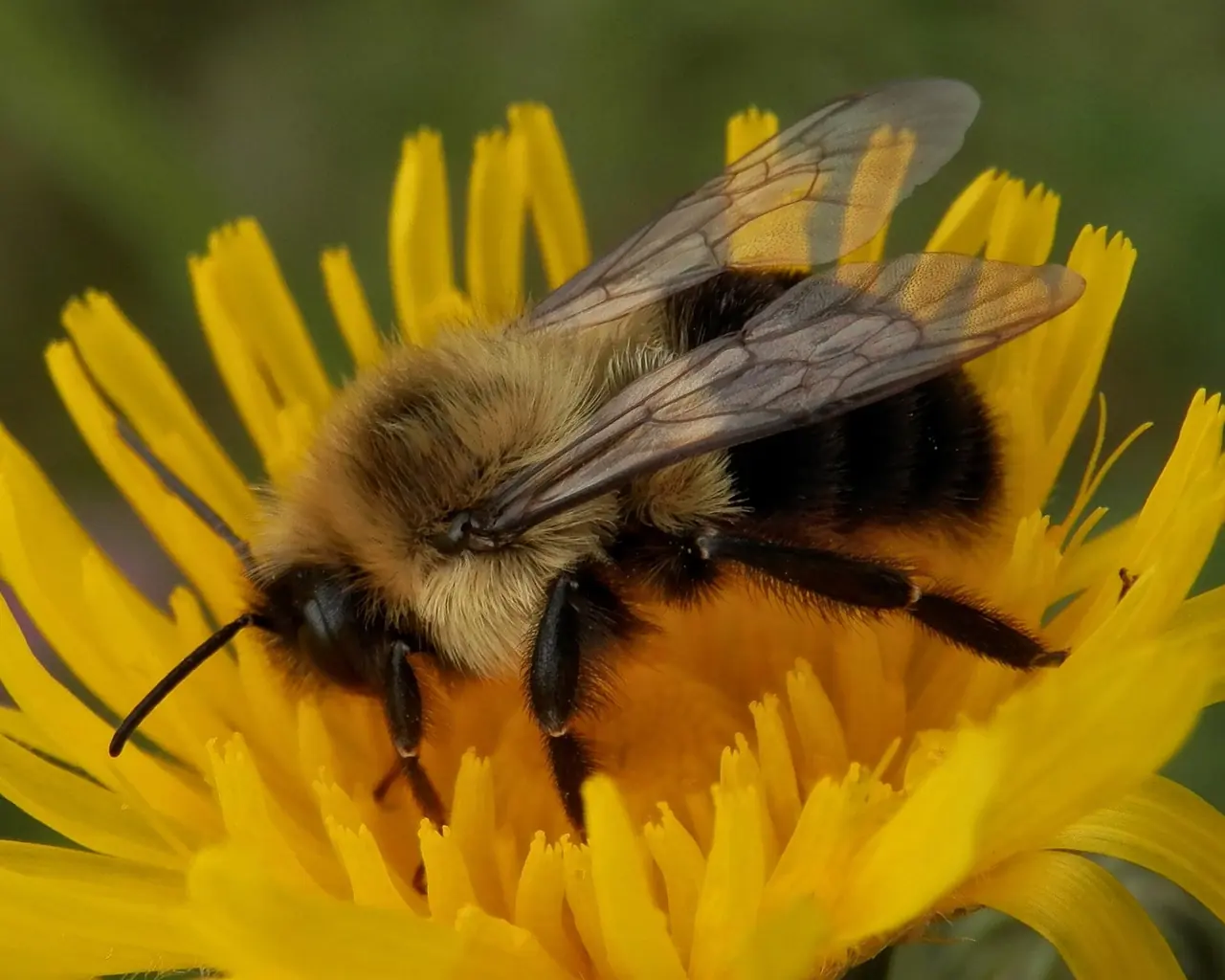
Photo: Ryan Hodnett, CC BY-SA 4.0, via Wikimedia Commons
Kansas City Pest Identification
Bombus spp.Beneficial / not treatedBumble Bee Identification
The fuzzy, slow-flying bee that nests in old mouse holes, compost, and under sheds. An important native pollinator and, several species being in decline, one we leave alone unless a nest is somewhere truly unworkable.
Need help identifying bumble bee?
Text a photo for fast pest identification. You'll get a real answer from a local expert — not a call center.
How to Identify It
Large, round, and fuzzy all over including the abdomen, black with yellow bands. Nests are small (50–400 bees), underground or in insulation, grass clumps, or birdhouses. They fly in cool weather other bees avoid.
Size: Queens 20–25 mm; workers smaller
Commonly Confused With
Carpenter bees (shiny bare abdomen, bore into wood).
Why It Shows Up
Queens look for insulated cavities in spring: abandoned rodent burrows, under decks and sheds, in compost, in wall or soffit insulation, and in unused birdhouses and grills.
Where Homeowners Find It
A lawn or mulch hole with slow fuzzy traffic, under a deck or shed, in a bale of straw, or behind siding near ground level.
Seasonal Activity in KC
Queens emerge in April; colonies die off in October and only new queens overwinter.
Risk Level
Docile; they sting only when the nest is stepped on or handled. Colonies die every fall, so a nest in an out-of-the-way spot resolves itself.
What You Can Do Yourself
- • Mark the entrance and mow around it until fall.
- • If a nest is in a spot people or pets can't avoid, call us and we will talk through options.
Our Take
Colonies die off at the first hard frost, so most nests can simply be left alone. If a nest is inside a wall or right at a doorway you can't avoid, call us and we'll talk through relocation or a referral.
Common Questions
How do I tell a bumble bee from something that looks similar?
Carpenter bees (shiny bare abdomen, bore into wood).
Do I need professional treatment for bumble bee?
We generally don't treat bumble bee. Colonies die off at the first hard frost, so most nests can simply be left alone. If a nest is inside a wall or right at a doorway you can't avoid, call us and we'll talk through relocation or a referral.