

For Homeowners
Termite Protection
See them first. Stop them for good.
Five signs worth a flashlight, how to tell a termite swarmer from a flying ant, why homeowners insurance will not cover the damage, and what real protection looks like.
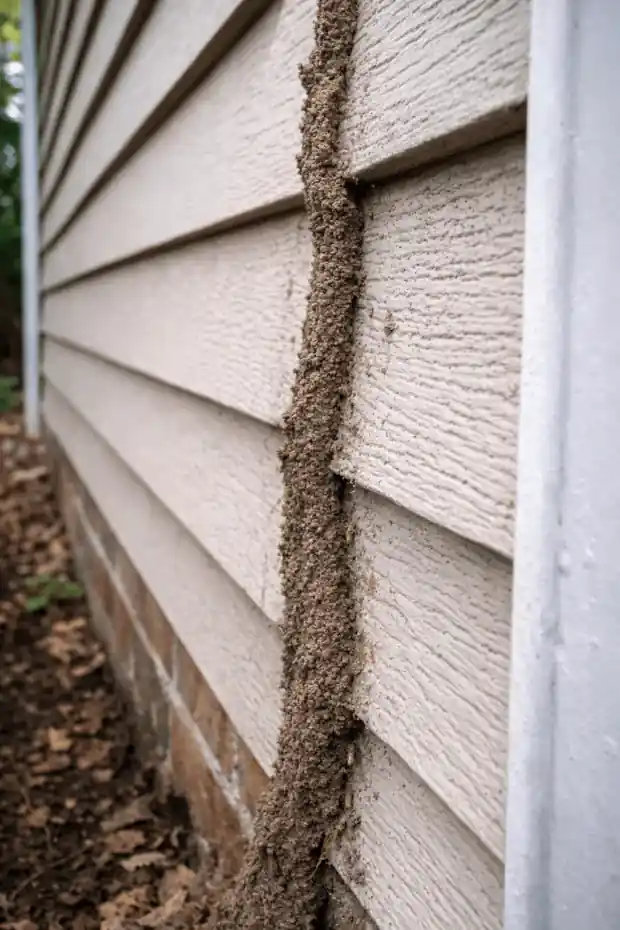
Termite inspections and treatment for the Kansas City metro area-wide — Johnson, Miami, and Wyandotte counties in Kansas, and Cass, Jackson, Clay, and Platte counties in Missouri. Honest diagnosis first, Termidor treatment when it is actually termites, and a 5-year retreatment warranty behind it.
Unlike many other pests, termites often work quietly behind walls, below flooring, and inside structural wood long before the homeowner sees obvious signs.
Termites are responsible for billions of dollars in property damage and treatment costs in the United States each year (source). Damage builds slowly, so an inspection is the way to know where you stand.
Seen swarmers, mud tubes or damaged wood? Text us a photo or book an inspection.
All Star Termite Warranty
If subterranean termites return to the treated structure within five years of a full All Star treatment, we come back and retreat — no charge. You get the terms in writing from the person who did the work, and we walk through them with you before you pay for anything.
A retreatment warranty covers retreating the structure; it is not a damage-repair policy. Spot treatments and pre-sale WDI inspections carry their own terms — just ask.
Take it with you
The homeowner guide to spotting termites early, the Termidor HE treatment brochure, and the one we hand real estate agents. Print-ready PDFs of the exact pieces we leave behind.
See them first. Stop them for good.
Five signs worth a flashlight, how to tell a termite swarmer from a flying ant, why homeowners insurance will not cover the damage, and what real protection looks like.
Less digging. Same proven protection.
How a Termidor HE treatment works, what to expect on treatment day, and the smaller trench and drill-hole footprint compared with a conventional liquid treatment.
Close deals. Not termite surprises.
Pre-listing and closing WDI inspections, the NPMA-33 report, how a treatment keeps a deal alive, and the transferable warranty a buyer can count on.
Honest Inspections Matter
Some wood damage can look like termites at first glance, but the real cause may be carpenter ants, acrobat ants, moisture damage, or another wood-damaging condition. That difference matters because the wrong diagnosis can lead to the wrong treatment.
You should not have to pay for a costly termite treatment if the real problem is ants.
At All Star Pest Solutions, we inspect first, identify the source, and explain what is actually happening before recommending treatment. If it is termites, we will tell you. If it is ants, we will tell you that too.
Carpenter ants tunnel through damaged or moisture-affected wood. Their galleries can be mistaken for termite damage without a proper inspection.
Acrobat ants often show up around moisture, voids, insulation, damaged trim, and wall areas. They can be a warning sign that conditions need attention.
Moisture attracts ants, but it can also create termite risk. That is why a real inspection is more useful than guessing.
The Kansas City metro is within the range of the Eastern Subterranean Termite, a major structural pest across much of North America. These termites thrive in soil and moisture conditions found throughout the metro — Johnson, Miami, Wyandotte, Cass, Jackson, Clay, and Platte counties alike.
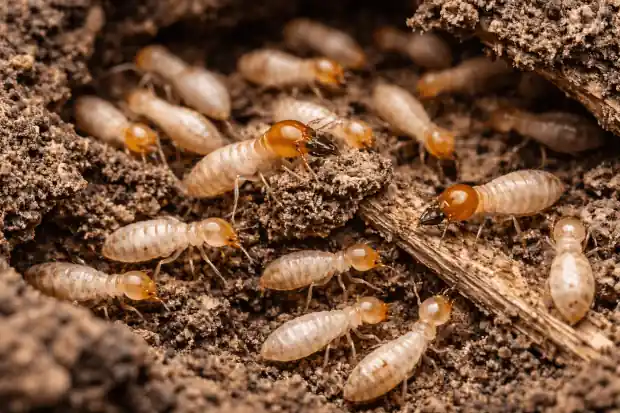
Subterranean termites live underground and build mud tunnels to travel from their colony to wood inside structures. Because they work inside walls, crawlspaces, and foundations, damage often goes unnoticed until it becomes severe.
Regular professional inspections can help catch termite activity earlier and reduce the chance of costly structural damage going unnoticed.

Termidor is the liquid termiticide we use for most subterranean termite treatments. Applied as a continuous treated zone around and under the structure, it is non-repellent — termites cannot detect it, so they carry it back to the colony instead of tunneling around it. Our own coverage is the 5-year retreatment warranty above; BASF also offers a separate Termidor pledge on qualifying treatments — ask us whether your treatment qualifies and what it does and does not cover.
Call now or text a photo. We will help you figure out what you are really dealing with.
Common signs include mud tubes on the foundation or in the crawlspace, piles of discarded wings near windows in spring, and wood that sounds hollow or has soft, blistered spots. Termites often work out of sight, which is why an inspection matters.
Termite swarmers have straight antennae, thick waists and wings of equal length. Flying ants have elbowed antennae, pinched waists and a longer front pair of wings.
If subterranean termites return to the treated structure within five years of a full All Star treatment, we come back and retreat at no charge. It covers retreatment, not repair of damage.
Mostly March through May, on warm, humid days after rain. Swarms last less than an hour, so wings on windowsills are often the only sign.
Yes — WDI inspections on the NPMA-33 form for buyers, sellers and agents. See our real estate termite inspection page.
Identify termites and swarmers in our pest library →
Termites work quietly. These pages cover what to look for, what treatment involves, and what a real estate inspection requires.
Need pest help today?
Text a pest photo, request service, or call directly. No call centers. Just real help from a local owner with 30+ years of professional experience.
Kansas City Pest Control • KS License #309053 • MO License #C29778• Categories 7A & 7B