🐜
How Ants Find Food
Fun fact: Ants follow invisible scent trails called pheromone trails.
Watch for: Watch for ants tapping antennae and following the same tiny road.
🌟 All Star Bug Academy — for Kansas City kids & families
Explore amazing insects, solve bug mysteries, watch real bug videos, and earn your printable Bug Academy certificate.
Kids can learn what common pests look like, where they live, and why they show up around homes.
Not every bug is bad. Bees, butterflies, spiders outside, and many other creatures help nature do its job.
Kids should look, learn, and tell an adult. They should not touch, spray, smash, or disturb unknown bugs or nests.
Amazing bug facts
Bees flap their wings about 230 times every second!
Grasshoppers can jump about 20 times their own body length!
Some spiders recycle their old webs... by eating them!
Ants can carry objects many times heavier than their own bodies.
A ladybug may eat 5,000 aphids in its lifetime. Gardens love them!
Fleas can jump about 100 times their own height. That's like you jumping over a skyscraper!
Academy classes
Each mini-class takes about 2 minutes. Tap one to start — can you finish all 7?
Classes explored: 0 / 7
Interactive Bug Lab
Kids can explore close-up bug pictures, learn how insects behave, test their bug knowledge, and practice thinking like young scientists.
Close-up explorer
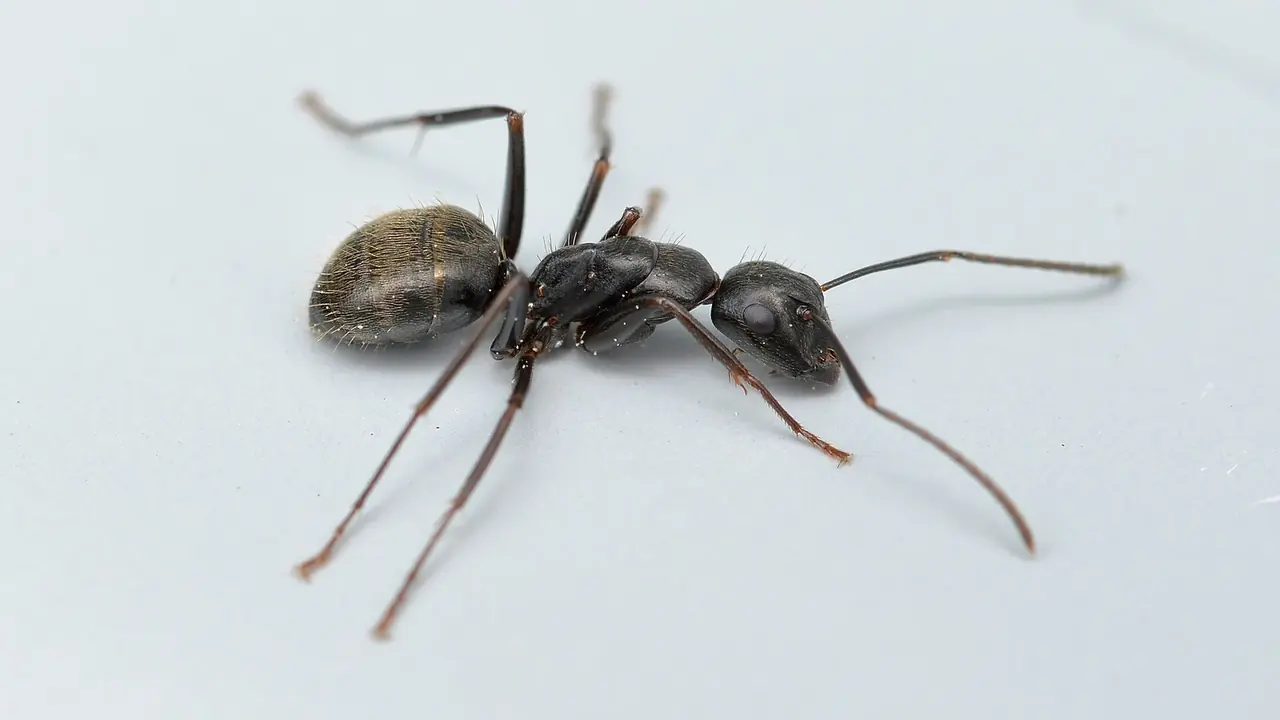
Insect
Clue: Ants use antennae to smell, touch, and share information.
Ants can leave invisible chemical trails called pheromone trails. Other ants follow those trails like tiny roads.
Teacher question
Ask students why a trail would help a colony find food faster than every ant searching alone.
Choose a close-up
Guess the bug science
Which body part helps ants smell a pheromone trail?
Ant behavior station
When an ant finds food, it can leave a tiny chemical scent trail behind. That scent is called a pheromone. Other ants smell it with their antennae and follow the trail like a road.
When ants meet, they often tap antennae. Those little taps help ants recognize nestmates, share clues, and communicate inside the colony.
Find food
Leave scent
Tap antennae
Sorting game
Teachers can use this as a quick class discussion: Which ones are pollinators? Which ones live in colonies? Which ones are arachnids?
Bug Video Lab
Each station plays a short, kid-friendly science video from PBS Deep Look and SciShow Kids. Watch how real bugs move, work, hunt, and grow, then use the fun fact and observation prompt to talk about what you see.
Fun fact: Ants follow invisible scent trails called pheromone trails.
Watch for: Watch for ants tapping antennae and following the same tiny road.
Fun fact: Bees move pollen from flower to flower while they collect nectar.
Watch for: Watch how the bee's fuzzy body catches and carries pollen.
Fun fact: Subterranean termites live in colonies and swarm to start new ones.
Watch for: Watch how termites travel together and stay near covered paths.
Fun fact: Spiders have eight legs and spin silk from body parts called spinnerets.
Watch for: Count the legs and look for how spiders use silk to build webs.
Fun fact: A mosquito has six tiny needles hidden inside its mouth.
Watch for: Look closely at how the mosquito's mouthparts work like tools.
Fun fact: Pill bugs are not insects — they are relatives of shrimp and crabs!
Watch for: Watch how the body curls into a tiny armored ball.
Bug Game Arcade
Spin the wheel, test your bug smarts, and match every bug to its home.
⭐ Bug of the Week
A single ladybug may eat 5,000 aphids in its lifetime.
🔍 Detective tip: Look on plant stems and leaves where aphids gather.
Spin the Bug Wheel
True or False?
“Spiders are insects.”
Match the Bug to its Home
The bugs
The homes
Bug guide
Here are some common insects, spiders, and pests kids may notice around Kansas City homes and yards.
Tiny teamwork experts
Can become a problem indoors
Hidden wood destroyers
Serious home pest
Fast kitchen invaders
Health-related pest
Eight-legged hunters
Usually helpful outside
Pollinator helpers
Helpful and important
Bold nest defenders
Can be dangerous near people
Tiny flying biters
Biting pest
Sneaky outdoor hitchhikers
Biting pest
Tiny nighttime travelers
Indoor pest
Little armored recyclers
Usually harmless
Jumping pet pests
Biting pest
Shield-shaped wall climbers
Occasional invader
Helpful or harmful?
Some bugs pollinate flowers. Some recycle leaves and dead plants. Some eat other pests. Pest control should protect families, homes, pets, and pollinators whenever possible.
🐝 Bees
🦋 Butterflies
🕷️ Many outdoor spiders
🪲 Ground beetles
🐞 Lady beetles outside
🌿 Praying mantises
🏠 Termites
🪳 Cockroaches
🛏️ Bed bugs
🦟 Mosquitoes
🐝 Wasps near people
🐜 Ants inside walls
Important
Look, but do not touch.
Never disturb nests, hives, or swarms.
Do not pick up spiders, ticks, wasps, bees, or unknown bugs.
Tell an adult if bugs are in a bed, kitchen, bathroom, or wall.
Do not spray pesticides yourself.
Ask a grown-up to take photos from a safe distance.
Bug detective challenge
When a child finds a bug, the goal is not to touch it. The goal is to observe it safely and tell a grown-up.
Kansas City bug seasons
Ants, termite swarmers, spiders, wasps starting nests, ticks
Mosquitoes, fleas, ticks, wasps, ants, spiders
Stink bugs, boxelder bugs, spiders, crickets, lady beetles, rodents moving indoors
Cockroaches, spiders, bed bugs, rodents, occasional indoor ants
Keep exploring
My Bug Badges
Finish the quiz, complete the sorting game, and find every hidden ladybug to unlock your badges.
Finish the Bug Science Quiz
Reveal every creature in the Sorting Game
Find all 8 hidden ladybugs on this page
Show your teacher! 🍎
Safe observation questions to explore any bug you find.
Meet the bees, butterflies, and hummingbirds that help our world.
Print your passport and stamp it every time you spot a new bug.
Worksheets, bug bingo, a word search, and coloring activities.
Teachers, parents & homeschool families
Grade-level activities, classroom discussion questions, and printable worksheets — plus you can invite a real pest pro to visit your class.
Parents and homeowners
Have a grown-up take a clear photo from a safe distance. All Star Pest Solutions can help identify whether it is harmless, helpful, or something that needs professional attention.
Pest photos are used under Creative Commons and public-domain licenses — see photo credits.
Need pest help today?
Text a pest photo, request service, or call directly. No call centers. Just real help from a local owner with 30+ years of professional experience.
Kansas City Pest Control • KS License #309053 • MO License #C29778• Categories 7A & 7B