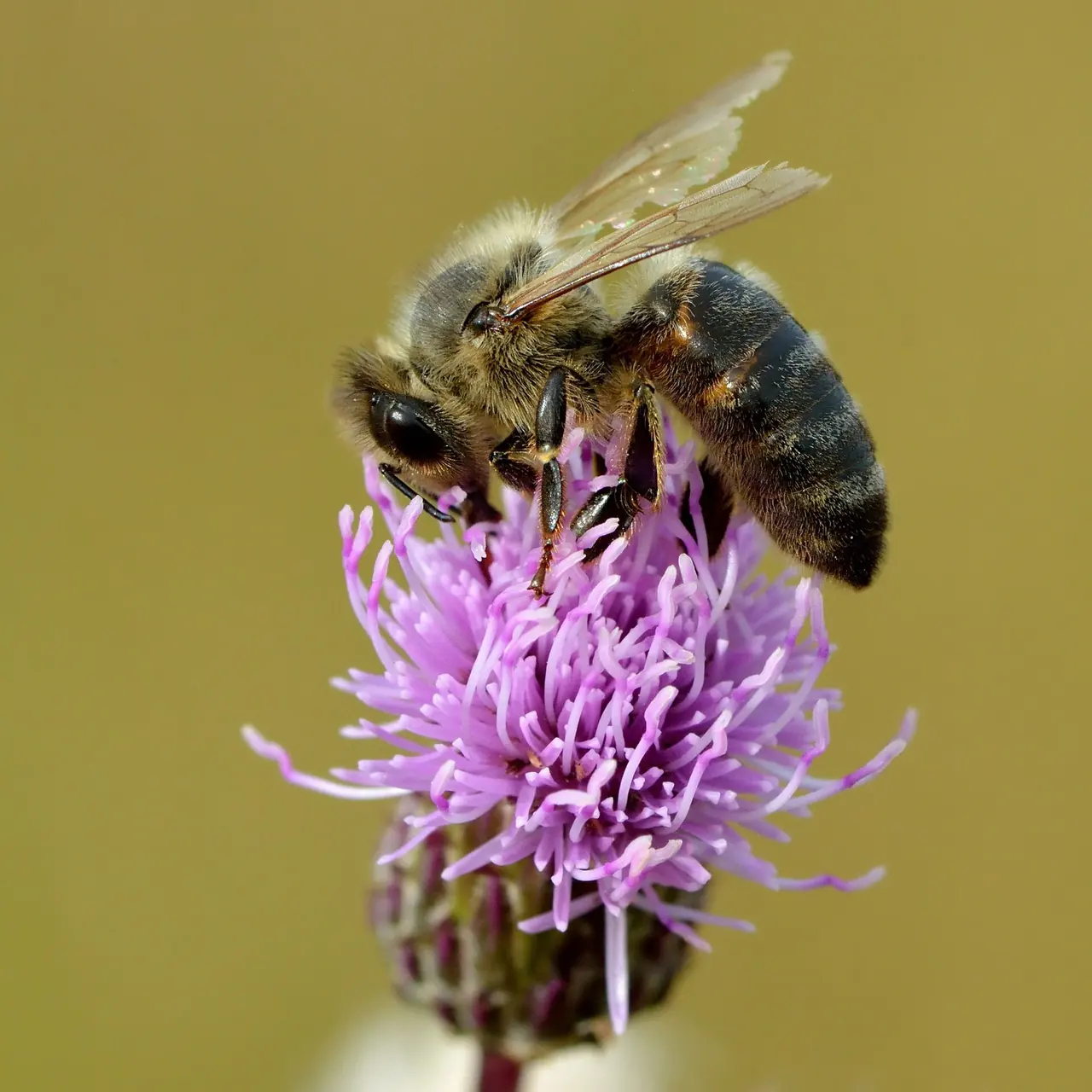
Photo: Ivar Leidus, CC BY-SA 4.0, via Wikimedia Commons
Kansas City Pest Identification
Apis melliferaBeneficial / not treatedHoney Bee Identification
The managed pollinator every food crop depends on. We do not exterminate honey bee colonies. If a swarm lands on your fence or a colony moves into your wall, the right call is a beekeeper, and we will help you find one.
Need help identifying honey bee?
Text a photo for fast pest identification. You'll get a real answer from a local expert — not a call center.
How to Identify It
Golden-brown and black with a fuzzy thorax and a slightly hairy, banded abdomen; less bright than a yellowjacket. A swarm is a hanging cluster of thousands of bees on a branch or wall, usually calm. An established colony shows steady traffic at a single gap in siding, a soffit, or a tree hole.
Size: Workers 12–15 mm
Commonly Confused With
Yellowjackets (bright yellow, smooth, aggressive) and hover flies (harmless mimics with one pair of wings and huge eyes).
Why It Shows Up
Swarms in April–June are looking for a cavity; a wall void, chimney, or soffit with a half-inch gap is ideal. Once inside they build comb and store honey, and the colony can live there for years.
Where Homeowners Find It
Swarm clusters on tree limbs, fences, and car mirrors; colonies in wall voids, soffits, chimneys, hollow trees, and old sheds. A warm spot on an interior wall in winter can be a hive.
Seasonal Activity in KC
Swarming April through June; colonies active year-round.
Risk Level
Bees defend a colony and stings are a concern for allergic people. Spraying a wall-void colony leaves pounds of honey and comb behind, which melts, leaks through drywall, and draws ants, roaches, and wax moths. That is why a live removal is the right answer.
What You Can Do Yourself
- • Leave a swarm alone; most move on within a day or two.
- • Contact a local beekeeping association swarm list — many will remove a swarm for free.
- • Do not seal the entrance of an active colony.
Our Take
For a colony inside a structure: a live removal by a beekeeper (cut-out or trap-out), followed by removal of comb and sealing of the cavity. We can coordinate that and handle the pest issues that follow (ants, roaches, wax moths).
Common Questions
How do I tell a honey bee from something that looks similar?
Yellowjackets (bright yellow, smooth, aggressive) and hover flies (harmless mimics with one pair of wings and huge eyes).
Do I need professional treatment for honey bee?
We generally don't treat honey bee. For a colony inside a structure: a live removal by a beekeeper (cut-out or trap-out), followed by removal of comb and sealing of the cavity. We can coordinate that and handle the pest issues that follow (ants, roaches, wax moths).