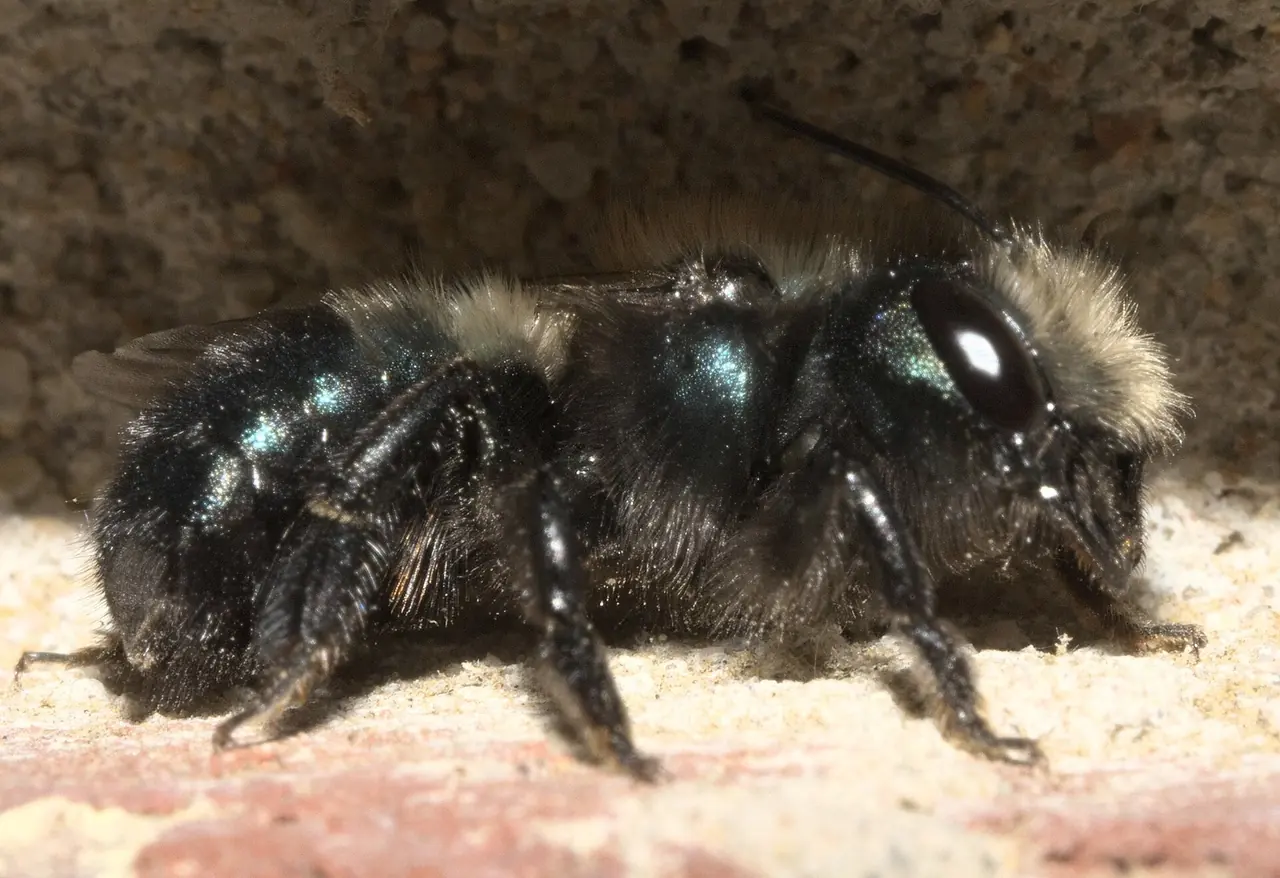
Photo: xpda, CC BY-SA 4.0, via Wikimedia Commons
Kansas City Pest Identification
Osmia spp.Beneficial / not treatedMason Bee Identification
A small metallic blue-green solitary bee that seals its nest tubes with mud and pollinates fruit trees better than honey bees. If you see mud-capped holes in a bee house or in old nail holes, this is who lives there.
Need help identifying mason bee?
Text a photo for fast pest identification. You'll get a real answer from a local expert — not a call center.
How to Identify It
Stocky, dark metallic blue or green, not striped. Nests in existing tunnels — hollow stems, beetle holes, bee houses — capped with mud. No colony, no defending behavior.
Size: 8–15 mm
Commonly Confused With
Small carpenter bees and sweat bees. Mason bees don't bore new holes.
Why It Shows Up
Any pre-existing quarter-inch tunnel: old nail and screw holes in siding, weep holes, wind chimes, and hose reels. They occasionally clog a keyhole or vent.
Where Homeowners Find It
Bee hotels, holes in fences and siding, the ends of hollow stems and reeds, and brick weep holes.
Seasonal Activity in KC
March through May, timed to fruit tree bloom.
Risk Level
None. Stings are rare and mild. Their mud plugs are the only possible complaint.
What You Can Do Yourself
- • Put up a mason bee house away from the door and enjoy the free pollination.
- • Cap any hole you don't want used with a dab of caulk after they emerge in early summer.
Our Take
No treatment. We do not treat mason bees.
Common Questions
How do I tell a mason bee from something that looks similar?
Small carpenter bees and sweat bees. Mason bees don't bore new holes.
Do I need professional treatment for mason bee?
We generally don't treat mason bee. No treatment. We do not treat mason bees.