South Kansas City Pest Identification
Formica spp.Field Ant Identification
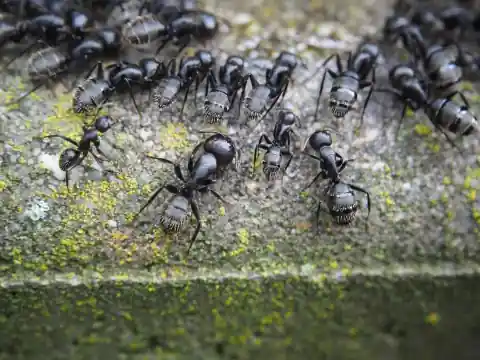
A large, mostly-outdoor ant that builds visible mound nests in lawns, along driveways, and at the base of trees. Field ants are sometimes mistaken for carpenter ants because of their size, but they don't nest in wood.
Need help identifying field ant?
Text a photo for fast pest identification. You'll get a real answer from a local expert — not a call center.
How to Identify It
Reddish-brown to black (often two-toned, dark abdomen with a lighter thorax), with an evenly rounded thorax profile and a single node in the waist — similar in size to a carpenter ant but without the smoothly arched thorax carpenter ants have. Nests are visible dirt or sand mounds, sometimes over a foot across.
Size: Workers 4–9 mm
Commonly Confused With
Carpenter ants (larger, uniform black or bicolor, smoothly rounded thorax, nest in wood rather than soil) — the most common mix-up given the similar size.
Why It Shows Up
Field ants nest outdoors in soil, not in wood, and rarely establish an indoor colony. Foraging workers occasionally wander inside chasing food, especially from a mound close to the foundation.
Where Homeowners Find It
Sunny lawn areas, along sidewalks and driveways, at the base of trees and stumps, and in mulch beds. Mounds are the clearest sign — a field ant colony builds a visible earthen mound rather than hiding underground.
Seasonal Activity in KC
Active March through October; mound-building most visible in spring.
Risk Level
Purely a lawn nuisance and occasional indoor forager — no structural damage the way carpenter ants cause, and bites are rare and mild.
What You Can Do Yourself
- • Mounds more than 10–15 feet from the foundation can usually be left alone or knocked down with a rake.
- • Move mounds close to the house by treating the mound directly or with a targeted bait.
- • Reduce mulch and debris piled against the foundation that gives colonies a bridge indoors.
What Professional Treatment Involves
Direct mound treatment for nests near the foundation, patio, or high-traffic lawn areas, plus a perimeter treatment if workers are regularly foraging indoors. Because field ants are frequently confused with carpenter ants, we confirm which one you have before recommending a plan — the treatments are different.
Serving the South Kansas City metro. Owner-operated with 30+ years of professional pest control experience.