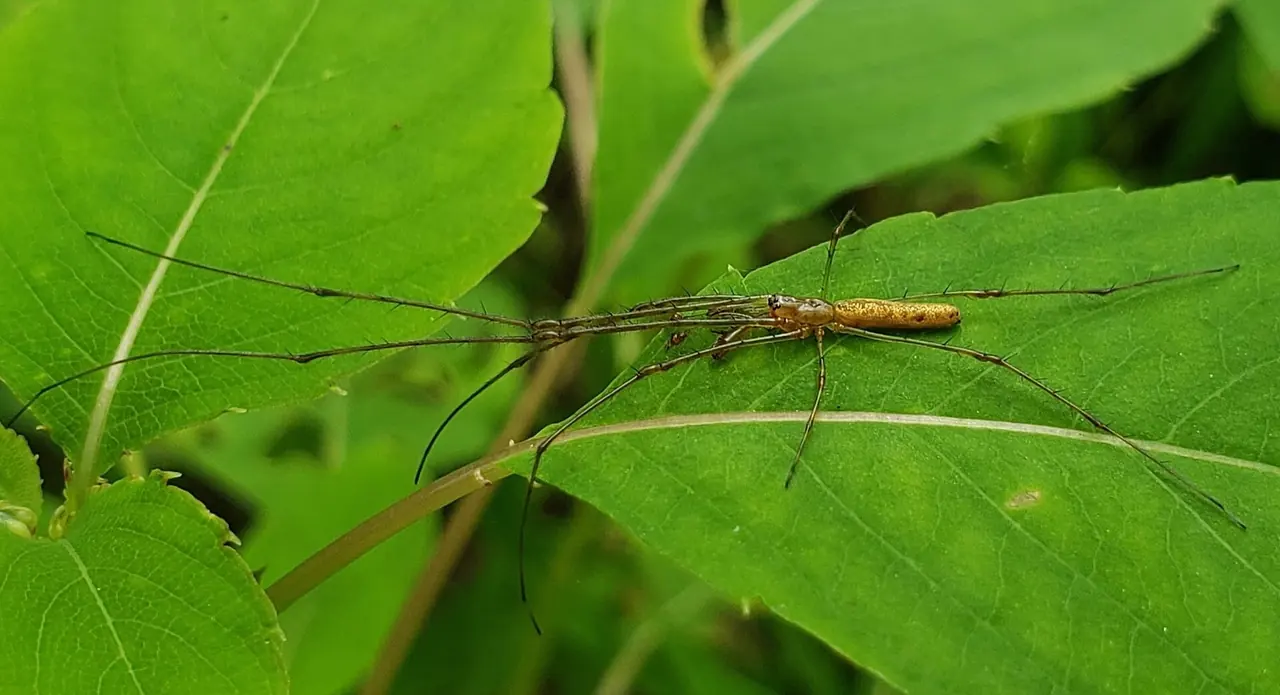
Photo: CriticalDrinking, CC BY-SA 4.0, via Wikimedia Commons
Kansas City Pest Identification
Tetragnatha spp.Beneficial / not treatedLong-Jawed Orb Weaver Identification
A slender, stretched-out spider with long jaws that builds horizontal webs near water. Common around ponds, lakes, and pools in Cass, Miami, and Johnson counties — and on the lakeside deck.
Need help identifying long-jawed orb weaver?
Text a photo for fast pest identification. You'll get a real answer from a local expert — not a call center.
How to Identify It
Long, thin, greenish-tan to brown body with the front legs stretched straight out ahead when at rest, so it looks like a stick. Web is an open, loose orb, usually horizontal over water or grass.
Size: Body 6–12 mm; very elongated
Commonly Confused With
A bit of debris or a grass stem until it moves. Not confused with anything dangerous.
Why It Shows Up
Only by accident. They hunt midges and mosquitoes over water and sometimes end up on boats, docks, and lake-house screens in large numbers.
Where Homeowners Find It
Lake and pond edges, pool enclosures, boat docks, irrigation ponds, and shrubs along creeks. Around Loch Lloyd, Raymore, and Lake Winnebago they can be abundant.
Seasonal Activity in KC
May through September.
Risk Level
None. They are one of the main predators of mosquitoes and midges at the water's edge.
What You Can Do Yourself
- • Hose the webs off the dock or screen; they rebuild, which is fine.
Our Take
No treatment recommended. Heavy numbers usually mean a heavy midge or mosquito population, which is the actual problem to address.
Common Questions
How do I tell a long-jawed orb weaver from something that looks similar?
A bit of debris or a grass stem until it moves. Not confused with anything dangerous.
Do I need professional treatment for long-jawed orb weaver?
We generally don't treat long-jawed orb weaver. No treatment recommended. Heavy numbers usually mean a heavy midge or mosquito population, which is the actual problem to address.