Photo: peterwchen, CC BY 4.0, via Wikimedia Commons
Kansas City Pest Identification
Crematogaster spp.Acrobat Ant Identification
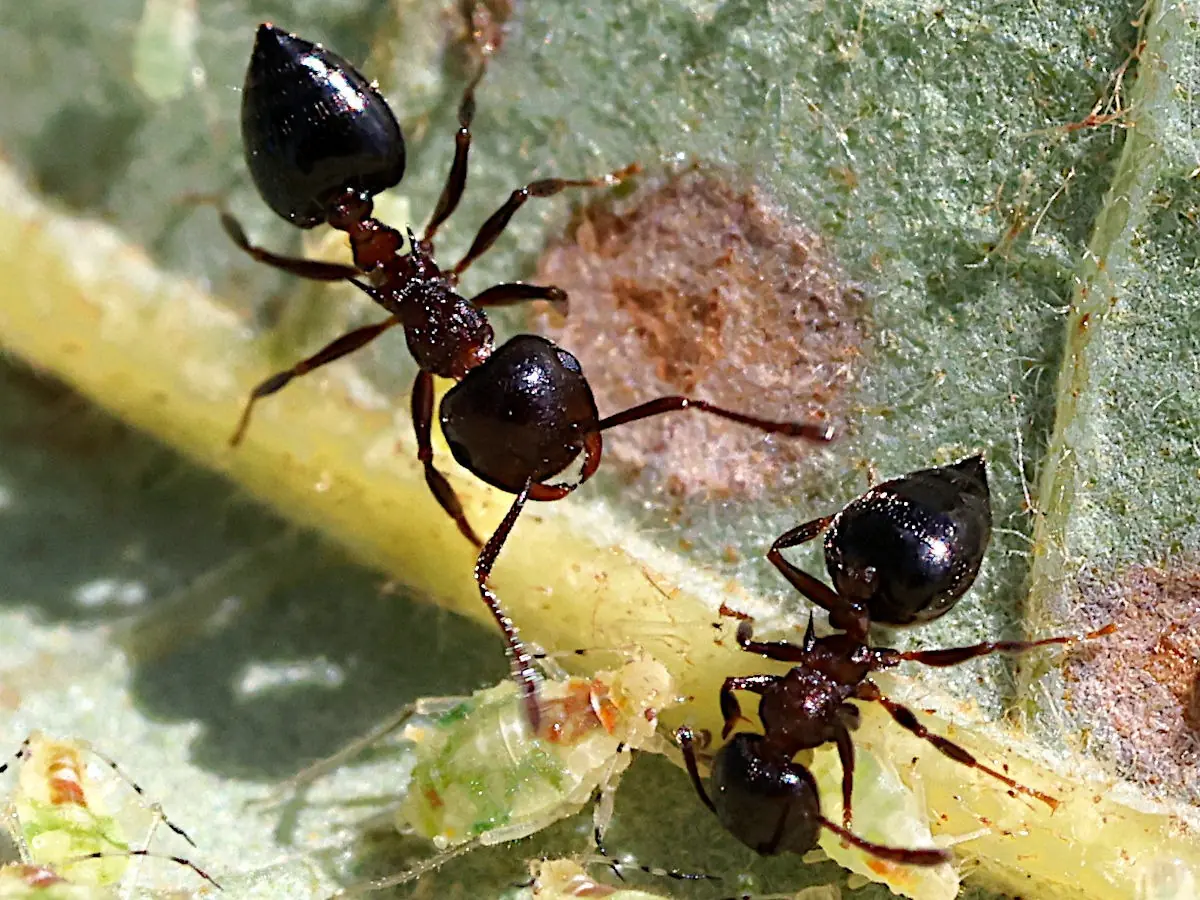
A small ant with a heart-shaped rear end that nests in moist, decayed wood and foam insulation. Finding acrobat ants indoors usually means there is water damage somewhere nearby.
Need help identifying acrobat ant?
Text a photo for fast pest identification. You'll get a real answer from a local expert — not a call center.
How to Identify It
Light brown to black with a distinctly heart-shaped abdomen that the ant raises over its head when disturbed — the "acrobat" pose. Two-node waist; the rear is often darker than the front.
Size: Workers 2.5–3.5 mm
Commonly Confused With
Odorous house ants (no heart-shaped rear, coconut smell when crushed) and pavement ants. Acrobat ant frass looks like carpenter ant frass but the ants are far smaller.
Why It Shows Up
They colonize wood that is already softened by moisture — window frames, door jambs, soffits, deck boards — and the foam board behind siding. They also follow utility lines in to reach sweets and proteins.
Where Homeowners Find It
Trailing along siding, window frames, and utility penetrations; inside around bathrooms, leaking skylights, and window sills with peeling paint.
Seasonal Activity in KC
Most visible May through September; swarms in mid-to-late summer.
Risk Level
Low direct risk, but they are a reliable indicator of a moisture problem, and they will strip insulation from low-voltage wiring.
What You Can Do Yourself
- • Look for the moisture: stained drywall, soft trim, or a window that fogs between the panes.
- • Seal gaps where cable and phone lines enter the house.
- • Keep gutters clear so fascia and soffits stay dry.
What Professional Treatment Involves
Trace the trail to the nest, treat the void or damaged wood directly, and apply a non-repellent treatment to the trail routes and entry points. Baits work for acrobat ants better than for carpenter ants.
Serving the Kansas City metro area-wide. Owner-operated with 30+ years of professional pest control experience. See our acrobat ant control service →
Common Questions
How do I tell an acrobat ant from something that looks similar?
Odorous house ants (no heart-shaped rear, coconut smell when crushed) and pavement ants. Acrobat ant frass looks like carpenter ant frass but the ants are far smaller.
Do I need professional treatment for acrobat ant?
Trace the trail to the nest, treat the void or damaged wood directly, and apply a non-repellent treatment to the trail routes and entry points. Baits work for acrobat ants better than for carpenter ants.