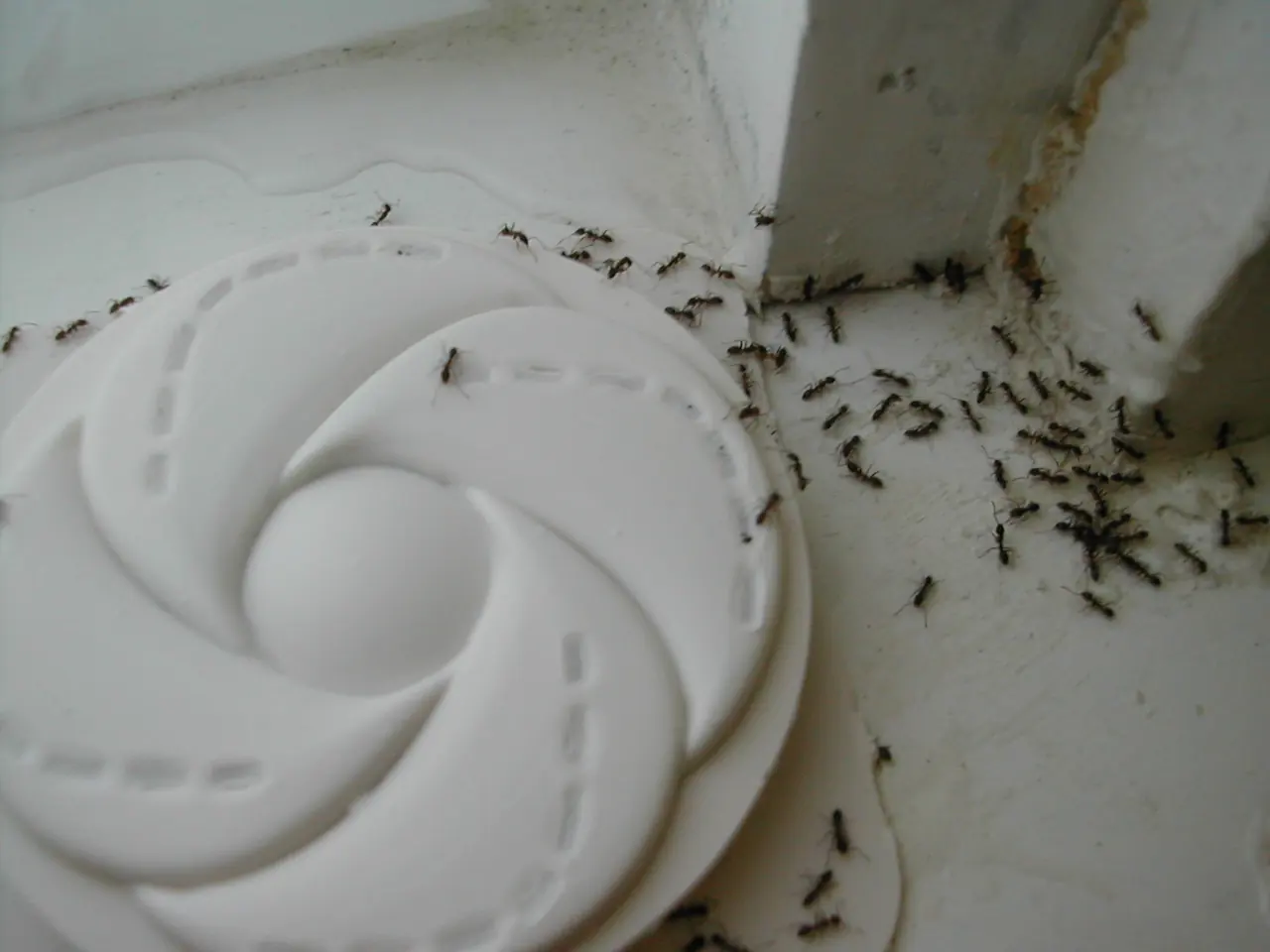
Photo: Thmazing, Public domain, via Wikimedia Commons
Kansas City Pest Identification
Linepithema humileArgentine Ant Identification
An invasive ant that forms enormous interconnected "supercolonies" with many queens rather than a single nest, which makes it notably harder to control than most native ants — treating one visible trail barely dents the population.
Need help identifying argentine ant?
Text a photo for fast pest identification. You'll get a real answer from a local expert — not a call center.
How to Identify It
Small, uniformly light-to-dark brown, shiny, with a single small node in the waist. Moves in dense, fast trails rather than scattered foraging. Does not have the sharp odor of the odorous house ant when crushed.
Size: Workers 2.2–2.8 mm
Commonly Confused With
Odorous house ants (rotten-coconut smell when crushed; Argentine ants have a fainter, different odor) and pavement ants.
Why It Shows Up
Because colonies have many queens and nest in many shallow, moist locations simultaneously (mulch, under stones, potted plants, wall voids), they can move indoors from almost any direction chasing moisture or sweets.
Where Homeowners Find It
Kitchen counters and sinks, bathroom fixtures, mulch beds and potted plants around the foundation, and dense trailing along sidewalks and exterior walls.
Seasonal Activity in KC
Active March through November, with heavier indoor pressure during summer drought and after heavy rain.
Risk Level
Nuisance and food contamination; no structural damage or bite/sting risk of concern. The main issue is how quickly and persistently they re-establish trails.
What You Can Do Yourself
- • Do not spray visible trails — this fragments the supercolony and can make the problem spread further, the same issue as with odorous house ants.
- • Reduce moisture sources and trim vegetation away from the foundation.
- • Sweet, slow-acting liquid baits are more effective than sprays, but supercolonies often need a sustained professional program.
What Professional Treatment Involves
Because of the supercolony structure, effective control requires a broader perimeter treatment combined with targeted baiting rather than spot-treating individual trails — we set expectations up front that this species typically takes a full season to bring under control.
Serving the Kansas City metro area-wide. Owner-operated with 30+ years of professional pest control experience.
Common Questions
How do I tell an argentine ant from something that looks similar?
Odorous house ants (rotten-coconut smell when crushed; Argentine ants have a fainter, different odor) and pavement ants.
Do I need professional treatment for argentine ant?
Because of the supercolony structure, effective control requires a broader perimeter treatment combined with targeted baiting rather than spot-treating individual trails — we set expectations up front that this species typically takes a full season to bring under control.