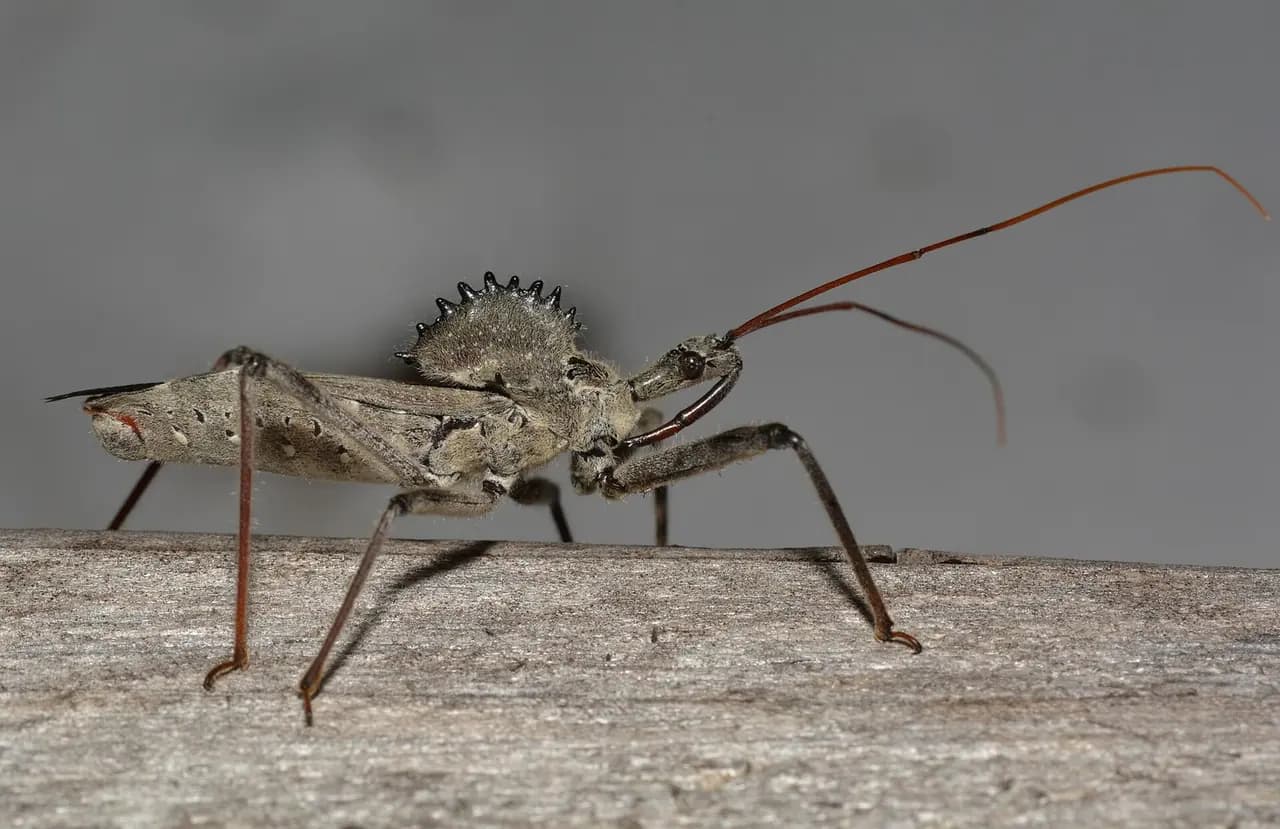
Photo: Andy Reago & Chrissy McClarren, CC BY 2.0, via Wikimedia Commons
Kansas City Pest Identification
Reduviidae (various species, including wheel bugs common locally)Beneficial / not treatedAssassin Bug Identification
A predatory insect — the wheel bug is the large, distinctive local species — that hunts other insects and delivers a notably painful bite if handled. Beneficial in the garden, best left alone rather than picked up.
Need help identifying assassin bug?
Text a photo for fast pest identification. You'll get a real answer from a local expert — not a call center.
How to Identify It
Wheel bugs are large, gray-brown, with a distinctive cog-like crest on the thorax. Other assassin bugs vary widely but share an elongated head and a curved, piercing mouthpart (beak) used to feed on prey.
Size: 12–35 mm depending on species
Commonly Confused With
Various beetles and other true bugs; the wheel bug's crest is unique and unmistakable.
Why It Shows Up
They don't seek out indoor habitat; occasional individuals wander in while hunting or are attracted to lights.
Where Homeowners Find It
Garden beds, shrubs, and tree bark where they hunt caterpillars and other soft-bodied insects; occasionally near outdoor lighting.
Seasonal Activity in KC
Spring through fall.
Risk Level
The bite is genuinely painful (often compared to a bee sting or worse) and can cause localized swelling, but assassin bugs are not aggressive and only bite when handled or trapped against skin.
What You Can Do Yourself
- • Don't handle it — observe from a distance and let it do its job hunting garden pests.
Our Take
We do not treat assassin bugs; they're beneficial and shouldn't be targeted.
Common Questions
How do I tell an assassin bug from something that looks similar?
Various beetles and other true bugs; the wheel bug's crest is unique and unmistakable.
Do I need professional treatment for assassin bug?
We generally don't treat assassin bug. We do not treat assassin bugs; they're beneficial and shouldn't be targeted.