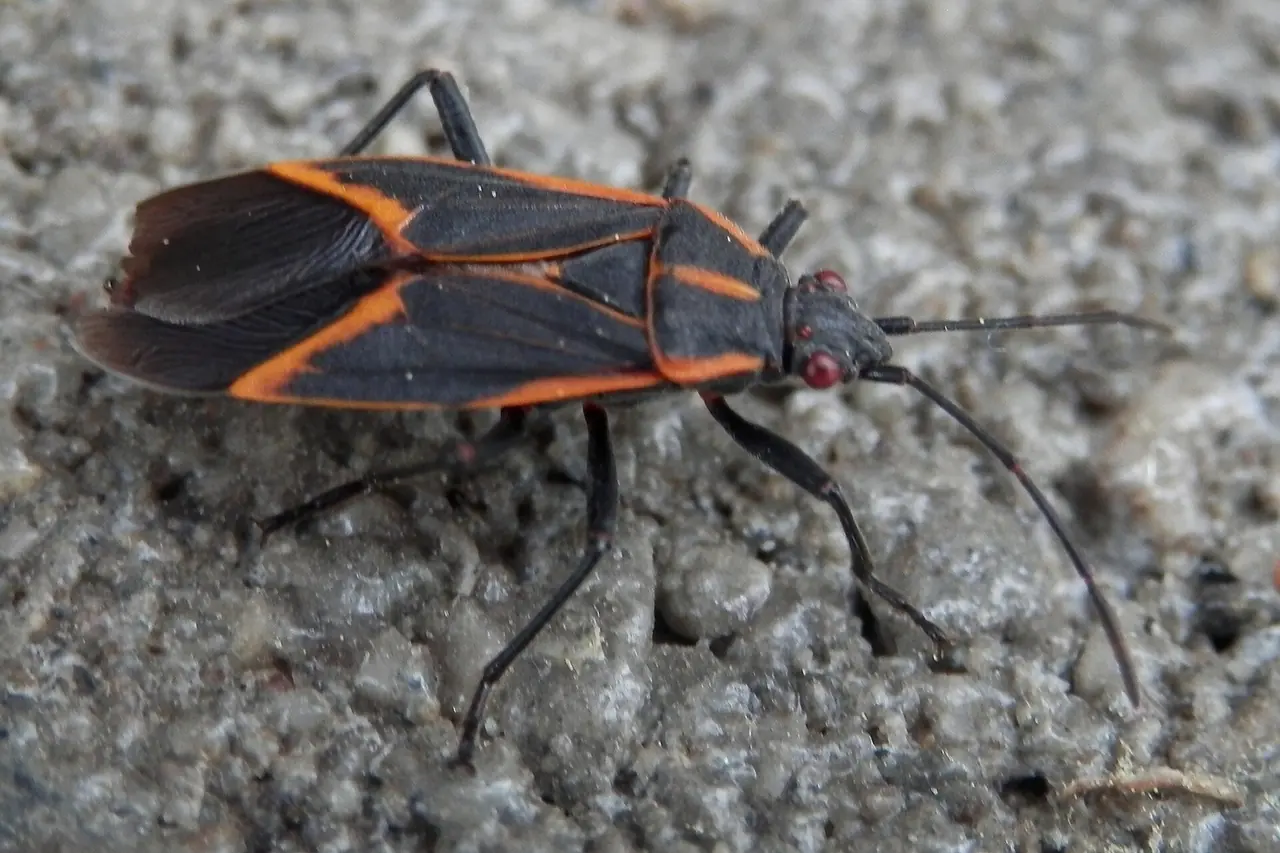
Photo: Ryan Hodnett, CC BY-SA 4.0, via Wikimedia Commons
Kansas City Pest Identification
Boisea trivittataBoxelder Bug Identification
The black bug with red-orange wing edges that gathers by the hundreds on sun-warmed, south-facing walls every fall looking for a place to overwinter. A classic Kansas City occasional invader tied directly to boxelder and maple trees.
Need help identifying boxelder bug?
Text a photo for fast pest identification. You'll get a real answer from a local expert — not a call center.
How to Identify It
Flat, elongated black body with three distinct red-orange lines on the thorax and red wing edges. Congregates in large clusters on warm walls, foundations, and window frames in fall.
Size: 12–14 mm
Commonly Confused With
Milkweed bugs (similar coloring, found on milkweed, not walls) and other occasional invaders like stink bugs during the same fall push.
Why It Shows Up
Adults overwinter in cracks and protected spots and are drawn to south- and west-facing walls that absorb afternoon sun. Gaps around windows, siding, and foundations let them slip into wall voids or living spaces.
Where Homeowners Find It
Sunny exterior walls near boxelder or maple trees, window and door frames, attic and soffit gaps, and occasionally indoors on warm winter days when they wake up.
Seasonal Activity in KC
Mass congregation late September through October; indoor sightings continue through winter on unusually warm days.
Risk Level
Purely a nuisance — no bite, no property damage, though large numbers indoors leave stains if crushed.
What You Can Do Yourself
- • Seal gaps around windows, siding, and utility penetrations before the fall migration starts (August).
- • Sweep or vacuum clusters rather than crushing them.
- • Removing a nearby boxelder tree eliminates the food source but isn't usually practical.
What Professional Treatment Involves
An exterior perimeter treatment in September or October, timed before they congregate, is the most effective timing — treating after they're already clustered on the wall is much less effective.
Serving the Kansas City metro area-wide. Owner-operated with 30+ years of professional pest control experience. See our boxelder bug control service →
Common Questions
How do I tell a boxelder bug from something that looks similar?
Milkweed bugs (similar coloring, found on milkweed, not walls) and other occasional invaders like stink bugs during the same fall push.
Do I need professional treatment for boxelder bug?
An exterior perimeter treatment in September or October, timed before they congregate, is the most effective timing — treating after they're already clustered on the wall is much less effective.