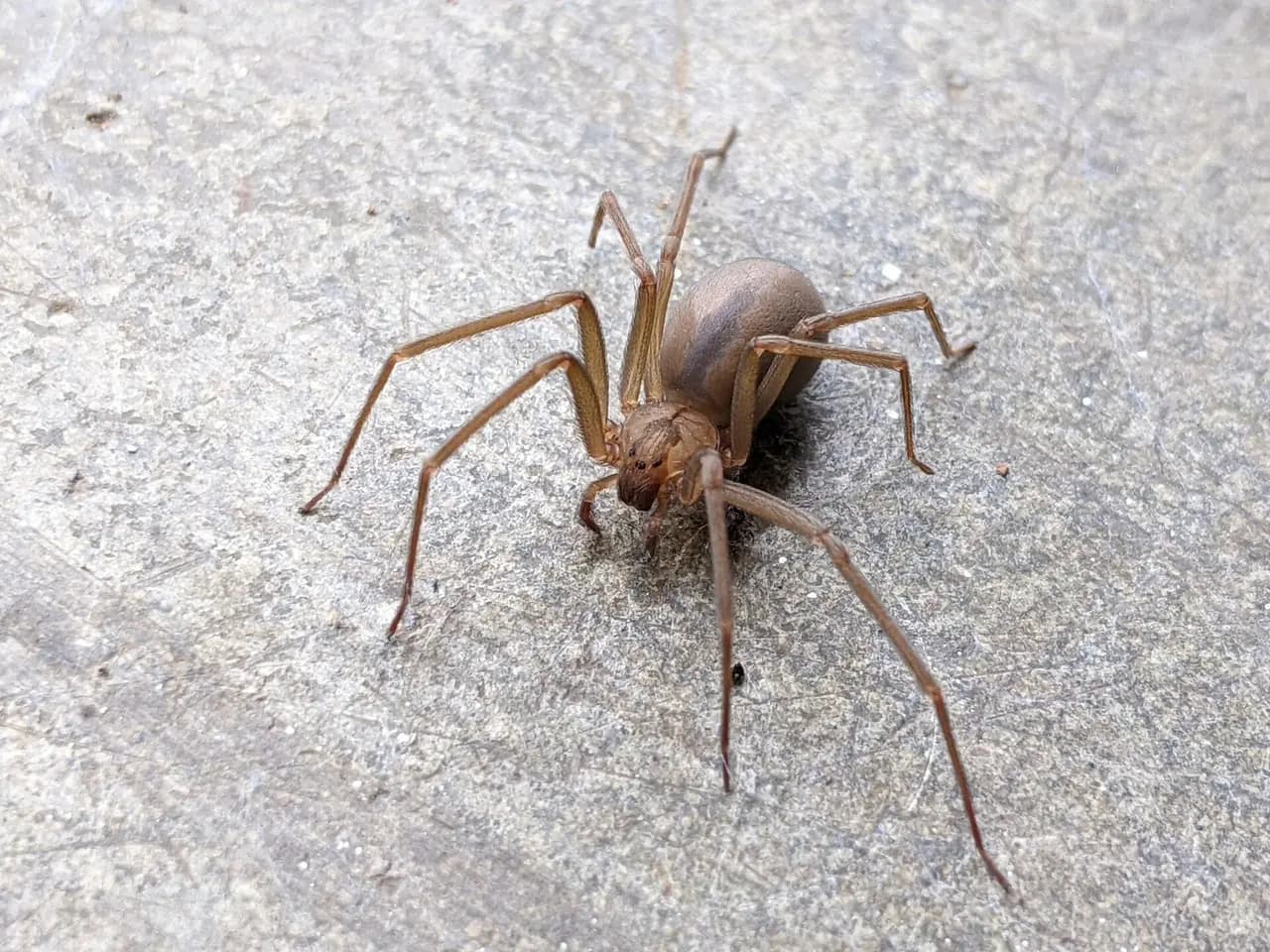
Photo: iamfindingplants, CC0, via Wikimedia Commons
Kansas City Pest Identification
Loxosceles reclusaBrown Recluse Identification
Kansas City sits in the heart of brown recluse range, and they are far more common in local homes than most people realize. They are the one spider in this area that justifies a real treatment program.
Need help identifying brown recluse?
Text a photo for fast pest identification. You'll get a real answer from a local expert — not a call center.
How to Identify It
Uniform tan to brown with no banding on the legs, a dark violin shape on the back of the front body section (neck pointing toward the rear), and — the definitive feature — six eyes arranged in three pairs instead of eight. Legs are long, thin, and hairless-looking. They do not build a catching web.
Size: Body 6–12 mm; legspan about the size of a quarter
Commonly Confused With
Cellar spiders, grass and funnel spiders, wolf spiders, and yellow sac spiders are constantly misidentified as recluses. Banded legs, a patterned abdomen, or an orb/sheet web rule out brown recluse. Text us a photo — we identify these every week.
Why It Shows Up
They live indoors year-round in undisturbed, dry, cluttered spaces: boxes, closets, attics, behind picture frames, in stored clothing, and in wall and ceiling voids. Older homes with rock or block foundations and lots of storage are prime habitat.
Where Homeowners Find It
Basements, attics, closets, garages, under furniture, inside shoes and folded bedding, behind baseboards, and — commonly — in sticky monitor traps placed along walls, which is how we confirm and measure an infestation.
Seasonal Activity in KC
Active indoors all year but far more visible May through September, when males roam at night looking for mates. Bites peak in summer when people reach into stored items.
Risk Level
Bites are rare and the spider is not aggressive, but the venom can cause a slow-healing necrotic wound and, occasionally, systemic illness. Children and older adults are at greater risk. Any suspected bite should be seen by a doctor.
What You Can Do Yourself
- • Put out sticky monitor traps along baseboards, behind furniture, and in closets — they tell you where the population actually is.
- • Declutter and switch cardboard boxes to sealed plastic totes; shake out shoes, gloves, and stored bedding before use.
- • Seal gaps at baseboards, door sweeps, and where pipes enter walls; pull beds a few inches from the wall.
What Professional Treatment Involves
A brown recluse program is different from a general spider spray. It combines a monitoring survey, targeted residual treatment along baseboards, crack-and-crevice and void treatment (dust into wall voids, attics, and behind trim), exterior perimeter treatment, and follow-up visits to check trap counts. One visit rarely resolves an established population.
The All Star difference: We confirm the species before recommending a program — many "recluse" calls are harmless spiders. When it is recluse, the plan is monitoring-based and label-directed, focused on the voids where they actually live, with prep and re-entry instructions for kids and pets given before treatment.
Serving the Kansas City metro area-wide. Owner-operated with 30+ years of professional pest control experience. See our brown recluse control service →
Common Questions
How do I tell a brown recluse from something that looks similar?
Cellar spiders, grass and funnel spiders, wolf spiders, and yellow sac spiders are constantly misidentified as recluses. Banded legs, a patterned abdomen, or an orb/sheet web rule out brown recluse. Text us a photo — we identify these every week.
Do I need professional treatment for brown recluse?
A brown recluse program is different from a general spider spray. It combines a monitoring survey, targeted residual treatment along baseboards, crack-and-crevice and void treatment (dust into wall voids, attics, and behind trim), exterior perimeter treatment, and follow-up visits to check trap counts. One visit rarely resolves an established population.