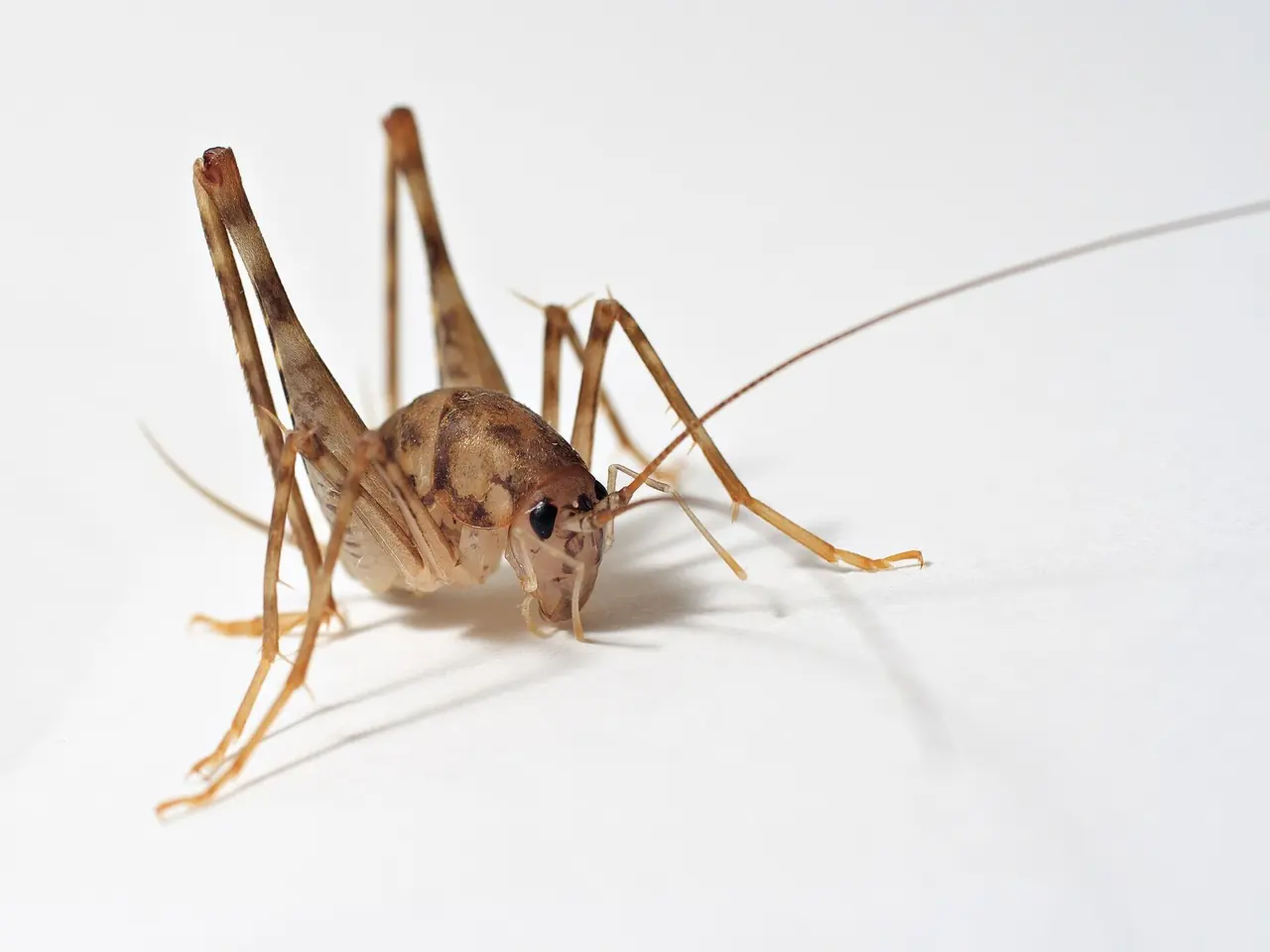
Photo: Thegreenj, CC BY-SA 3.0, via Wikimedia Commons
Kansas City Pest Identification
Ceuthophilus spp. (camel cricket)Cave Cricket Identification
A silent, humpbacked cricket with long legs that lives in damp, dark spaces — basements, crawlspaces, wells — and startles people with its jumping when disturbed. Unlike other crickets, it doesn't chirp.
Need help identifying cave cricket?
Text a photo for fast pest identification. You'll get a real answer from a local expert — not a call center.
How to Identify It
Brown, humpbacked profile with long antennae and very long hind legs, no wings (so no chirping sound). Jumps erratically and powerfully when disturbed, which is usually what people notice first.
Size: 13–38 mm
Commonly Confused With
Field/house crickets (which chirp and have a flatter profile) and spiders at a quick glance because of the jumping legs.
Why It Shows Up
They need consistently damp, dark conditions and thrive in unfinished basements, crawlspaces, and window wells with high humidity.
Where Homeowners Find It
Unfinished basements, crawlspaces, window wells, and damp garage corners.
Seasonal Activity in KC
Year-round in consistently damp indoor spaces.
Risk Level
None — they don't bite people, don't damage structures, and are simply startling due to their jumping.
What You Can Do Yourself
- • Run a dehumidifier in the basement or crawlspace to reduce humidity below 50%.
- • Seal window wells and foundation gaps.
- • Remove damp cardboard and clutter that provides hiding spots.
What Professional Treatment Involves
Treatment is secondary to moisture correction; a residual application in the affected area helps in the short term while humidity is addressed.
Serving the Kansas City metro area-wide. Owner-operated with 30+ years of professional pest control experience.
Common Questions
How do I tell a cave cricket from something that looks similar?
Field/house crickets (which chirp and have a flatter profile) and spiders at a quick glance because of the jumping legs.
Do I need professional treatment for cave cricket?
Treatment is secondary to moisture correction; a residual application in the affected area helps in the short term while humidity is addressed.