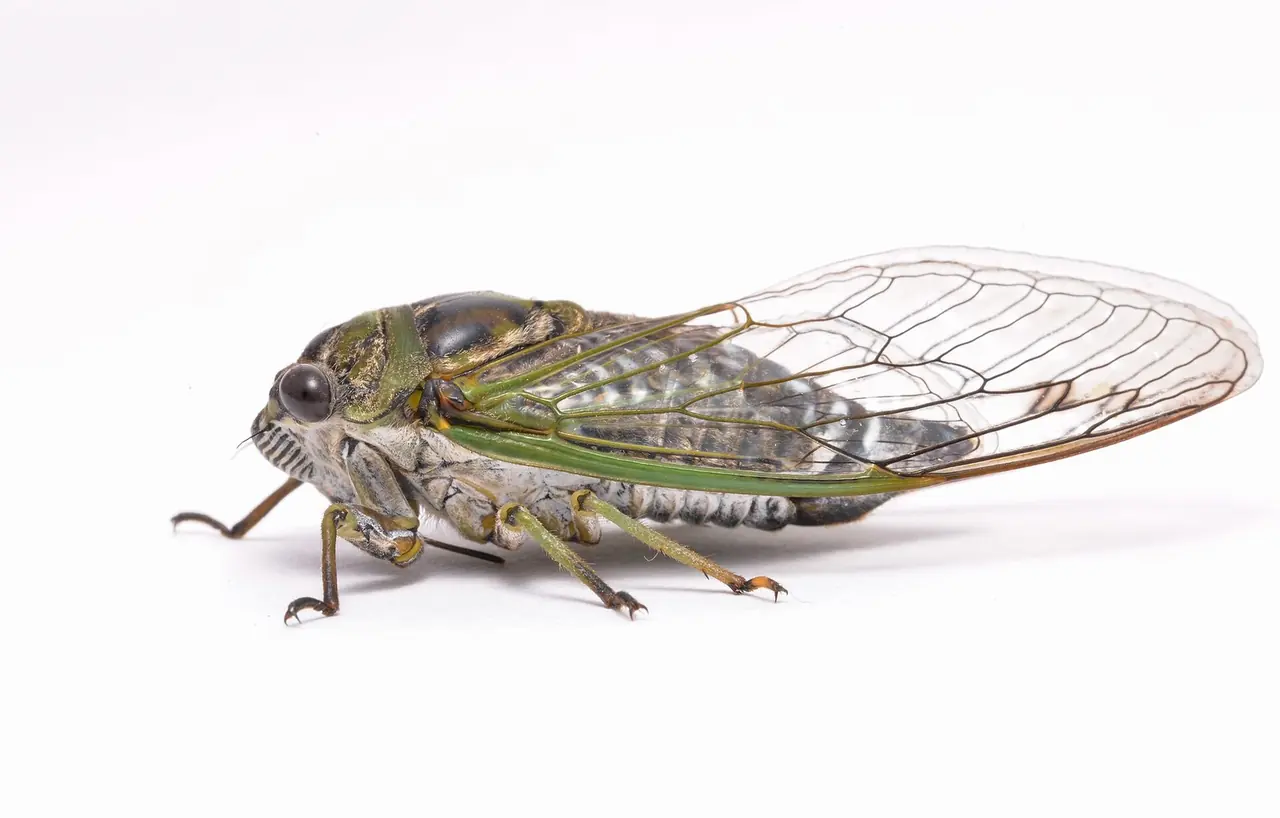
Photo: Will Brown, CC BY 2.0, via Wikimedia Commons
Kansas City Pest Identification
Annual cicadas (Neotibicen spp.) and periodical cicadas (Magicicada spp.)Beneficial / not treatedCicada Identification
The loud buzzing insect that defines a Kansas City summer. Annual cicadas emerge every year; periodical cicadas emerge in massive numbers every 13 or 17 years depending on the brood. Neither is a structural pest.
Need help identifying cicada?
Text a photo for fast pest identification. You'll get a real answer from a local expert — not a call center.
How to Identify It
Large, thick-bodied, with prominent red or black eyes and clear, veined wings held tent-like over the back. Best known for the loud, sustained buzzing call from trees on hot afternoons. Shed exoskeletons ("cicada shells") are commonly found clinging to tree bark and siding.
Size: 25–50 mm
Commonly Confused With
Cicada killer wasps hunt cicadas and are sometimes confused with them, but look entirely different: a large black-and-yellow wasp, not a stout green-brown bug.
Why It Shows Up
They don't come inside or infest structures — they emerge from underground, molt on nearby vertical surfaces (trees, siding, fences), and spend a few weeks in tree canopies before dying.
Where Homeowners Find It
Trees and shrubs throughout summer; shed exoskeletons on bark, siding, and fences; periodical cicada emergences can carpet the ground with thousands of insects for several weeks in specific years.
Seasonal Activity in KC
Annual cicadas mid-summer through early fall every year; periodical broods emerge in specific years for a few weeks in May–June.
Risk Level
None to people or structures. Females can cause minor damage to young tree branches when laying eggs (slitting bark), which is worth monitoring on new plantings during a major periodical emergence.
What You Can Do Yourself
- • Protect young or newly planted trees with fine netting during a major periodical emergence if egg-laying damage is a concern.
- • No treatment is needed or recommended for normal annual cicada activity.
Our Take
We do not treat cicadas — they're not a pest that responds to or needs pesticide treatment.
Common Questions
How do I tell a cicada from something that looks similar?
Cicada killer wasps hunt cicadas and are sometimes confused with them, but look entirely different: a large black-and-yellow wasp, not a stout green-brown bug.
Do I need professional treatment for cicada?
We generally don't treat cicada. We do not treat cicadas — they're not a pest that responds to or needs pesticide treatment.