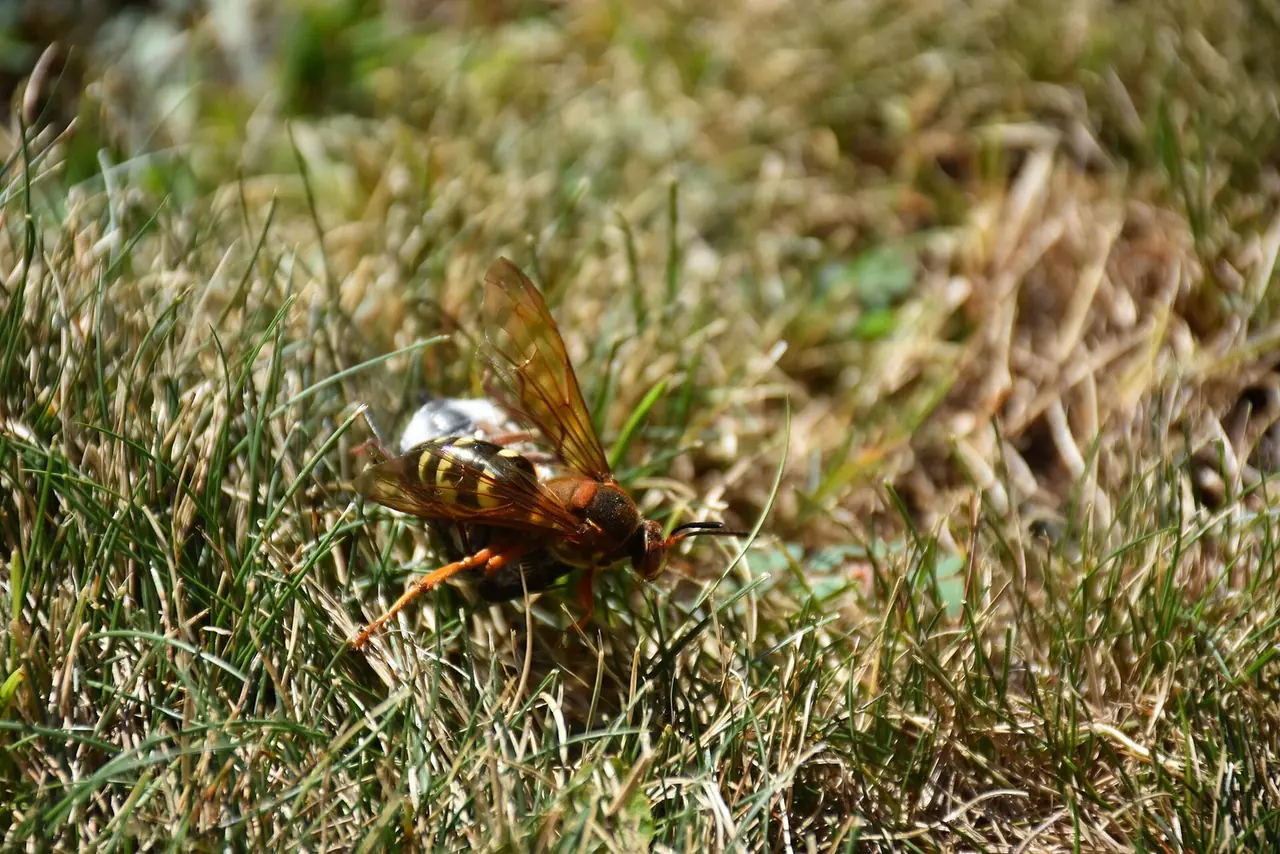
Photo: Dmitry Brant, CC BY-SA 4.0, via Wikimedia Commons
Kansas City Pest Identification
Sphecius speciosusCicada Killer Identification
The enormous digger wasp that excavates burrows in sunny bare soil every July and drags cicadas into them. Alarming because of its size; nearly harmless because it is solitary and has no colony to defend.
Need help identifying cicada killer?
Text a photo for fast pest identification. You'll get a real answer from a local expert — not a call center.
How to Identify It
Up to two inches long, black with yellow bands, rusty-orange wings, and a reddish head. Burrows are half-inch holes with a fan of excavated dirt, usually several in the same sandy, sunny patch. Males patrol and dive-bomb but cannot sting.
Size: 30–50 mm
Commonly Confused With
European hornets (brown-and-yellow, nocturnal, cavity nesters) and, from a distance, a yellowjacket. Cicada killers are far larger and never form a swarm.
Why It Shows Up
They don't. They nest in bare, well-drained soil in full sun: lawn edges, sand under playground equipment, along driveways and patios, in sand traps, and in bare spots on south-facing slopes.
Where Homeowners Find It
Burrow clusters in bare or thin lawn, sandy beds, and along sidewalk edges; adults flying low over the same area and around trees where cicadas are singing.
Seasonal Activity in KC
Mid-June through August, timed to annual cicadas.
Risk Level
Females can sting if handled or stepped on barefoot, but stings are rare. Burrowing can undermine patio pavers and leave dirt piles. Mostly a fear-factor pest.
What You Can Do Yourself
- • Thicken the lawn and mulch bare patches; they need bare soil.
- • Water the area — they avoid wet ground.
- • Wait it out; they are gone by September.
What Professional Treatment Involves
Individual burrow treatment with insecticide dust where activity is heavy near patios, pools, or play areas, plus advice on eliminating the bare ground that attracts them next year.
Serving the Kansas City metro area-wide. Owner-operated with 30+ years of professional pest control experience. See our cicada killer control service →
Common Questions
How do I tell a cicada killer from something that looks similar?
European hornets (brown-and-yellow, nocturnal, cavity nesters) and, from a distance, a yellowjacket. Cicada killers are far larger and never form a swarm.
Do I need professional treatment for cicada killer?
Individual burrow treatment with insecticide dust where activity is heavy near patios, pools, or play areas, plus advice on eliminating the bare ground that attracts them next year.