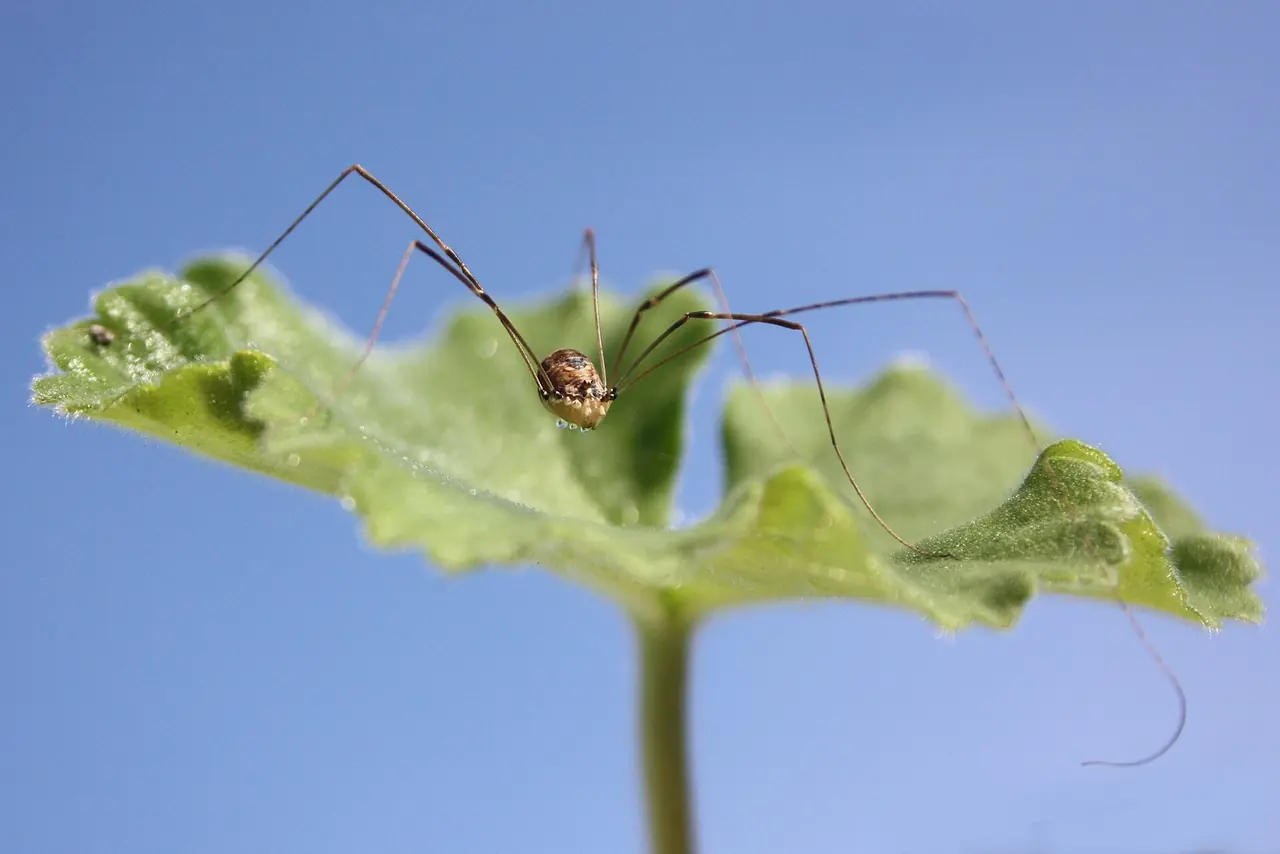
Photo: Charles J. Sharp, CC BY-SA 3.0, via Wikimedia Commons
Kansas City Pest Identification
OpilionesBeneficial / not treatedDaddy Longlegs Identification
Not a spider. Harvestmen are a separate arachnid group with a single oval body, no venom, no silk, and no fangs. They cluster on foundations and under eaves in late summer.
Need help identifying daddy longlegs?
Text a photo for fast pest identification. You'll get a real answer from a local expert — not a call center.
How to Identify It
One fused body segment (a spider has two), eight very long legs, two eyes on a small turret, and no web. Often found in dense clusters that look like a mat of hair on a shaded wall.
Size: Body 3–8 mm; legs to 50 mm
Commonly Confused With
Cellar spiders (which do build webs and have a two-part body) and, at a glance, brown recluse. Harvestmen are harmless.
Why It Shows Up
They wander in from foundations and gardens by accident, especially in fall. They do not live or breed indoors.
Where Homeowners Find It
Shaded exterior walls, under decks and eaves, garden beds, basement window wells, and occasionally a garage floor.
Seasonal Activity in KC
July through October.
Risk Level
None. They cannot bite people and are beneficial scavengers and predators of small pests.
What You Can Do Yourself
- • Brush clusters off the wall with a broom or a hose if they bother you.
- • Seal basement window wells and door gaps to keep the occasional wanderer out.
Our Take
No treatment needed. If you are seeing a lot of them, it is a sign of a damp, insect-rich foundation, which a perimeter service will address for the pests that matter.
Common Questions
How do I tell a daddy longlegs from something that looks similar?
Cellar spiders (which do build webs and have a two-part body) and, at a glance, brown recluse. Harvestmen are harmless.
Do I need professional treatment for daddy longlegs?
We generally don't treat daddy longlegs. No treatment needed. If you are seeing a lot of them, it is a sign of a damp, insect-rich foundation, which a perimeter service will address for the pests that matter.