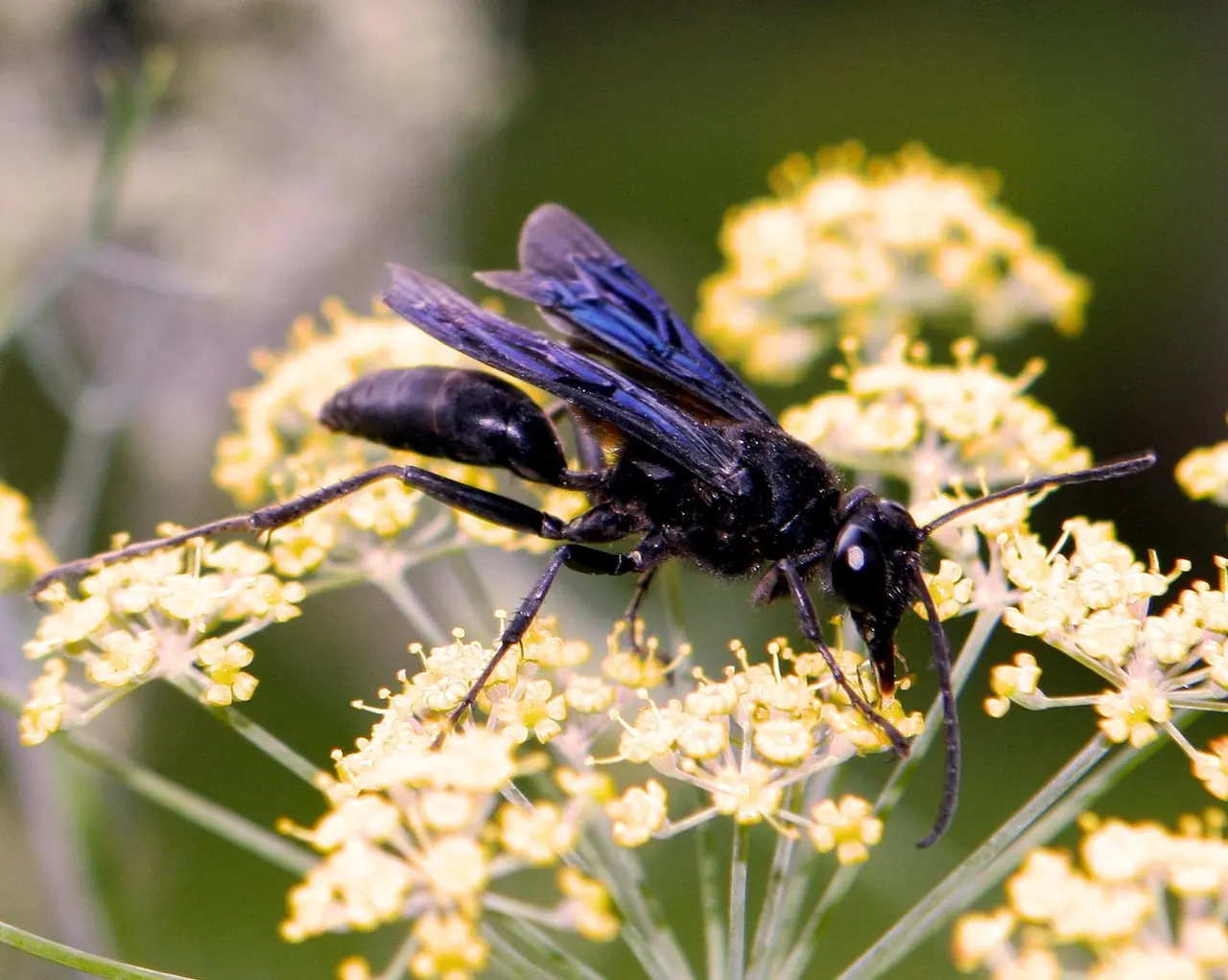
Photo: Hardyplants, Public domain, via Wikimedia Commons
Kansas City Pest Identification
Sphecidae and Crabronidae (various solitary ground-nesting wasps)Digger Wasp Identification
A broad group of solitary, ground-nesting wasps that dig individual burrows in bare or thin turf, often in visible numbers over a lawn in summer. Not aggressive and generally beneficial, but the burrows and hovering males can alarm homeowners.
Need help identifying digger wasp?
Text a photo for fast pest identification. You'll get a real answer from a local expert — not a call center.
How to Identify It
Varies by species, but typically slender-waisted wasps seen hovering low over bare soil or entering small individual burrow holes (unlike the large shared mounds of social ground-nesting species).
Size: 10–25 mm depending on species
Commonly Confused With
Cicada killers (much larger, specific to cicada season) and ground-nesting bees. The key distinguishing feature versus yellowjackets is behavior — digger wasps are solitary and rarely defend the burrow aggressively.
Why It Shows Up
They don't enter structures. They nest in bare, sandy, well-drained soil, often the same conditions that attract cicada killers.
Where Homeowners Find It
Bare or thin lawn patches, sandy garden beds, and along walkways and driveways in full sun.
Seasonal Activity in KC
Summer months.
Risk Level
Low — most species rarely sting unless directly handled, and stings are generally mild.
What You Can Do Yourself
- • Thicken the lawn and reduce bare soil patches; they need open ground to burrow into.
What Professional Treatment Involves
Individual burrow treatment where a heavy concentration is near high-traffic areas like patios or play spaces.
Serving the Kansas City metro area-wide. Owner-operated with 30+ years of professional pest control experience.
Common Questions
How do I tell a digger wasp from something that looks similar?
Cicada killers (much larger, specific to cicada season) and ground-nesting bees. The key distinguishing feature versus yellowjackets is behavior — digger wasps are solitary and rarely defend the burrow aggressively.
Do I need professional treatment for digger wasp?
Individual burrow treatment where a heavy concentration is near high-traffic areas like patios or play spaces.