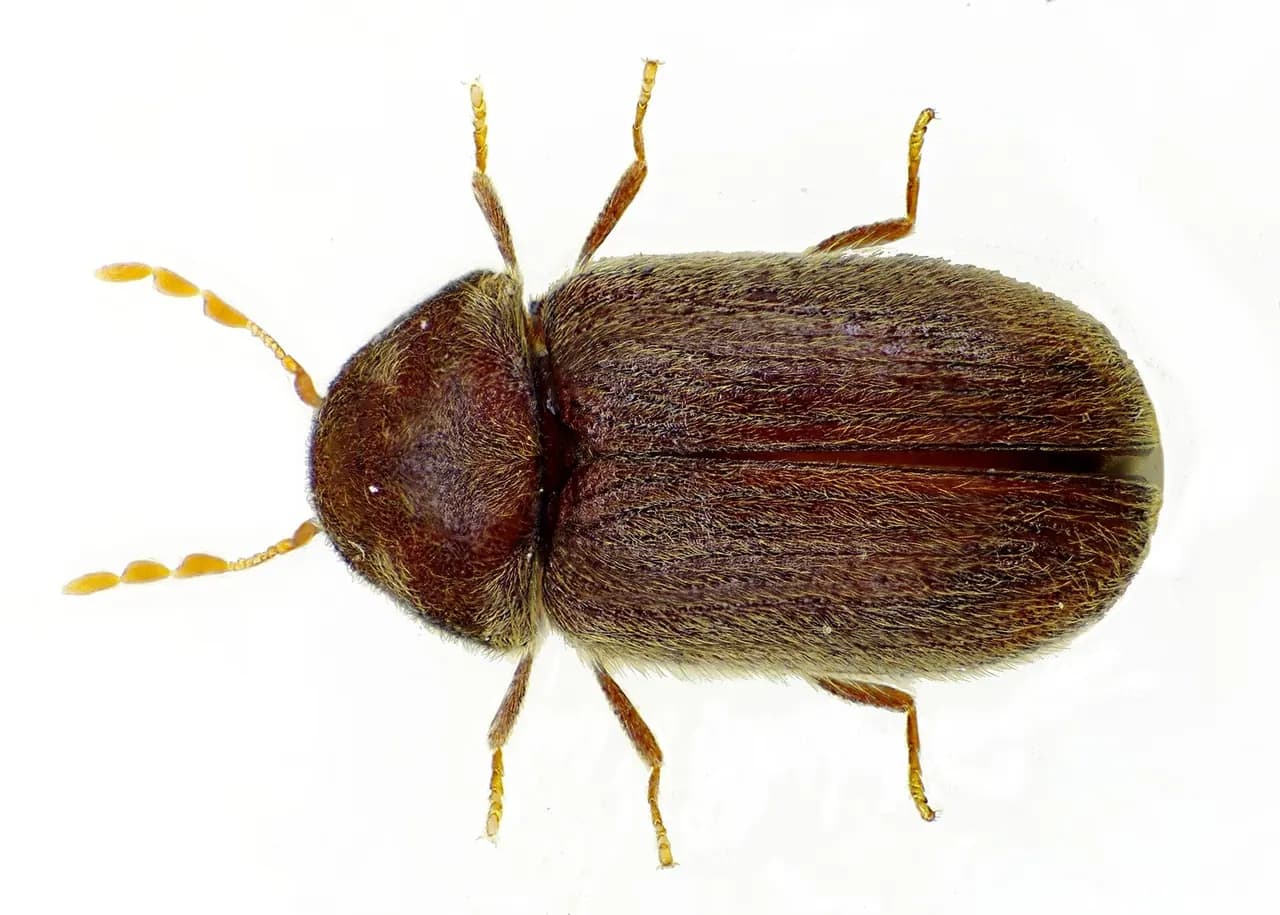
Photo: Siga, CC BY-SA 3.0, via Wikimedia Commons
Kansas City Pest Identification
Stegobium paniceumDrugstore Beetle Identification
A small, oval reddish-brown beetle that infests an unusually wide range of dry stored goods — not just food, but spices, dried herbs, pet food, and even some non-food items like book bindings and dried flowers.
Need help identifying drugstore beetle?
Text a photo for fast pest identification. You'll get a real answer from a local expert — not a call center.
How to Identify It
Small, cylindrical, reddish-brown with fine hairs giving a slightly fuzzy appearance, and grooved wing covers. Flies readily and is often noticed at windows.
Size: 2–3.5 mm
Commonly Confused With
Cigarette beetles (very similar, smooth wing covers instead of grooved — the distinction rarely changes treatment) and grain beetles.
Why It Shows Up
Arrives in an infested package of dry goods — spices are a particularly common and often-overlooked source — and the population builds from there.
Where Homeowners Find It
Dried herbs and spices, pet food, cereal and grain products, dried flower arrangements, and occasionally book bindings and paper products with starch-based glue.
Seasonal Activity in KC
Year-round indoors.
Risk Level
Food and stored-goods contamination; no health or structural risk beyond that.
What You Can Do Yourself
- • Check spice racks and dried goods, not just cereal and flour — spices are commonly overlooked.
- • Discard infested items and clean the shelf thoroughly.
- • Store susceptible dry goods in sealed containers.
What Professional Treatment Involves
Pantry inspection to locate the source (often something the homeowner hasn't considered, like spices or dried decorations), pheromone monitoring, and crack-and-crevice treatment if the population has spread into cabinet voids.
Serving the Kansas City metro area-wide. Owner-operated with 30+ years of professional pest control experience. See our drugstore beetle control service →
Common Questions
How do I tell a drugstore beetle from something that looks similar?
Cigarette beetles (very similar, smooth wing covers instead of grooved — the distinction rarely changes treatment) and grain beetles.
Do I need professional treatment for drugstore beetle?
Pantry inspection to locate the source (often something the homeowner hasn't considered, like spices or dried decorations), pheromone monitoring, and crack-and-crevice treatment if the population has spread into cabinet voids.