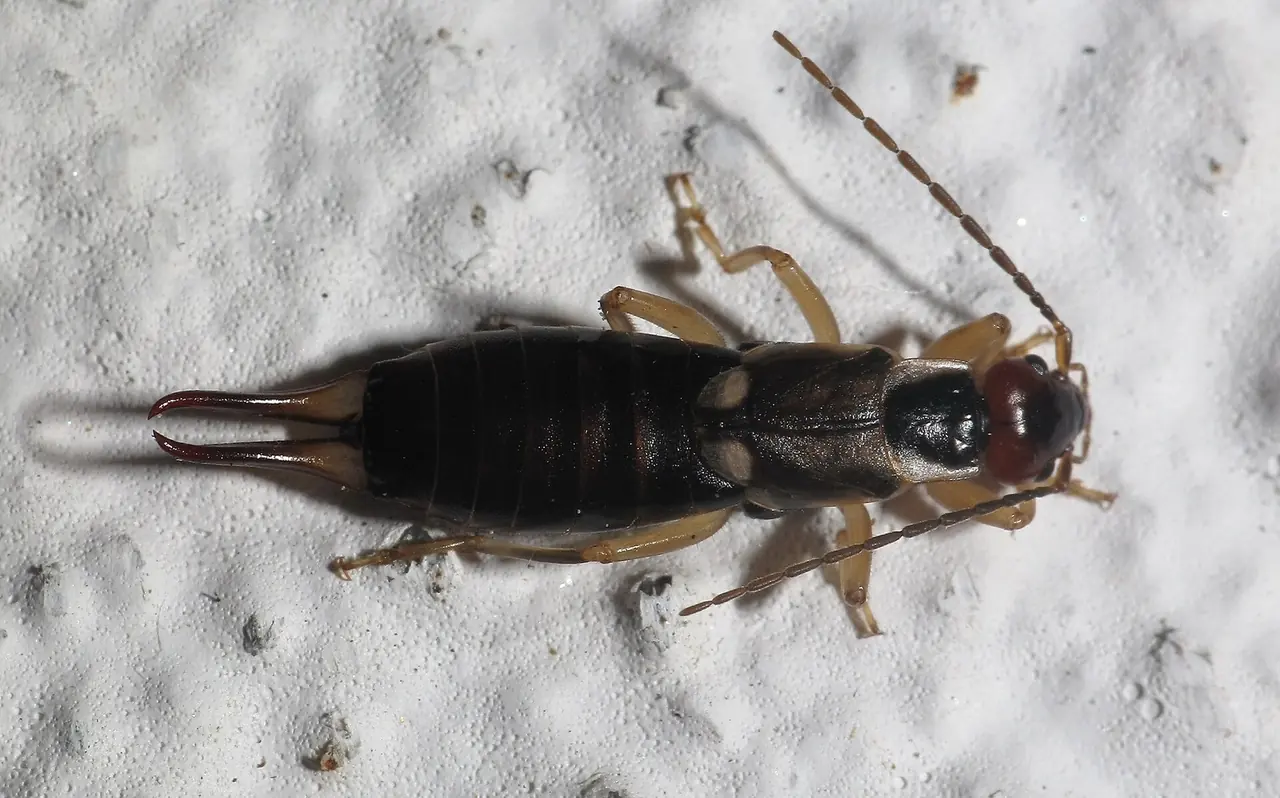
Photo: Luis Miguel Bugallo Sánchez, CC BY-SA 3.0, via Wikimedia Commons
Kansas City Pest Identification
Forficula auricularia (European earwig)Earwig Identification
A dark, fast-moving insect with a pair of visible pincers at the rear, common in mulch beds and under stones, that wanders indoors during wet weather. The pincers look alarming but are harmless to people.
Need help identifying earwig?
Text a photo for fast pest identification. You'll get a real answer from a local expert — not a call center.
How to Identify It
Reddish-brown, elongated body with short wing covers and a distinctive pair of forceps-like pincers at the tip of the abdomen — curved in males, straighter in females.
Size: 12–19 mm
Commonly Confused With
Nothing else in this area has that pincer structure — earwigs are unmistakable once seen.
Why It Shows Up
They live in damp mulch, under stones and boards, and in leaf litter, and move indoors during heavy rain or drought seeking moisture, usually through foundation gaps and door thresholds.
Where Homeowners Find It
Mulch beds, under landscape stones and timbers, basement window wells, and occasionally bathrooms and kitchens after wet weather.
Seasonal Activity in KC
Most active spring and fall; indoor wandering spikes during and after heavy rain.
Risk Level
The pincers can pinch but rarely break skin and cause no real harm. No disease transmission, no structural damage. They can damage tender garden seedlings in large numbers.
What You Can Do Yourself
- • Pull mulch back from the foundation and reduce excess moisture near the house.
- • Seal foundation gaps and install door sweeps.
- • Reduce outdoor lighting near entry points, which attracts the insects they feed on.
What Professional Treatment Involves
Exterior perimeter treatment focused on mulch beds and foundation entry points, especially ahead of wet-weather periods when indoor wandering spikes.
Serving the Kansas City metro area-wide. Owner-operated with 30+ years of professional pest control experience. See our earwig control service →
Common Questions
How do I tell an earwig from something that looks similar?
Nothing else in this area has that pincer structure — earwigs are unmistakable once seen.
Do I need professional treatment for earwig?
Exterior perimeter treatment focused on mulch beds and foundation entry points, especially ahead of wet-weather periods when indoor wandering spikes.