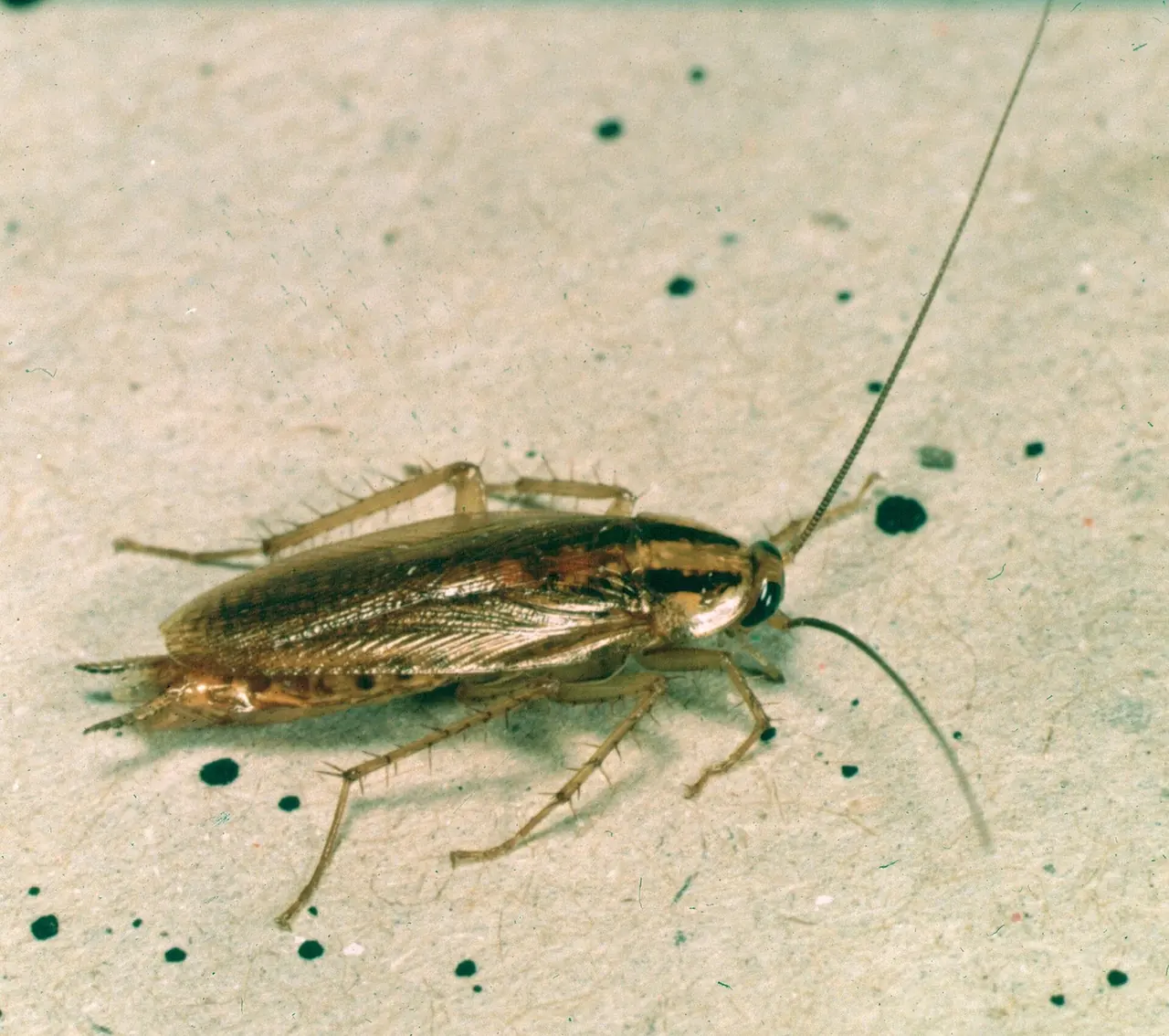
Photo: Clemson University - USDA Cooperative Extension Slide Series, CC BY 3.0 US, via Wikimedia Commons
Kansas City Pest Identification
Blattella germanicaGerman Cockroach Identification
The small, fast-breeding kitchen roach behind almost every serious indoor infestation in Kansas City apartments, restaurants, and homes. It lives only indoors and it does not go away on its own.
Need help identifying german cockroach?
Text a photo for fast pest identification. You'll get a real answer from a local expert — not a call center.
How to Identify It
Light brown with two dark parallel stripes running down the shield behind the head. Adults have wings but rarely fly. Nymphs are tiny, dark, and wingless with a pale stripe. Egg cases (oothecae) are tan, ridged, about 8 mm long, and the female carries hers until it is almost ready to hatch.
Size: 13–16 mm
Commonly Confused With
Young American cockroaches (much larger as adults, reddish, from drains and basements). Getting this right changes the treatment completely.
Why It Shows Up
They arrive in cardboard boxes, grocery bags, used appliances, and from an adjoining unit, then settle wherever there is warmth, water, and food residue — the motor compartment of the fridge, under the dishwasher, behind the stove.
Where Homeowners Find It
Kitchen and bathroom: inside cabinet hinges and corners, under sinks, behind the refrigerator and stove, in the dishwasher door, inside the microwave clock, and in the gap between counter and wall. Droppings look like coarse black pepper.
Seasonal Activity in KC
Year-round. Indoor temperatures keep them breeding continuously; a single female can produce 30,000 descendants in a year.
Risk Level
Real health risk. German roaches spread bacteria across food surfaces and their droppings and shed skins are a leading trigger of childhood asthma. Heavy infestations produce a distinct musty odor.
What You Can Do Yourself
- • Deep-clean grease and food residue; empty and wipe cabinets. Sanitation makes any bait work better.
- • Use gel bait in small dots inside cabinet corners and hinges — not sprays, which repel roaches away from the bait.
- • Fix drips under sinks and dry the sink at night; water is the limiting resource.
What Professional Treatment Involves
A German roach cleanout: inspection with flushing agent to find every harborage, then gel baits and insect growth regulator (IGR) placed in the cracks and voids they use, dust in wall voids and behind appliances, and monitors to measure progress. Follow-up in 2–3 weeks is essential because egg cases keep hatching after the first visit.
The All Star difference: We do not spray baseboards for German roaches — that scatters them and makes baiting fail. The program is bait-and-IGR based, placed by the person who did the inspection, with a scheduled follow-up built into the price.
Serving the Kansas City metro area-wide. Owner-operated with 30+ years of professional pest control experience. See our german cockroach control service →
Common Questions
How do I tell a german cockroach from something that looks similar?
Young American cockroaches (much larger as adults, reddish, from drains and basements). Getting this right changes the treatment completely.
Do I need professional treatment for german cockroach?
A German roach cleanout: inspection with flushing agent to find every harborage, then gel baits and insect growth regulator (IGR) placed in the cracks and voids they use, dust in wall voids and behind appliances, and monitors to measure progress. Follow-up in 2–3 weeks is essential because egg cases keep hatching after the first visit.