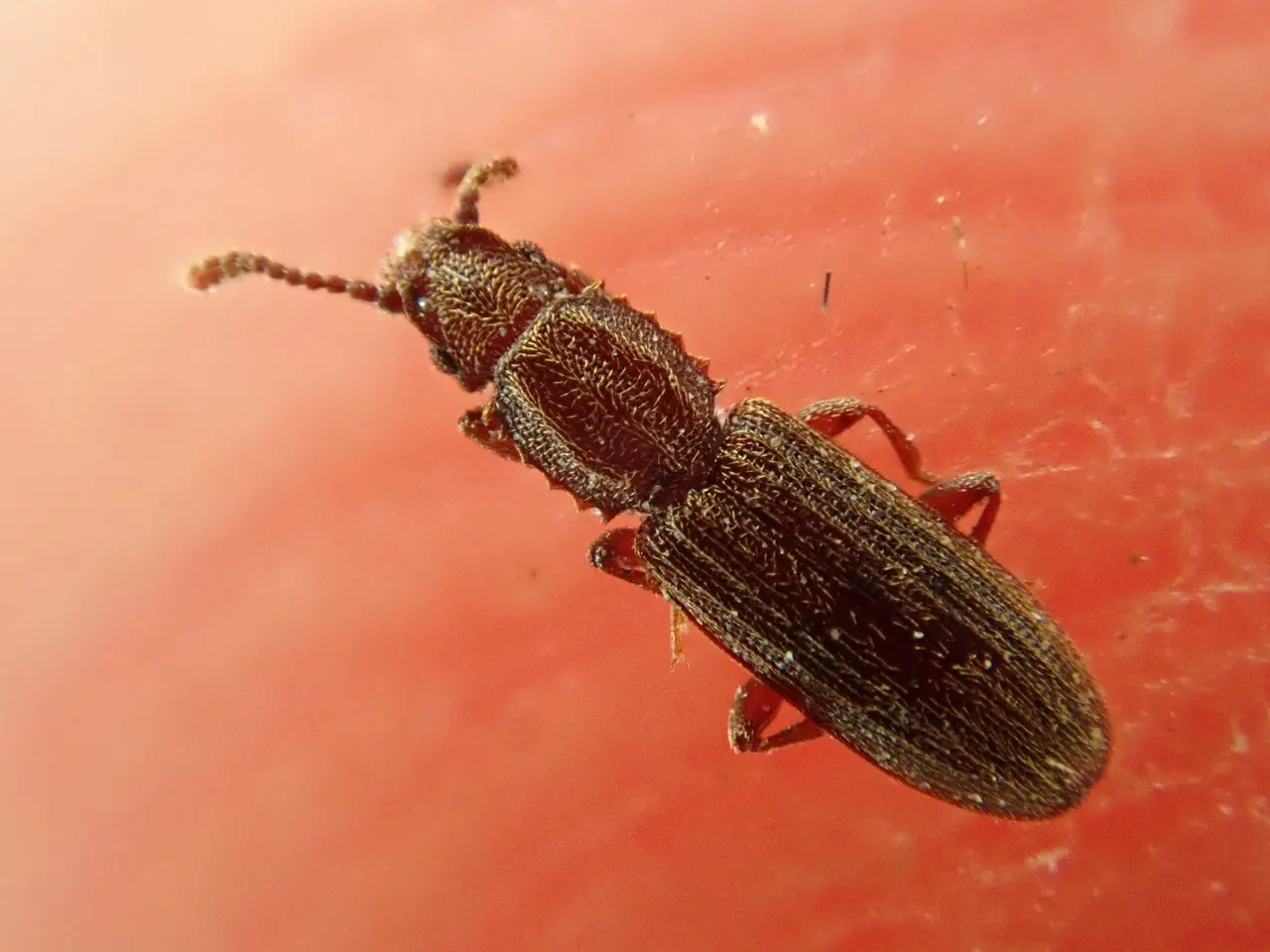
Photo: Karel Schoonvaere, CC0, via Wikimedia Commons
Kansas City Pest Identification
Oryzaephilus surinamensis (sawtoothed grain beetle) and related speciesGrain Beetle Identification
A slender, flattened beetle common in stored grains, cereal, and dried fruit, distinguished by saw-like projections along the sides of its thorax.
Need help identifying grain beetle?
Text a photo for fast pest identification. You'll get a real answer from a local expert — not a call center.
How to Identify It
Narrow, flattened, reddish-brown body with six saw-tooth-like projections visible along each side of the thorax under magnification. Does not fly. Small enough to squeeze through tiny gaps in packaging.
Size: 2.5–3.5 mm
Commonly Confused With
Flour beetles (more oval, no saw-toothed thorax) and drugstore beetles (more cylindrical, hairy).
Why It Shows Up
Arrives already present in a package of grain, cereal, dried fruit, or pasta and multiplies from there — able to penetrate cardboard and thin plastic packaging.
Where Homeowners Find It
Cereal, flour, oats, rice, pasta, dried fruit, birdseed, and pet food.
Seasonal Activity in KC
Year-round indoors.
Risk Level
Food contamination only.
What You Can Do Yourself
- • Inspect all dry goods in the pantry, not just the package where they were first noticed.
- • Discard infested items and vacuum shelves and cracks thoroughly.
- • Transition to sealed hard containers for grain and cereal storage.
What Professional Treatment Involves
Full pantry inspection, monitoring, and crack-and-crevice treatment where the population has spread beyond the original package.
Serving the Kansas City metro area-wide. Owner-operated with 30+ years of professional pest control experience. See our grain beetle control service →
Common Questions
How do I tell a grain beetle from something that looks similar?
Flour beetles (more oval, no saw-toothed thorax) and drugstore beetles (more cylindrical, hairy).
Do I need professional treatment for grain beetle?
Full pantry inspection, monitoring, and crack-and-crevice treatment where the population has spread beyond the original package.