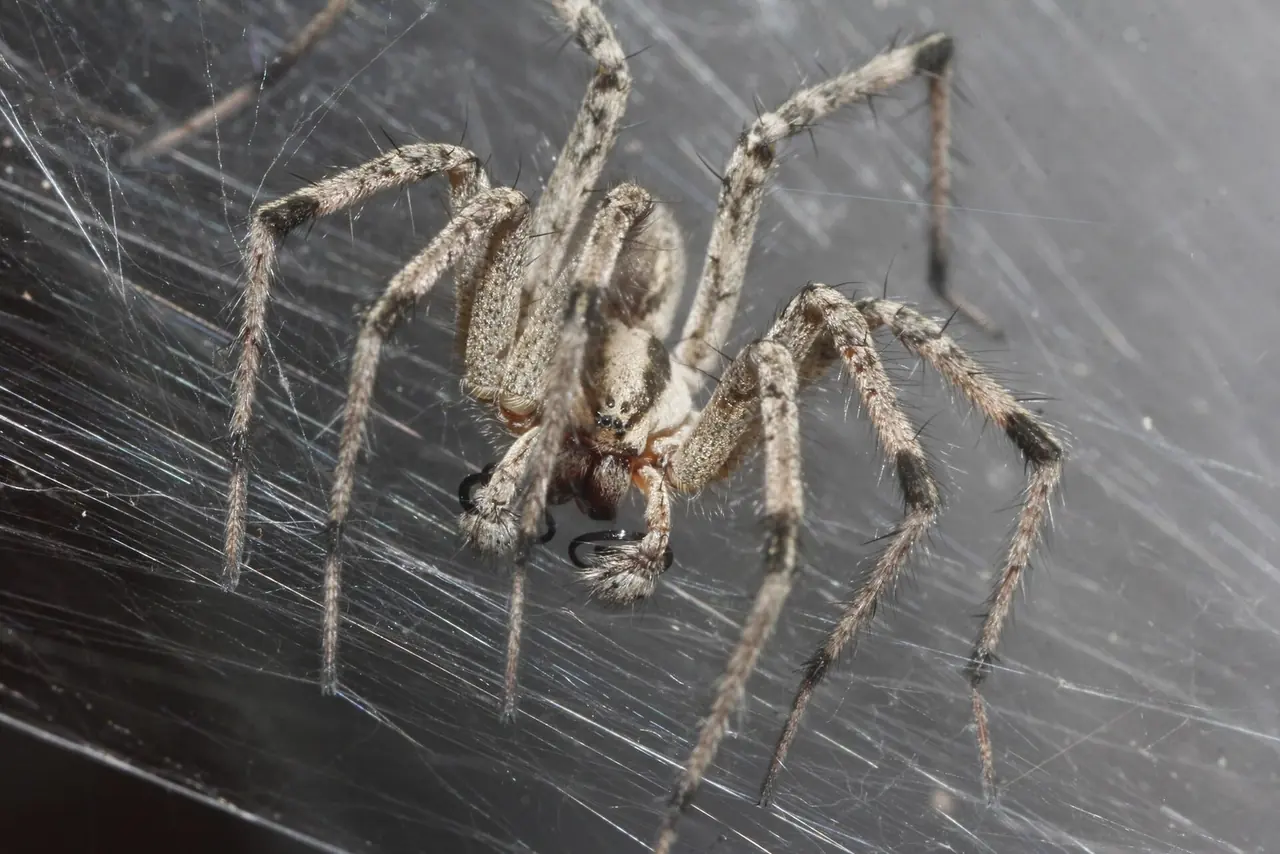
Photo: Juan Cruzado Cortés, CC BY-SA 4.0, via Wikimedia Commons
Kansas City Pest Identification
Agelenopsis spp.Grass Spider Identification
The spider behind the flat sheet webs with a funnel at one end that cover Kansas City lawns and shrubs on dewy September mornings. Harmless, and frequently mistaken for brown recluse when one wanders indoors.
Need help identifying grass spider?
Text a photo for fast pest identification. You'll get a real answer from a local expert — not a call center.
How to Identify It
Brown with two dark stripes on the head, a striped abdomen, banded legs, and long spinnerets that stick out behind. Sits at the mouth of a funnel-shaped retreat in a sheet web and darts out at prey.
Size: Body 10–20 mm
Commonly Confused With
Brown recluse (grass spiders have stripes, banding, and a web; recluses have none) and wolf spiders (no web).
Why It Shows Up
Cool fall nights push males indoors looking for mates. They do not build indoor webs and usually die within days.
Where Homeowners Find It
Lawns, groundcover, shrubs, window wells, along the foundation, and inside along basement walls and garage floors in fall.
Seasonal Activity in KC
Webs most visible August through October; indoor sightings peak in September and October.
Risk Level
None significant. Bites are very rare and minor.
What You Can Do Yourself
- • Door sweeps and window well covers stop nearly all indoor visits.
- • Trim groundcover back from the foundation.
What Professional Treatment Involves
Exterior perimeter treatment in late summer reduces the number that reach the house. Interior treatment is rarely warranted for this species.
Serving the Kansas City metro area-wide. Owner-operated with 30+ years of professional pest control experience. See our grass spider control service →
Common Questions
How do I tell a grass spider from something that looks similar?
Brown recluse (grass spiders have stripes, banding, and a web; recluses have none) and wolf spiders (no web).
Do I need professional treatment for grass spider?
Exterior perimeter treatment in late summer reduces the number that reach the house. Interior treatment is rarely warranted for this species.