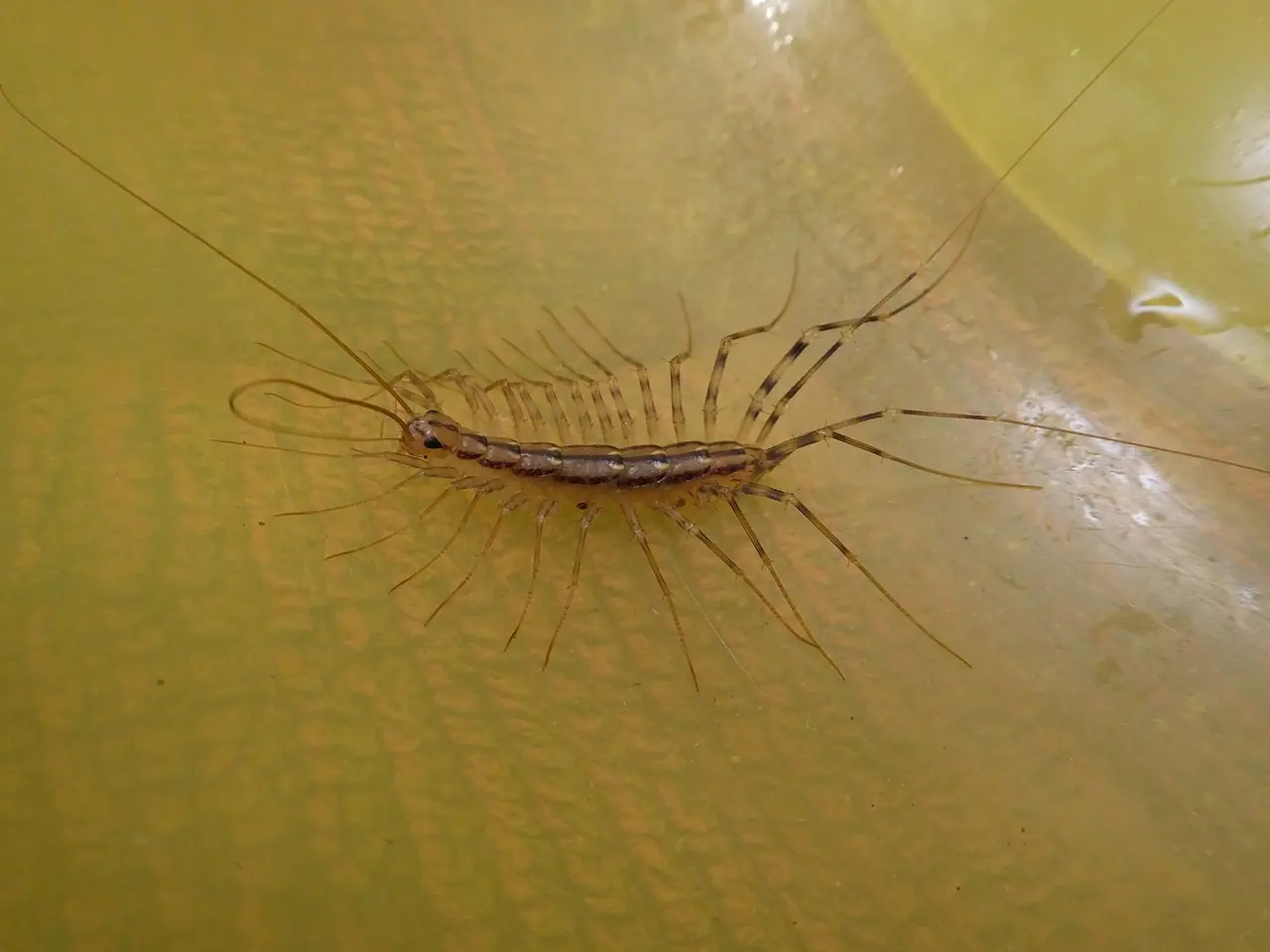
Photo: Syrio, CC BY-SA 4.0, via Wikimedia Commons
Kansas City Pest Identification
Scutigera coleoptrataHouse Centipede Identification
The startlingly fast, long-legged creature that darts across a bathroom floor and disappears down a drain. Unsettling to see, but a predator of other household pests, not a threat itself.
Need help identifying house centipede?
Text a photo for fast pest identification. You'll get a real answer from a local expert — not a call center.
How to Identify It
Grayish-yellow with dark stripes, a flattened segmented body, and 15 pairs of extremely long legs that make it look far larger than its actual body size. Moves in fast, erratic bursts.
Size: 25–38 mm (body); legs add significant length
Commonly Confused With
Millipedes (slow, many short legs, no speed) and other true centipedes (fewer legs, less leggy appearance).
Why It Shows Up
They hunt other small insects and spiders and are drawn indoors by humidity and prey availability — a house centipede sighting often means there's another insect problem it's feeding on.
Where Homeowners Find It
Damp bathrooms, basements, closets, and crawlspaces — anywhere humid with insect activity to hunt.
Seasonal Activity in KC
Year-round in humid indoor spots, more commonly noticed in summer.
Risk Level
They can bite if handled, comparable to a mild bee sting, but almost never do. They actually reduce populations of other pests.
What You Can Do Yourself
- • Reduce humidity with a dehumidifier or bathroom fan.
- • Address the underlying insect population it's hunting — silverfish, small flies, spiders.
What Professional Treatment Involves
Rarely treated directly; addressing moisture and the prey insects it depends on resolves centipede sightings as a side effect of a broader perimeter or interior program.
Serving the Kansas City metro area-wide. Owner-operated with 30+ years of professional pest control experience. See our house centipede control service →
Common Questions
How do I tell a house centipede from something that looks similar?
Millipedes (slow, many short legs, no speed) and other true centipedes (fewer legs, less leggy appearance).
Do I need professional treatment for house centipede?
Rarely treated directly; addressing moisture and the prey insects it depends on resolves centipede sightings as a side effect of a broader perimeter or interior program.