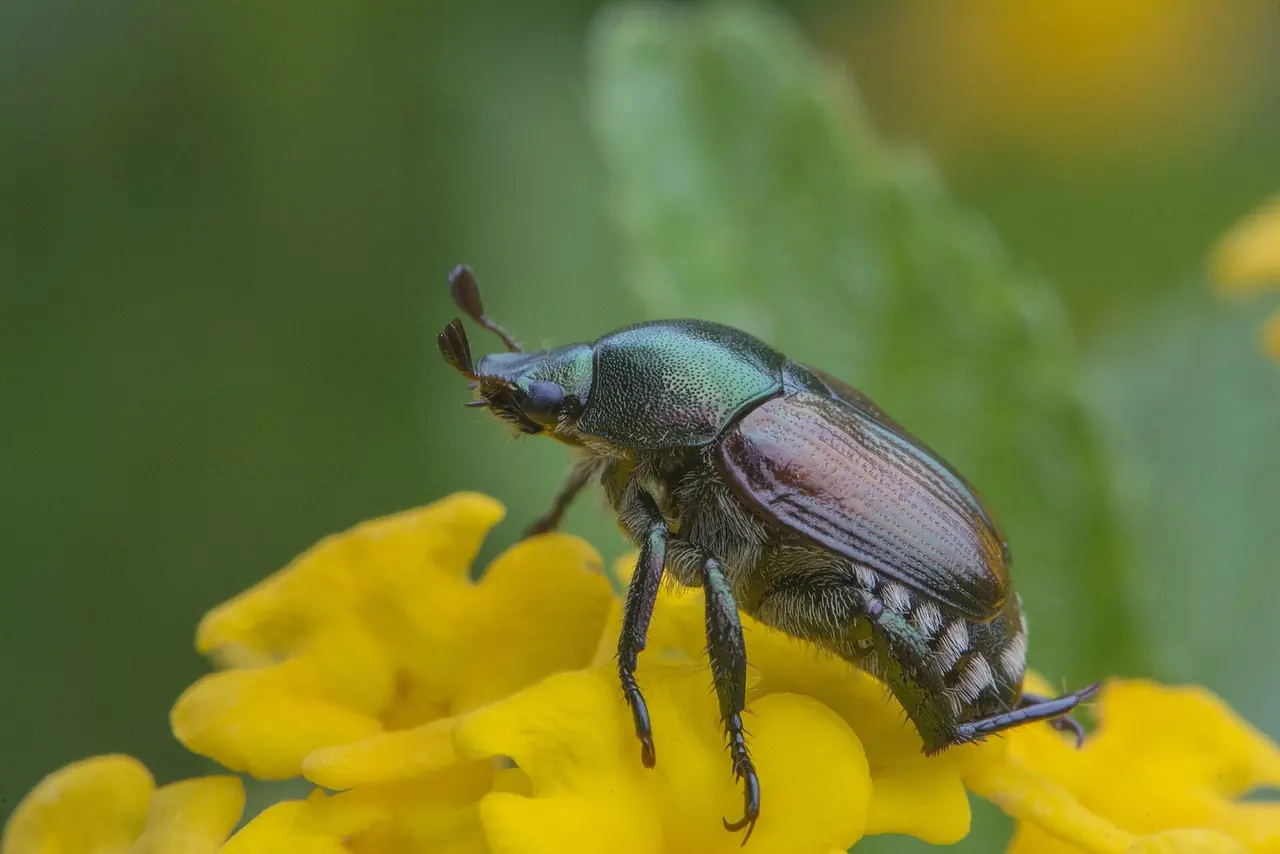
Photo: Kmtnewsman0, CC BY-SA 4.0, via Wikimedia Commons
Kansas City Pest Identification
Popillia japonicaJapanese Beetle Identification
The metallic green-and-copper beetle that skeletonizes rose bushes, grapevines, and linden trees every July. A lawn and garden pest, not a home-invader — its larvae (white grubs) feed on turf roots.
Need help identifying japanese beetle?
Text a photo for fast pest identification. You'll get a real answer from a local expert — not a call center.
How to Identify It
Iridescent metallic green head and thorax with copper-brown wing covers, and small tufts of white hair along the sides of the abdomen. Feeds in clusters, leaving leaves skeletonized down to the veins.
Size: 8–11 mm
Commonly Confused With
June bugs (larger, uniform brown, no metallic sheen) and other scarab beetles.
Why It Shows Up
They rarely enter homes; occasionally a few wander in through open doors while feeding heavily nearby, but this is not a structural pest.
Where Homeowners Find It
Roses, grapevines, linden and crabapple trees, and raspberry canes in full sun. Grubs live in turf, feeding on grass roots.
Seasonal Activity in KC
Adults active late June through August; grubs develop in lawns through fall and overwinter.
Risk Level
Garden and landscape damage to ornamentals and fruit, plus brown patches in turf where grubs feed on roots.
What You Can Do Yourself
- • Hand-pick beetles into soapy water in early morning when they're sluggish.
- • Avoid beetle-bag traps near the plants you're protecting — they attract more beetles to the area than they catch.
What Professional Treatment Involves
Controlling the grub stage in late summer does more long-term good than treating adult beetles directly.
Serving the Kansas City metro area-wide. Owner-operated with 30+ years of professional pest control experience.
Common Questions
How do I tell a japanese beetle from something that looks similar?
June bugs (larger, uniform brown, no metallic sheen) and other scarab beetles.
Do I need professional treatment for japanese beetle?
Controlling the grub stage in late summer does more long-term good than treating adult beetles directly.