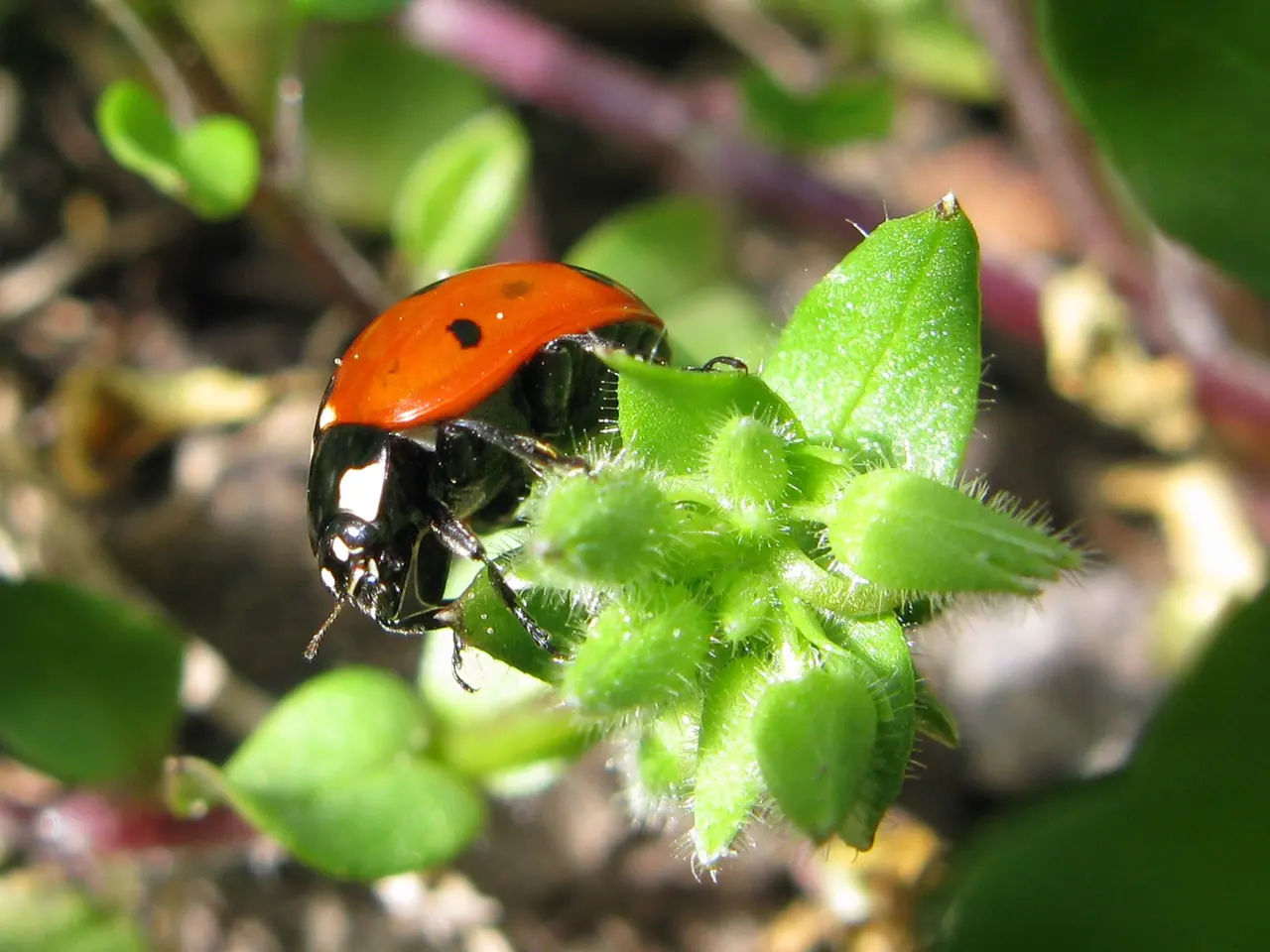
Photo: Zsolt BARNA (Kabóca), CC BY-SA 3.0, via Wikimedia Commons
Kansas City Pest Identification
Hippodamia convergens (convergent lady beetle) and related native speciesBeneficial / not treatedLady Beetle (Ladybug) Identification
The classic red, black-spotted beetle beneficial to gardens for eating aphids. Native ladybugs don't invade homes in large numbers the way the Asian lady beetle does — that is the Asian lady beetle, the fall home-invader version.
Need help identifying lady beetle (ladybug)?
Text a photo for fast pest identification. You'll get a real answer from a local expert — not a call center.
How to Identify It
Rounded, domed body, typically bright red or orange with black spots (spot count and pattern vary by species), black head, and short antennae.
Size: 5–8 mm
Commonly Confused With
Asian lady beetle (more variable coloring, from orange to red, a black "M" or "W" on the white area behind the head, and the species responsible for large fall indoor swarms).
Why It Shows Up
Native ladybug species rarely invade homes in numbers; occasional individuals wander in but don't seek overwintering sites indoors the way Asian lady beetles do.
Where Homeowners Find It
Garden beds and plants with aphid activity, where they're actively hunting.
Seasonal Activity in KC
Spring through fall.
Risk Level
None. Entirely beneficial — a single ladybug can eat thousands of aphids in its lifetime.
What You Can Do Yourself
- • No action needed — they're helping your garden.
Our Take
We do not treat native ladybugs.
Common Questions
How do I tell a lady beetle (ladybug) from something that looks similar?
Asian lady beetle (more variable coloring, from orange to red, a black "M" or "W" on the white area behind the head, and the species responsible for large fall indoor swarms).
Do I need professional treatment for lady beetle (ladybug)?
We generally don't treat lady beetle (ladybug). We do not treat native ladybugs.