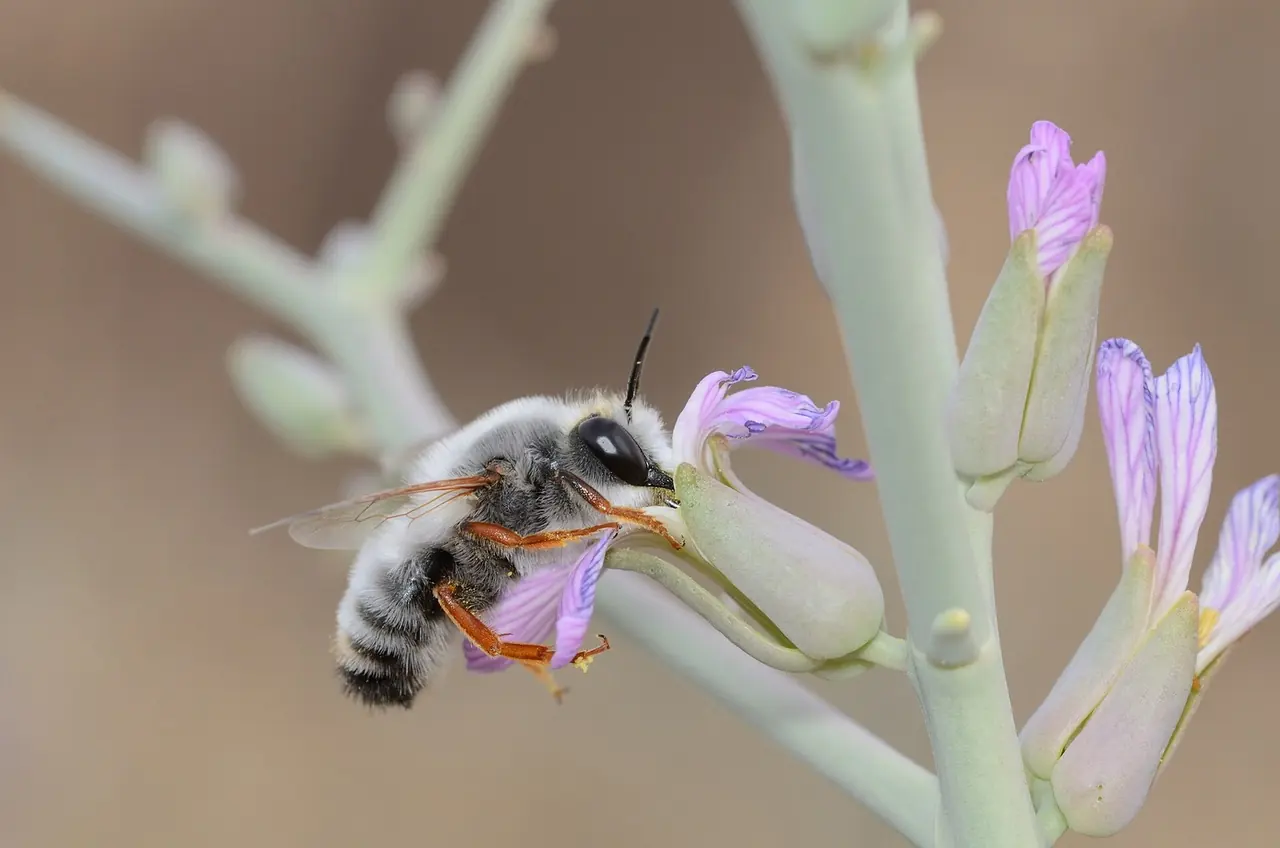
Photo: Gideon Pisanty (Gidip) גדעון פיזנטי, CC BY 3.0, via Wikimedia Commons
Kansas City Pest Identification
Megachile spp.Beneficial / not treatedLeafcutter Bee Identification
The bee responsible for the neat half-circle notches cut from rose and redbud leaves. Solitary, gentle, and a top-tier pollinator of alfalfa and garden vegetables.
Need help identifying leafcutter bee?
Text a photo for fast pest identification. You'll get a real answer from a local expert — not a call center.
How to Identify It
Dark, moderately hairy bee that carries pollen on the underside of the abdomen (yellow belly) rather than on its legs. Nests in hollow stems and cavities lined with cut leaf pieces.
Size: 7–18 mm
Commonly Confused With
Mason bees (metallic, mud caps) and small honey bees.
Why It Shows Up
Cavities the diameter of a pencil: rotting wood, hollow stems, bee houses, gaps in stacked lumber, and occasionally unused hose ends or patio-umbrella tubes.
Where Homeowners Find It
Around roses, redbud, lilac, and bougainvillea with notched leaves; in bee houses and woodpiles.
Seasonal Activity in KC
June through August.
Risk Level
None. Leaf cutting is cosmetic and does not harm the plant.
What You Can Do Yourself
- • Nothing needed. Skip insecticides on notched plants; the damage is done by a beneficial insect.
Our Take
No treatment.
Common Questions
How do I tell a leafcutter bee from something that looks similar?
Mason bees (metallic, mud caps) and small honey bees.
Do I need professional treatment for leafcutter bee?
We generally don't treat leafcutter bee. No treatment.