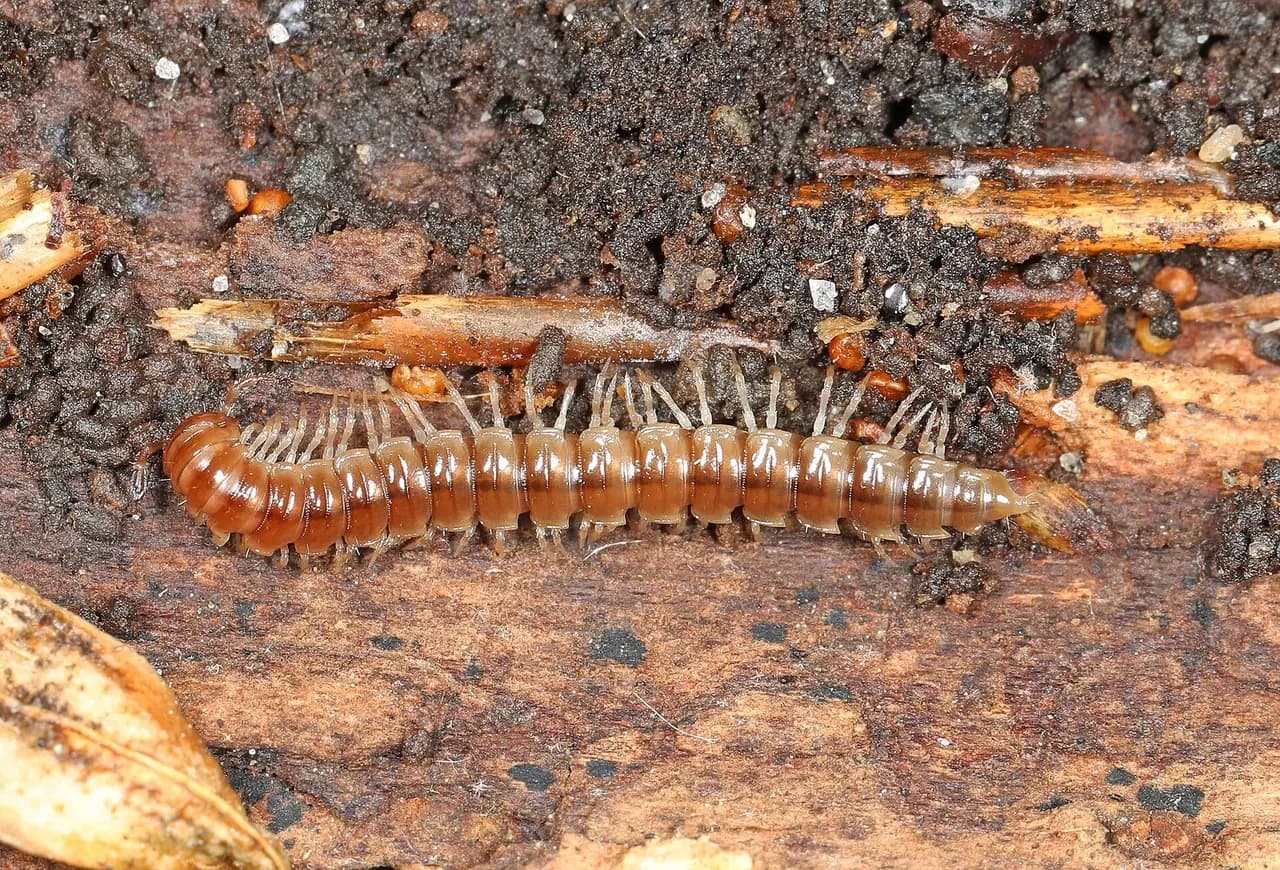
Photo: Judy Gallagher, CC BY 2.0, via Wikimedia Commons
Kansas City Pest Identification
Class Diplopoda (various species)Millipede Identification
A slow-moving, many-legged invader that shows up in large numbers after heavy rain, especially around new construction and homes with a lot of mulch or leaf litter. Harmless, but overwhelming in numbers some years.
Need help identifying millipede?
Text a photo for fast pest identification. You'll get a real answer from a local expert — not a call center.
How to Identify It
Cylindrical, hard-shelled, dark brown to black body with two pairs of legs per segment (versus one pair for centipedes), moving slowly and curling into a tight coil when disturbed.
Size: 25–50 mm
Commonly Confused With
House centipedes (fast-moving, long legs, flattened body, one pair of legs per segment) and wireworms.
Why It Shows Up
They live in moist organic debris — mulch, leaf litter, compost — and migrate toward foundations in large numbers after heavy rain saturates their usual habitat, entering through basement window wells and foundation gaps.
Where Homeowners Find It
Mulch beds, under leaf litter and stones, basement window wells, garage floors, and crawlspace entrances — especially common the first year or two after a new home is built on cleared, organic-rich soil.
Seasonal Activity in KC
Migrations spike after heavy spring and fall rains, particularly noticeable around new construction.
Risk Level
No bite of concern (some can secrete a mild irritant if handled), no property damage. Purely a numbers-and-nuisance issue.
What You Can Do Yourself
- • Rake back mulch and leaf litter from the foundation and let the soil surface dry.
- • Seal basement window wells and foundation gaps.
- • Sweep up and discard rather than crush — they can release a mildly irritating odor.
What Professional Treatment Involves
Exterior perimeter treatment focused on mulch beds and foundation entry points, timed ahead of expected wet-weather migrations.
Serving the Kansas City metro area-wide. Owner-operated with 30+ years of professional pest control experience. See our millipede control service →
Common Questions
How do I tell a millipede from something that looks similar?
House centipedes (fast-moving, long legs, flattened body, one pair of legs per segment) and wireworms.
Do I need professional treatment for millipede?
Exterior perimeter treatment focused on mulch beds and foundation entry points, timed ahead of expected wet-weather migrations.