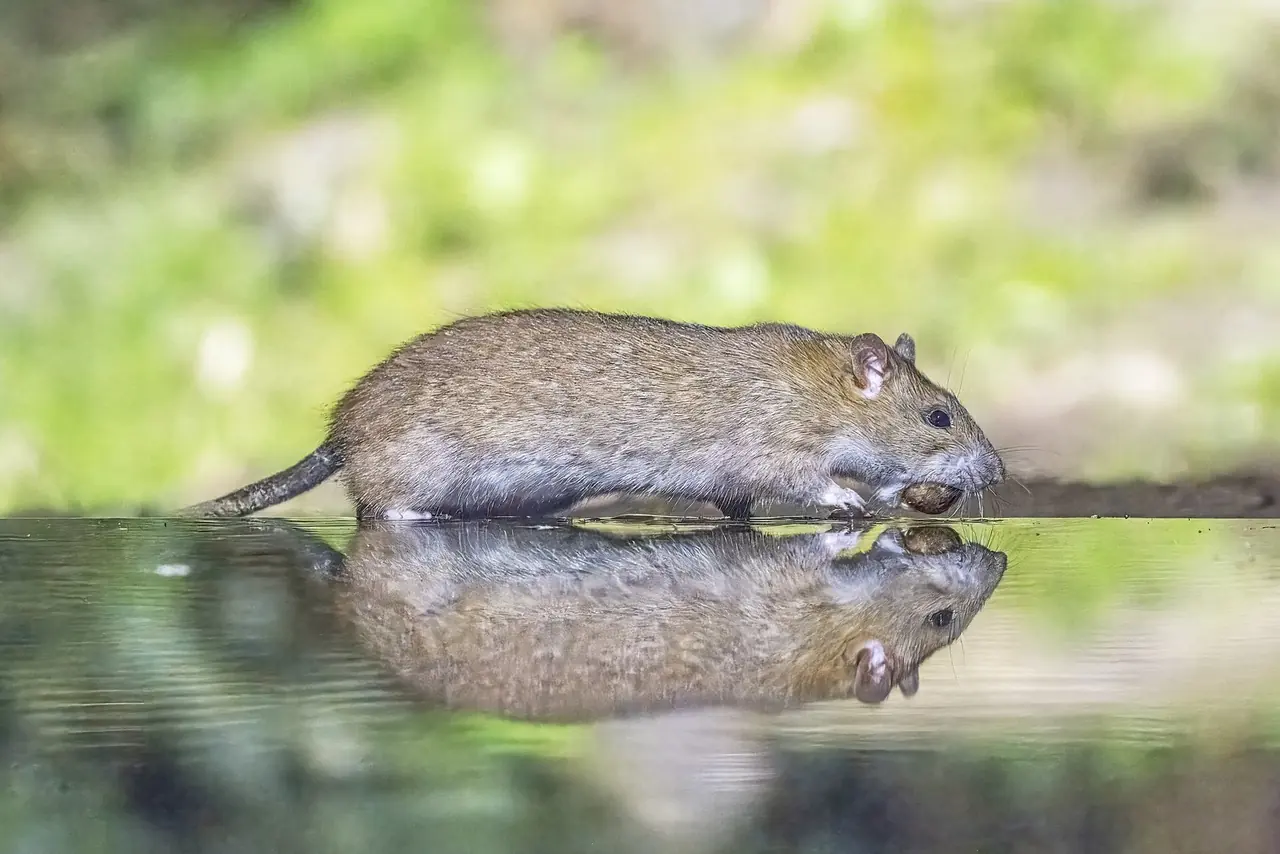
Photo: Charles J. Sharp, CC BY-SA 4.0, via Wikimedia Commons
Kansas City Pest Identification
Rattus norvegicusNorway Rat Identification
The common brown rat that burrows along foundations, under sheds, and in landscaping, and shows up around dumpsters and drainage. Larger and more destructive than a mouse, and a real problem for both homes and commercial properties.
Need help identifying norway rat?
Text a photo for fast pest identification. You'll get a real answer from a local expert — not a call center.
How to Identify It
Blunt nose, small ears that don't reach the eyes when folded forward, a tail shorter than the body, and shaggy brown-gray fur. Burrows are 3-inch holes with smoothed, packed dirt around the entrance. Droppings are capsule-shaped, up to ¾" long.
Size: Body 18–25 cm plus tail
Commonly Confused With
Large house mice — a young Norway rat has a bigger head and oversized feet for its body. Roof rats, the climbing rat of the southern states, are not established in the Kansas City area; the rats found here are Norway rats.
Why It Shows Up
Ground-level access: foundation gaps, gaps under sheds and decks, sewer line defects, and gaps around dumpster pads. They burrow along foundations for shelter and follow food sources — bird feeders, pet food, and garbage.
Where Homeowners Find It
Burrows along foundations, under sheds, in dense landscaping and ivy, near dumpsters and compost, and in crawlspaces. Runways (worn paths through grass) and grease marks along walls indicate an established population.
Seasonal Activity in KC
Active year-round; burrowing and outdoor activity peak in warmer months, indoor pressure increases in fall.
Risk Level
Property damage from burrowing and gnawing, contamination of stored food and surfaces, and disease transmission (Leptospirosis via urine, among others). A serious concern for restaurants and multi-family properties.
What You Can Do Yourself
- • Remove bird feeders or use a squirrel/rat-proof feeder, and clean up spilled seed.
- • Store trash in cans with tight lids, not bags.
- • Eliminate harborage: thick ivy, brush piles, and pallets stacked against the building.
What Professional Treatment Involves
Exterior bait station placement and monitoring (the standard commercial and residential approach for exterior populations), burrow treatment, exclusion at foundation and utility gaps, and sanitation recommendations. Commercial accounts get a service log documenting station checks.
Serving the Kansas City metro area-wide. Owner-operated with 30+ years of professional pest control experience. See our norway rat control service →
Common Questions
How do I tell a norway rat from something that looks similar?
Large house mice — a young Norway rat has a bigger head and oversized feet for its body. Roof rats, the climbing rat of the southern states, are not established in the Kansas City area; the rats found here are Norway rats.
Do I need professional treatment for norway rat?
Exterior bait station placement and monitoring (the standard commercial and residential approach for exterior populations), burrow treatment, exclusion at foundation and utility gaps, and sanitation recommendations. Commercial accounts get a service log documenting station checks.