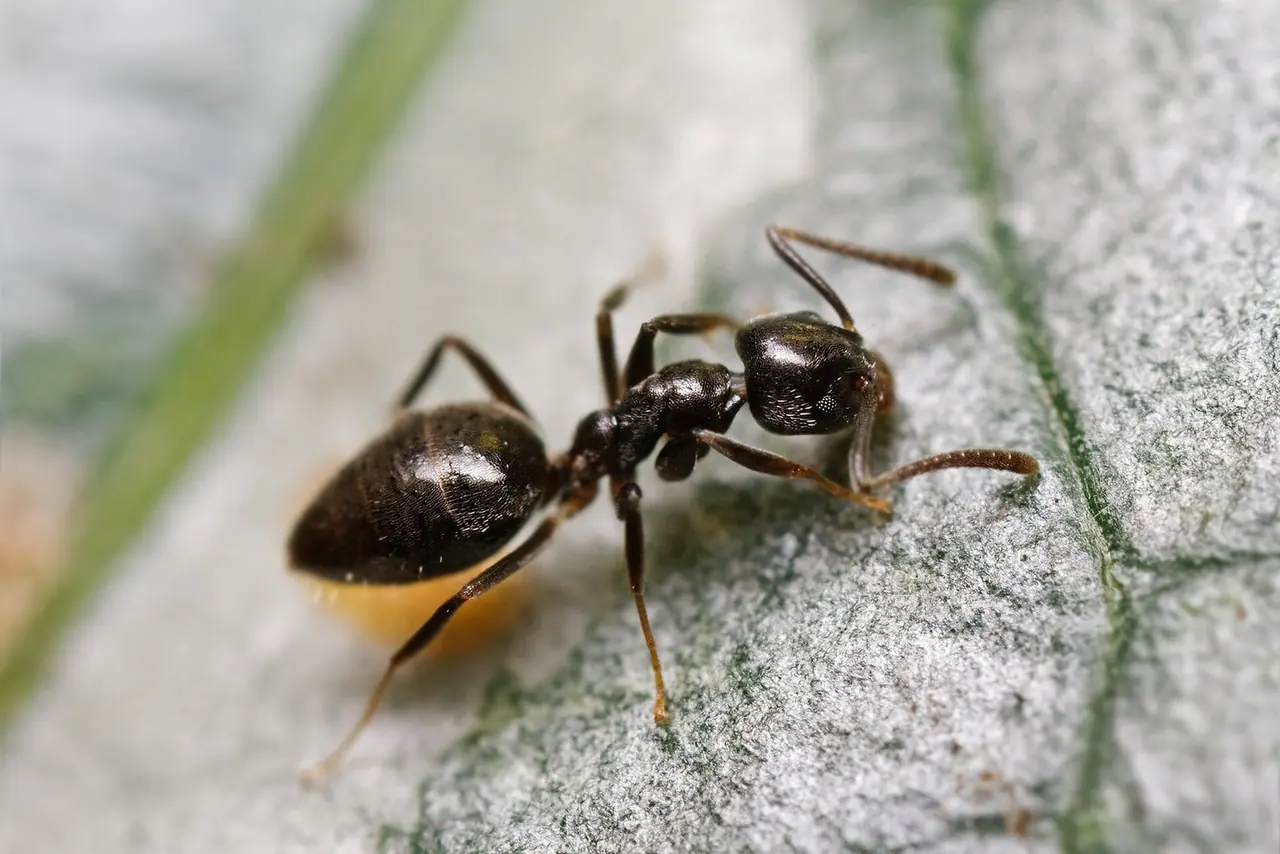
Photo: JJ Harrison, CC BY-SA 3.0, via Wikimedia Commons
Kansas City Pest Identification
Tapinoma sessileOdorous House Ant Identification
The small dark ant that shows up in Kansas City kitchens and bathrooms every spring and will not stay gone after you spray it. It is the most common indoor ant we treat.
Need help identifying odorous house ant?
Text a photo for fast pest identification. You'll get a real answer from a local expert — not a call center.
How to Identify It
Tiny, uniformly dark brown to black, with an uneven (one-node) waist you can't see without a lens. The giveaway is the smell: crush one and it gives off a rotten-coconut odor. Trails are fast-moving and erratic when disturbed.
Size: Workers 2.5–3.5 mm
Commonly Confused With
Pavement ants (slightly larger, brown, with visible ridges on the head and a two-node waist) and acrobat ants (heart-shaped rear end that lifts when threatened). Store-bought bait that works on one may be ignored by the other.
Why It Shows Up
Sweets and moisture. Colonies have many queens and many satellite nests, and they move indoors when it rains, when it turns dry, or when a food source appears. Some repellent sprays can scatter this species and trigger "budding" into more satellite nests, which is why correct identification and treatment strategy matter more than the product used.
Where Homeowners Find It
Kitchen counters, under the sink, around dishwashers, bathroom vanities, and along window sills. Outdoors: under mulch, landscape stones, and siding, and in wall voids with a moisture source.
Seasonal Activity in KC
March through October, with a spike after the first warm rains in spring and again in late summer drought. Indoor colonies can stay active all winter near heat.
Risk Level
Nuisance only — no bite or sting of note and no structural damage, but they contaminate food and are relentless once established in a wall void.
What You Can Do Yourself
- • Avoid spraying visible trails directly — for this species it can scatter the colony into more satellite nests. Wipe trails with soapy water instead.
- • Put out a sweet liquid ant bait where you see them and leave it alone for a week.
- • Fix the moisture: dripping traps, wet sponges, leaking window seals, and mulch piled against the foundation.
What Professional Treatment Involves
Identification first (bait choice depends on the species), then a combination of non-repellent exterior treatment along the foundation and entry points, targeted gel or granular baits indoors, and treatment of any wall-void nests found. Follow-up in two to three weeks to confirm the colony collapsed.
Serving the Kansas City metro area-wide. Owner-operated with 30+ years of professional pest control experience. See our odorous house ant control service →
Common Questions
How do I tell an odorous house ant from something that looks similar?
Pavement ants (slightly larger, brown, with visible ridges on the head and a two-node waist) and acrobat ants (heart-shaped rear end that lifts when threatened). Store-bought bait that works on one may be ignored by the other.
Do I need professional treatment for odorous house ant?
Identification first (bait choice depends on the species), then a combination of non-repellent exterior treatment along the foundation and entry points, targeted gel or granular baits indoors, and treatment of any wall-void nests found. Follow-up in two to three weeks to confirm the colony collapsed.