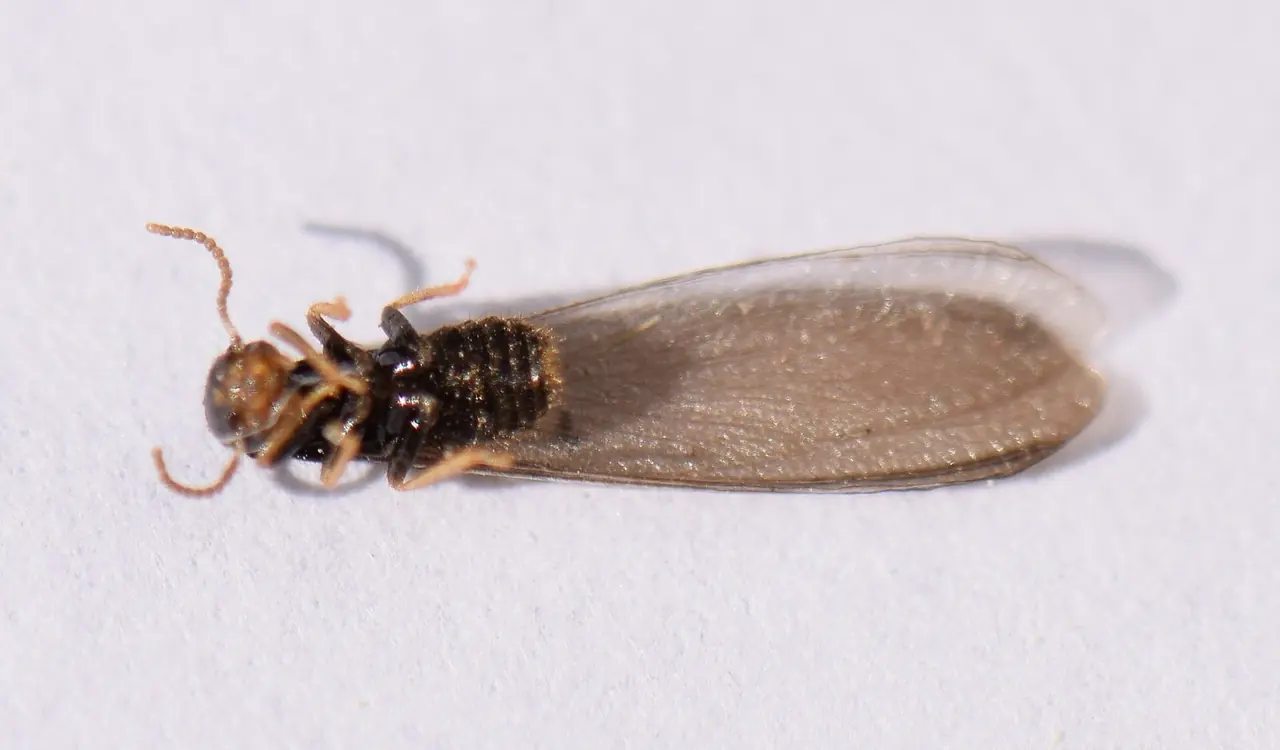
Photo: PumpkinSky, CC BY-SA 4.0, via Wikimedia Commons
Kansas City Pest Identification
Reticulitermes flavipes (reproductive caste)Termite Swarmer Identification
The winged reproductive termites that emerge in a swarm to start new colonies — usually the first visible sign homeowners notice, and the clearest sign it's time to schedule an inspection.
Need help identifying termite swarmer?
Text a photo for fast pest identification. You'll get a real answer from a local expert — not a call center.
How to Identify It
Dark brown to black body, straight (not elbowed) antennae, a thick waist with no pinch, and two pairs of equal-length wings extending well past the body. Swarmers are weak fliers and shed their wings quickly after landing — piles of discarded wings near windowsills or light fixtures are a strong indicator even after the swarmers are gone.
Size: 8–10 mm including wings
Commonly Confused With
Flying (winged) carpenter ants, which have elbowed antennae, a pinched narrow waist, and unequal wing lengths (front wings longer than back). This is the single most common termite-vs-ant misidentification, and getting it right changes whether you need treatment at all.
Why It Shows Up
A swarm indoors almost always means the colony producing it is inside or directly adjacent to the structure — swarmers emerge from established colonies to mate and found new ones nearby.
Where Homeowners Find It
Around windows and light fixtures (they're drawn to light), inside window wells, near floor vents and heating registers close to exterior walls, and in crawlspace or basement corners.
Seasonal Activity in KC
Swarms typically occur on warm, humid, often post-rain days in spring, usually March through May in the Kansas City area, sometimes in early fall.
Risk Level
The swarmers themselves cause no damage, but a swarm indoors confirms an active colony is present and already established — this is when we recommend inspection, not a wait-and-see approach.
What You Can Do Yourself
- • Collect a few swarmers or shed wings in a bag or jar for identification rather than vacuuming and discarding all evidence.
- • Note exactly where they emerged — that location often points to the colony's entry point.
What Professional Treatment Involves
A full inspection triggered by any indoor swarm, followed by a Termidor treatment if an active colony is confirmed. We identify swarmers on-site (photo or in-person) before recommending anything.
Serving the Kansas City metro area-wide. Owner-operated with 30+ years of professional pest control experience. See our termite swarmer control service →
Common Questions
How do I tell a termite swarmer from something that looks similar?
Flying (winged) carpenter ants, which have elbowed antennae, a pinched narrow waist, and unequal wing lengths (front wings longer than back). This is the single most common termite-vs-ant misidentification, and getting it right changes whether you need treatment at all.
Do I need professional treatment for termite swarmer?
A full inspection triggered by any indoor swarm, followed by a Termidor treatment if an active colony is confirmed. We identify swarmers on-site (photo or in-person) before recommending anything.