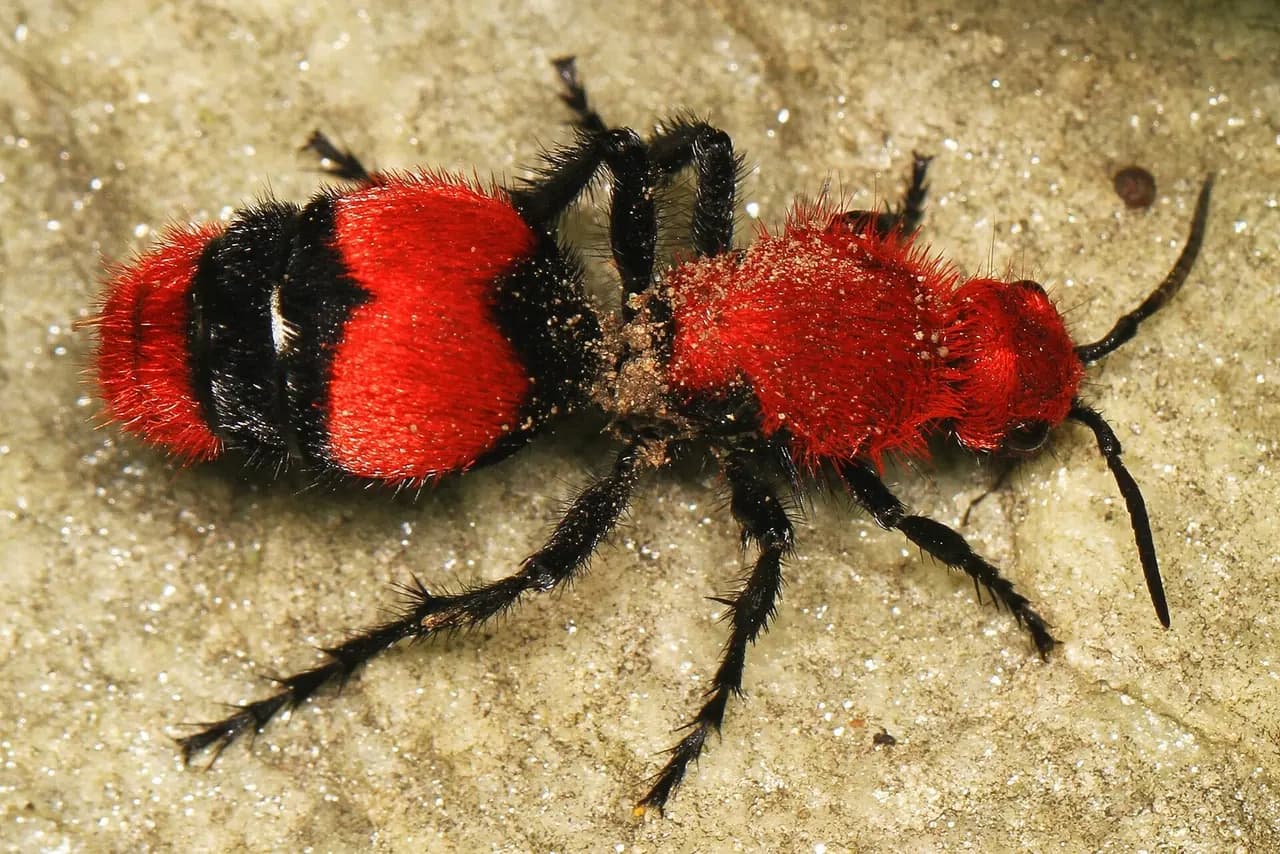
Photo: Judy Gallagher, CC BY 2.0, via Wikimedia Commons
Kansas City Pest Identification
Dasymutilla spp.Beneficial / not treatedVelvet Ant Identification
Not an ant at all — a wingless female wasp with a sting painful enough to earn the nickname "cow killer." A solitary insect you will see on bare ground or lawns in mid-summer, not something that infests a house.
Need help identifying velvet ant?
Text a photo for fast pest identification. You'll get a real answer from a local expert — not a call center.
How to Identify It
Fuzzy, bright red-orange (sometimes yellow or white) and black, running fast across open soil. Females have no wings; the winged males look like ordinary black wasps. They squeak when handled.
Size: 6–20 mm
Commonly Confused With
A large ant, or the harmless pyrgotid flies. No true ant in Kansas City is furry and that vividly red.
Why It Shows Up
They don't come inside on purpose. Females hunt for ground-nesting bee and wasp nests (cicada killers, bumble bees) to lay eggs in, so you find them where those nest — sandy spots, bare lawn patches, and garden beds.
Where Homeowners Find It
Sunny bare ground, sandy driveway edges, playgrounds, and around cicada killer burrows. Occasionally one wanders into a garage.
Seasonal Activity in KC
June through September.
Risk Level
The sting is very painful but not medically significant for most people; there is no colony to grow and no property damage.
What You Can Do Yourself
- • Leave it alone and wear shoes in the yard; they only sting when stepped on or picked up.
- • Reduce bare, sandy patches by overseeding or mulching if they keep appearing.
Our Take
There is nothing to treat. If velvet ants are common on your property it usually means a large cicada killer or ground-bee population, which we can address if it is a problem.
Common Questions
How do I tell a velvet ant from something that looks similar?
A large ant, or the harmless pyrgotid flies. No true ant in Kansas City is furry and that vividly red.
Do I need professional treatment for velvet ant?
We generally don't treat velvet ant. There is nothing to treat. If velvet ants are common on your property it usually means a large cicada killer or ground-bee population, which we can address if it is a problem.