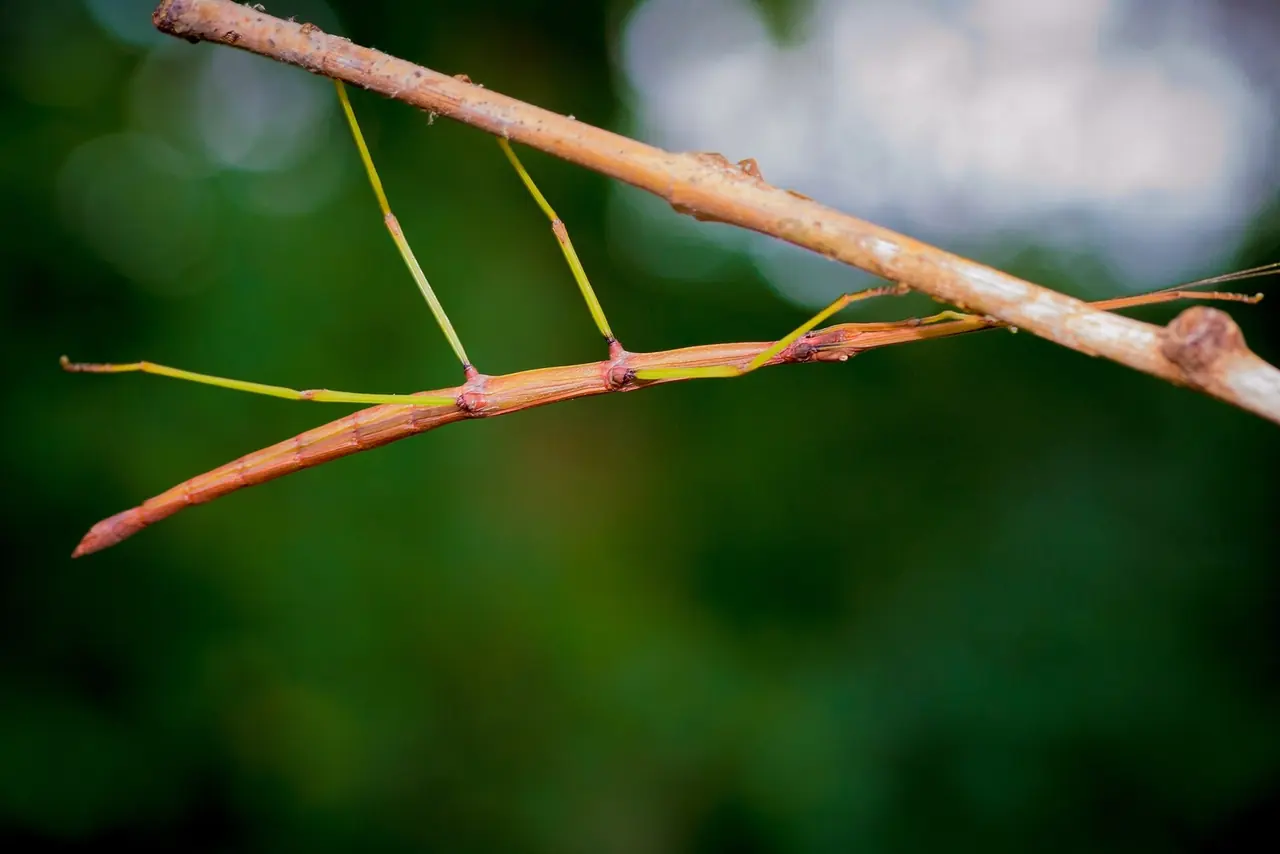
Photo: Andrew C, CC BY 2.0, via Wikimedia Commons
Kansas City Pest Identification
Diapheromera femorata (northern walkingstick)Beneficial / not treatedWalking Stick Identification
A large, slow-moving, twig-mimicking insect found on trees and shrubs. Occasionally wanders onto a porch or wall but poses no threat and isn't a structural pest.
Need help identifying walking stick?
Text a photo for fast pest identification. You'll get a real answer from a local expert — not a call center.
How to Identify It
Long, thin, brown to green body that closely resembles a twig, with long thin legs and antennae. Moves very slowly and relies on camouflage rather than fleeing.
Size: 75–100 mm (females)
Commonly Confused With
An actual twig, more often than not — that's the point.
Why It Shows Up
They feed on tree and shrub foliage (oak is a favorite) and occasionally wander onto nearby structures, but don't seek out or establish indoors.
Where Homeowners Find It
Tree canopies and shrubs, occasionally found resting on siding, porch screens, or fences near host trees.
Seasonal Activity in KC
Adults visible July through October.
Risk Level
None. They don't bite, sting, or damage structures. Large populations can occasionally defoliate sections of host trees, but this is rarely severe.
What You Can Do Yourself
- • No action needed — relocate one outdoors if it wanders inside.
Our Take
We do not treat walking sticks.
Common Questions
How do I tell a walking stick from something that looks similar?
An actual twig, more often than not — that's the point.
Do I need professional treatment for walking stick?
We generally don't treat walking stick. We do not treat walking sticks.