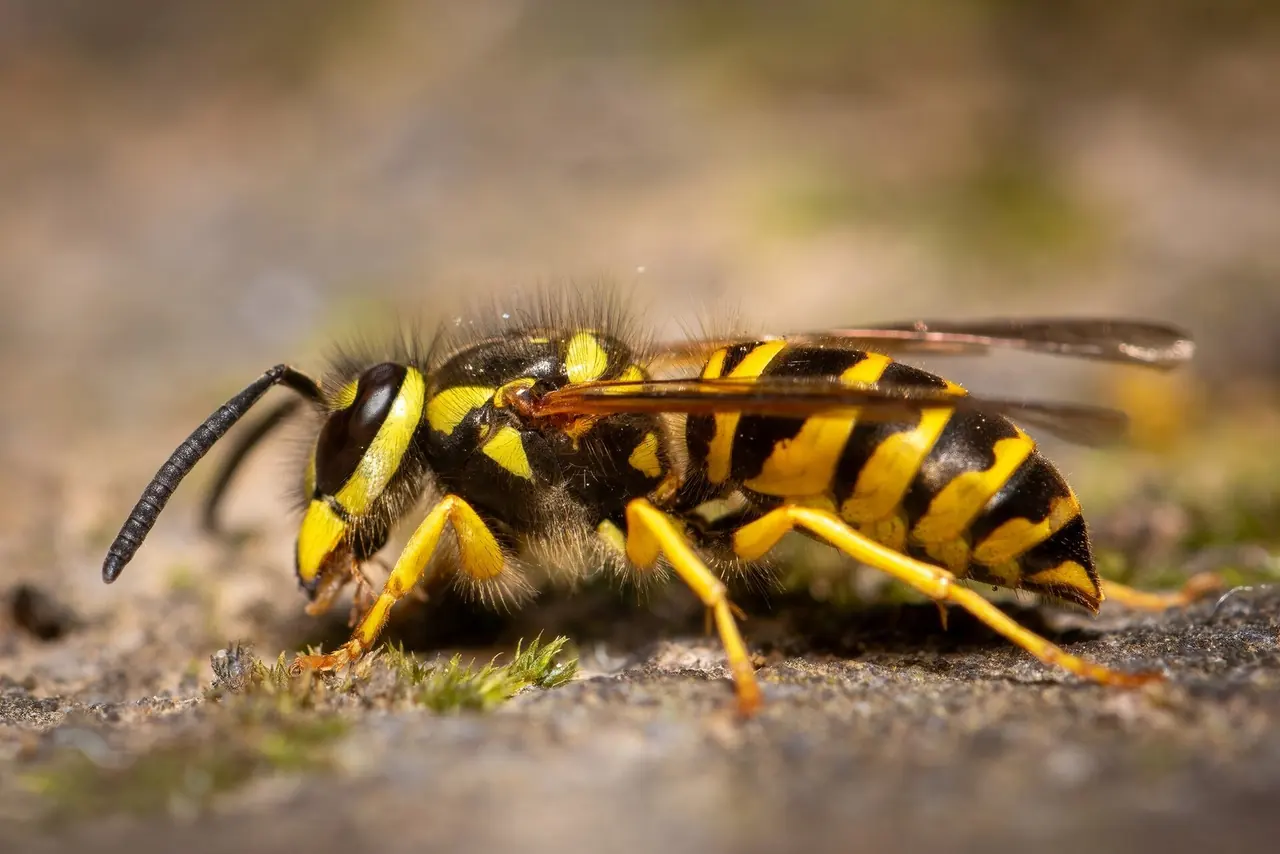
Photo: Desislav Iliev, CC BY 4.0, via Wikimedia Commons
Kansas City Pest Identification
Vespula spp. (eastern and German yellowjacket)Yellowjacket Identification
The aggressive black-and-yellow wasp that ruins August cookouts and nests underground or inside wall voids. The most dangerous stinging insect we deal with in Kansas City because of colony size and temperament.
Need help identifying yellowjacket?
Text a photo for fast pest identification. You'll get a real answer from a local expert — not a call center.
How to Identify It
Bright yellow and black with a smooth, hairless body, narrow waist, and wings folded lengthwise at rest. Nests are papery and gray, but hidden — in a ground burrow (often an old rodent hole), a wall void, a soffit, or under a deck — with a stream of workers in and out of a single hole.
Size: Workers 10–16 mm
Commonly Confused With
Honey bees (fuzzy, golden-brown, not bright yellow) and paper wasps (longer legs that dangle in flight, open exposed nest). Yellowjackets are the ones swarming a trash can or soda.
Why It Shows Up
Queens start nests in spring in any protected cavity: rodent burrows, wall voids reached through a gap in siding, attic soffits, and hollow railroad ties. Late in the season workers chase sugar and protein at outdoor meals and garbage.
Where Homeowners Find It
A hole in the lawn or mulch bed with traffic in and out, a gap in siding or brick weep hole with wasps entering, under deck boards, in soffits, and occasionally chewing through drywall into a room in fall.
Seasonal Activity in KC
Colonies start in April, grow through summer, and peak in August–October at several thousand workers. First hard freeze kills all but the new queens.
Risk Level
Repeated, unprovoked stings in defense of the nest; they release an alarm pheromone that recruits the colony. Dangerous for anyone with a sting allergy, and ground nests are a real hazard when mowing.
What You Can Do Yourself
- • Mark the nest entrance and stay away; do not plug the hole (they will chew into the house).
- • Keep trash lids tight and cover drinks outdoors in late summer.
- • Do not use gasoline or a shop vac. Both are common and both go badly.
What Professional Treatment Involves
Nest treatment at dusk or early morning with insecticide dust or aerosol applied directly into the entrance, protective equipment, and — for wall-void nests — treatment through the entry point rather than opening the wall. Removal of the nest where accessible, then sealing the entry after the colony is dead.
The All Star difference: Wall-void yellowjacket work is a specialty. We treat through the existing entrance so the colony dies in place, then advise on sealing once activity stops — sealing too early is how they end up in your living room.
Serving the Kansas City metro area-wide. Owner-operated with 30+ years of professional pest control experience. See our yellowjacket control service →
Common Questions
How do I tell a yellowjacket from something that looks similar?
Honey bees (fuzzy, golden-brown, not bright yellow) and paper wasps (longer legs that dangle in flight, open exposed nest). Yellowjackets are the ones swarming a trash can or soda.
Do I need professional treatment for yellowjacket?
Nest treatment at dusk or early morning with insecticide dust or aerosol applied directly into the entrance, protective equipment, and — for wall-void nests — treatment through the entry point rather than opening the wall. Removal of the nest where accessible, then sealing the entry after the colony is dead.