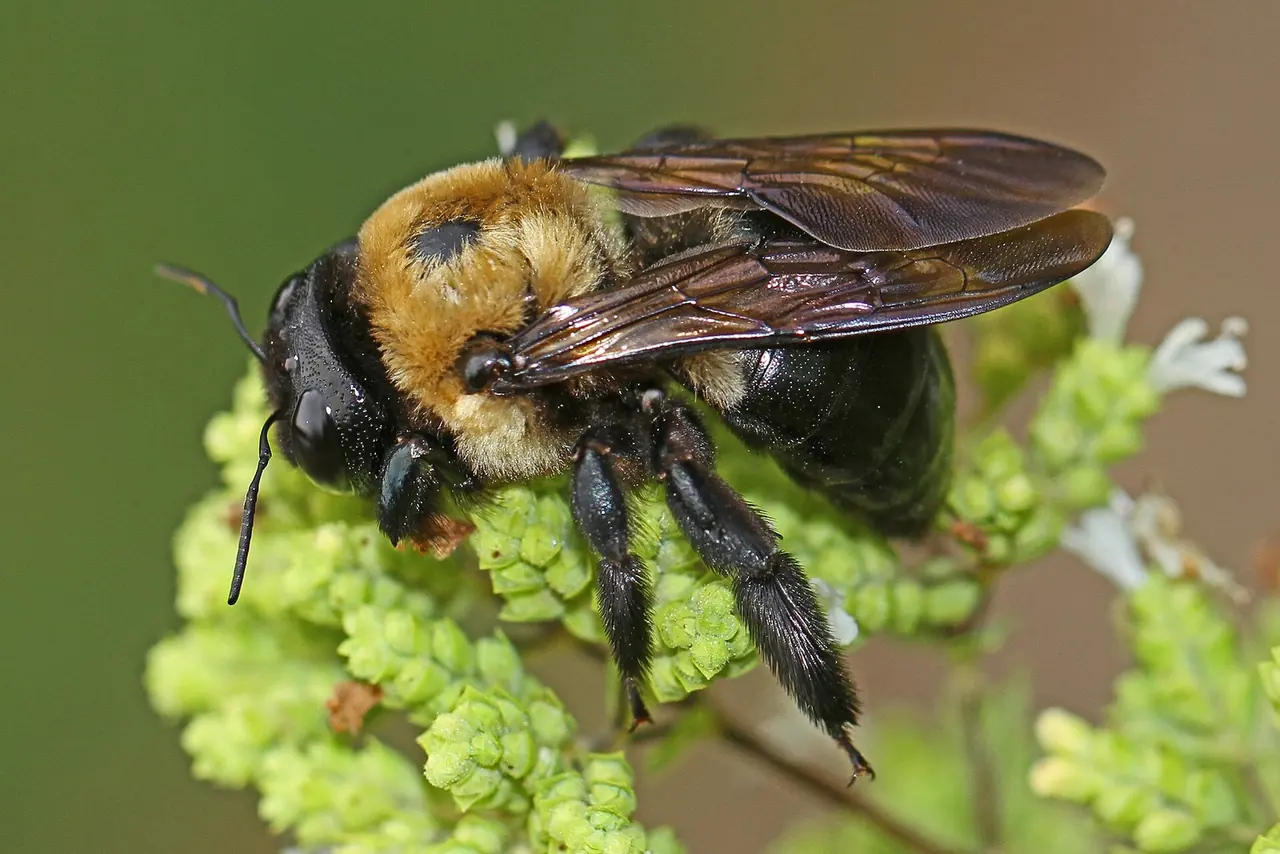
Photo: Judy Gallagher, CC BY 2.0, via Wikimedia Commons
Kansas City Pest Identification
Xylocopa virginicaCarpenter Bee Identification
The big black-and-yellow bee drilling perfect half-inch holes into your deck rail, fascia, or cedar siding every spring. It is a pollinator, but it is also the one bee that damages wood.
Need help identifying carpenter bee?
Text a photo for fast pest identification. You'll get a real answer from a local expert — not a call center.
How to Identify It
Bumble bee-sized with a shiny, hairless black abdomen (bumble bees are fuzzy all over). Males hover aggressively at face height but have no stinger. Round entrance holes on the underside of wood with coarse sawdust and yellow staining below.
Size: 19–25 mm
Commonly Confused With
Bumble bees (fuzzy abdomen, ground nests, don't bore wood).
Why It Shows Up
Bare or weathered softwood: deck railings, fascia boards, pergolas, cedar and redwood siding, wooden playsets, and log homes. They reuse and extend tunnels year after year, and woodpeckers tear the wood open to reach the larvae.
Where Homeowners Find It
Undersides of deck rails and fascia, porch ceilings, wooden fences, swing sets, and eaves. Look for holes, sawdust, and bees hovering in the same spot each morning.
Seasonal Activity in KC
Adults emerge in April, tunnel and lay eggs through June; a second wave of new adults appears in August and overwinters in the tunnels.
Risk Level
Cumulative structural damage to rails, trim, and fascia over several seasons, plus woodpecker damage. Females can sting but almost never do.
What You Can Do Yourself
- • Paint or polyurethane bare wood; they strongly prefer unfinished surfaces.
- • Plug holes with a wood dowel and putty once the gallery has been treated and activity has stopped.
- • Replace badly tunneled rails with composite or treated lumber.
What Professional Treatment Involves
Dust applied into each active gallery in spring, a residual on the surfaces they favor, and plugging of the holes once the tunnels are inactive. Timing matters — treating before the August emergence stops next year's generation.
The All Star difference: We treat carpenter bees specifically, not with a broad spray that hits the bumble bees and mason bees working your flower beds. Galleries get treated directly; the rest of the yard is left alone.
Serving the Kansas City metro area-wide. Owner-operated with 30+ years of professional pest control experience. See our carpenter bee control service →
Common Questions
How do I tell a carpenter bee from something that looks similar?
Bumble bees (fuzzy abdomen, ground nests, don't bore wood).
Do I need professional treatment for carpenter bee?
Dust applied into each active gallery in spring, a residual on the surfaces they favor, and plugging of the holes once the tunnels are inactive. Timing matters — treating before the August emergence stops next year's generation.