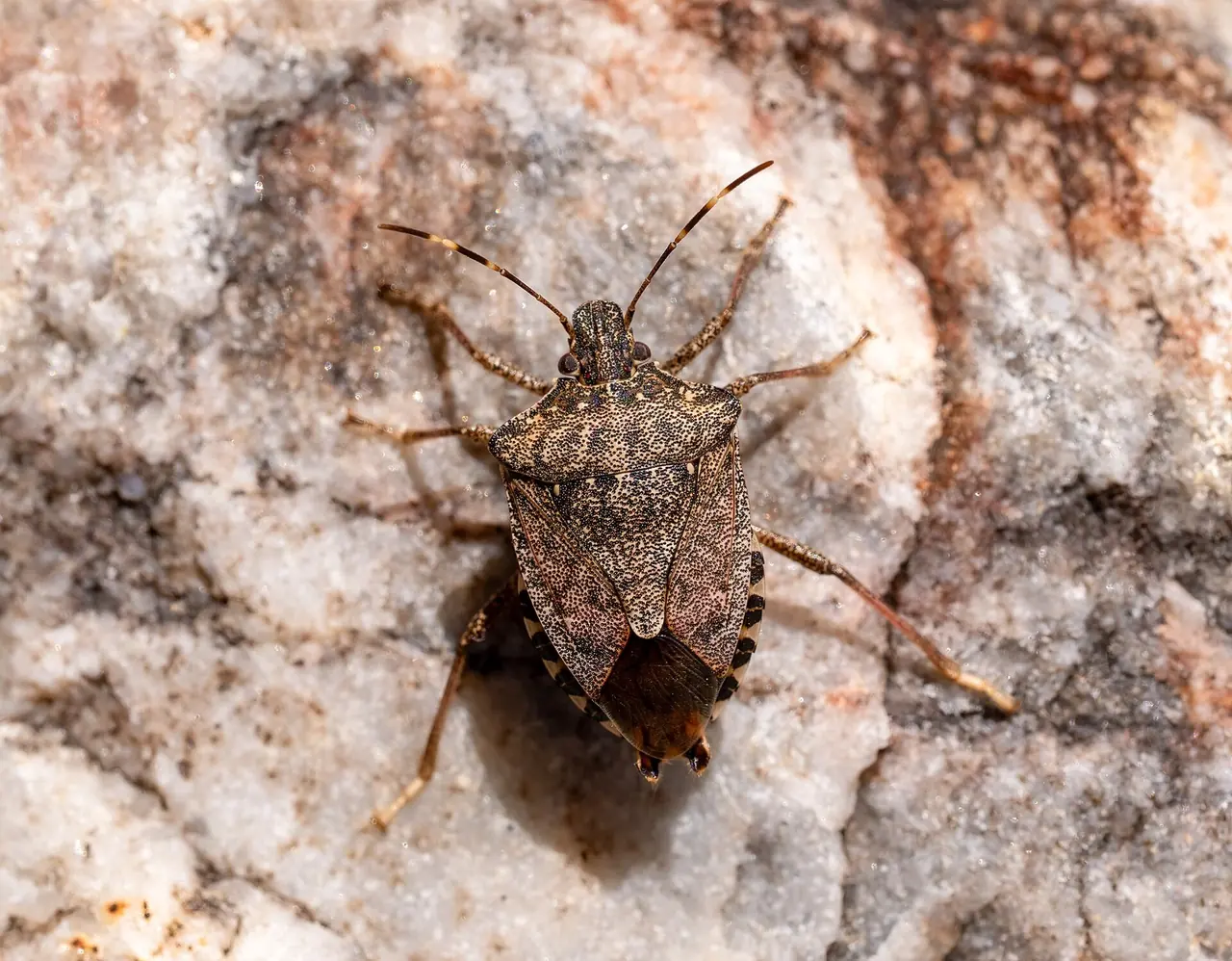
Photo: Rhododendrites, CC BY-SA 4.0, via Wikimedia Commons
Kansas City Pest Identification
Halyomorpha halys (brown marmorated stink bug) and native speciesStink Bug Identification
A shield-shaped bug that invades homes by the dozens in fall looking for a place to overwinter, and releases a strong odor when disturbed or crushed. The invasive brown marmorated species has spread through the Kansas City area over the past decade.
Need help identifying stink bug?
Text a photo for fast pest identification. You'll get a real answer from a local expert — not a call center.
How to Identify It
Mottled brown, shield-shaped (pentagon) body with alternating light and dark bands on the antennae — the antenna banding is the clearest way to confirm brown marmorated stink bug specifically.
Size: 12–17 mm
Commonly Confused With
Native stink bug species (no antenna banding) and boxelder bugs (elongated, not shield-shaped).
Why It Shows Up
Like boxelder bugs, they seek sheltered overwintering spots and are drawn to sun-warmed walls in fall, then squeeze through gaps around siding, windows, and soffits.
Where Homeowners Find It
Sunny exterior walls, attics, wall voids, window frames, and — once inside — often found slowly crawling on ceilings and walls throughout winter.
Seasonal Activity in KC
Fall invasion September through October; sporadic indoor activity all winter as individuals wake up.
Risk Level
No bite, no structural damage. The odor when crushed or vacuumed is the main complaint, along with sheer numbers in a bad year.
What You Can Do Yourself
- • Seal gaps around windows, doors, and siding before fall.
- • Use a shop vac with a bag you can dispose of outside rather than a regular vacuum (the odor lingers).
- • Don't crush them on walls or curtains.
What Professional Treatment Involves
Exterior perimeter treatment timed for September or October, focused on sun-exposed walls and known entry points, is the most effective approach — same timing principle as boxelder bugs.
Serving the Kansas City metro area-wide. Owner-operated with 30+ years of professional pest control experience. See our stink bug control service →
Common Questions
How do I tell a stink bug from something that looks similar?
Native stink bug species (no antenna banding) and boxelder bugs (elongated, not shield-shaped).
Do I need professional treatment for stink bug?
Exterior perimeter treatment timed for September or October, focused on sun-exposed walls and known entry points, is the most effective approach — same timing principle as boxelder bugs.