Beetles
Beetles in a Kansas City home fall into two groups: pantry and fabric beetles that live in stored food, wool and carpet, and outdoor beetles like Asian lady beetles that crowd onto siding in fall.
Pantry beetles are solved by finding and throwing out the infested product; fall invaders by sealing gaps before they arrive.
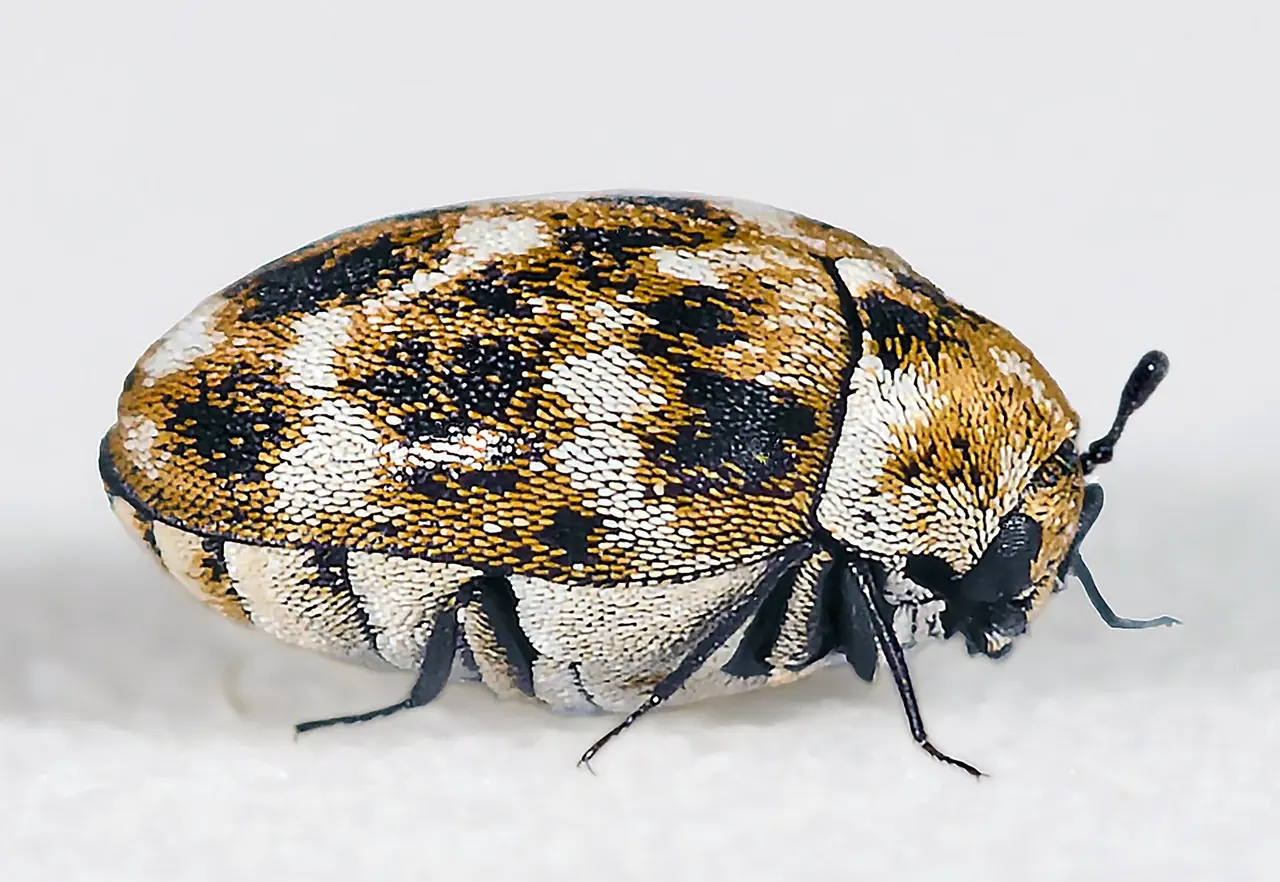
Carpet Beetle
Adults are harmless flower visitors, but the fuzzy, bristly larvae eat wool, silk, fur, feathers, and pet hair — the actual cause of unexplained holes in sweaters, rugs, and heirloom textiles.
Identify & treat carpet beetle →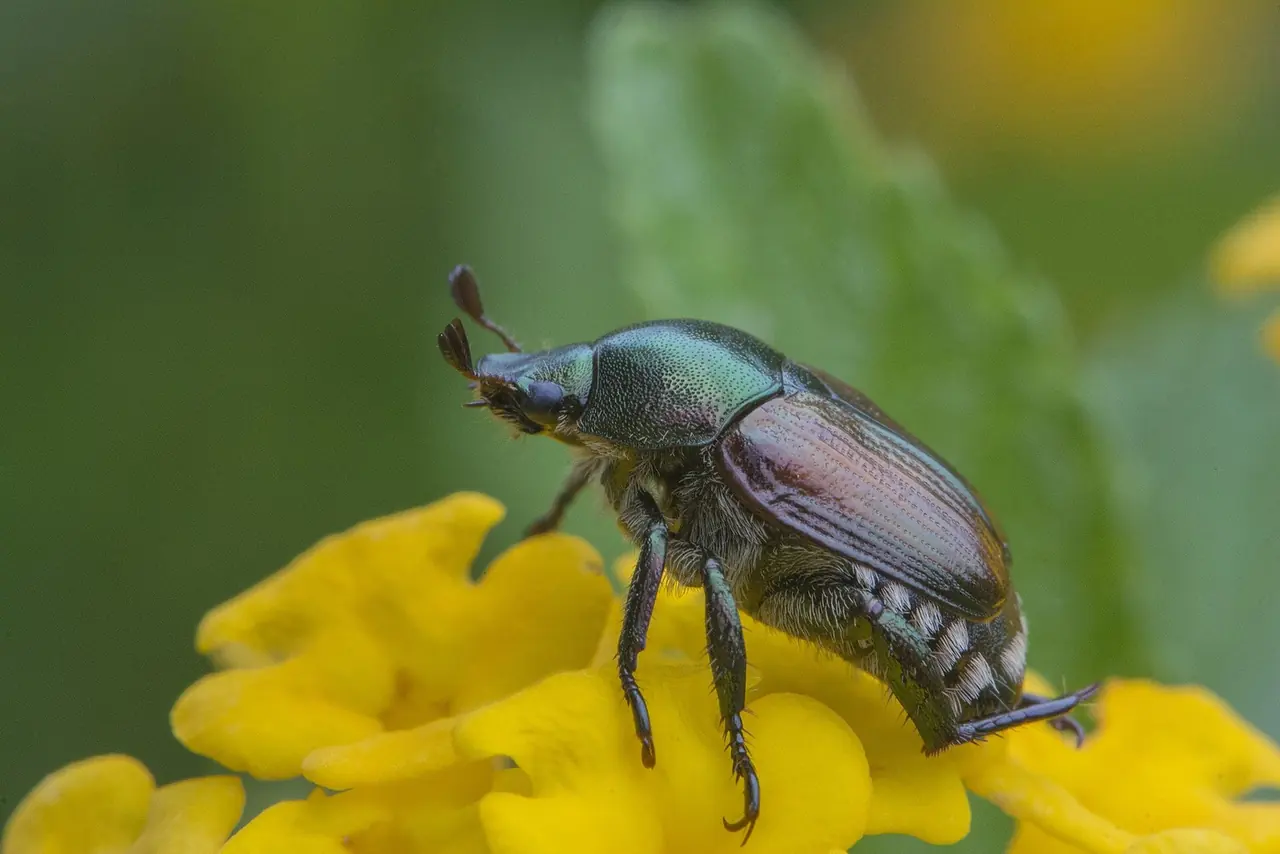
Japanese Beetle
The metallic green-and-copper beetle that skeletonizes rose bushes, grapevines, and linden trees every July. A lawn and garden pest, not a home-invader — its larvae (white grubs) feed on turf roots.
Identify & treat japanese beetle →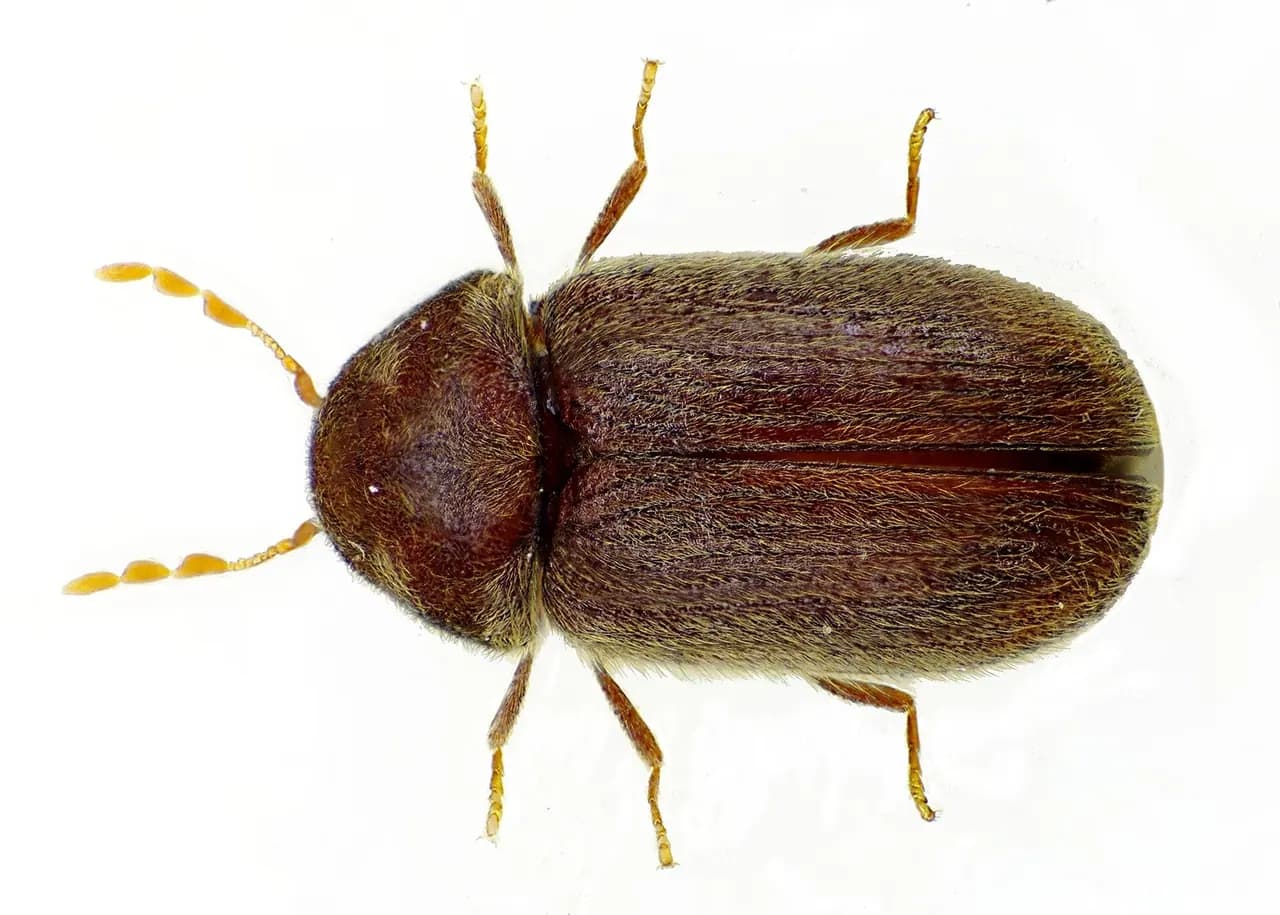
Drugstore Beetle
A small, oval reddish-brown beetle that infests an unusually wide range of dry stored goods — not just food, but spices, dried herbs, pet food, and even some non-food items like book bindings and dried flowers.
Identify & treat drugstore beetle →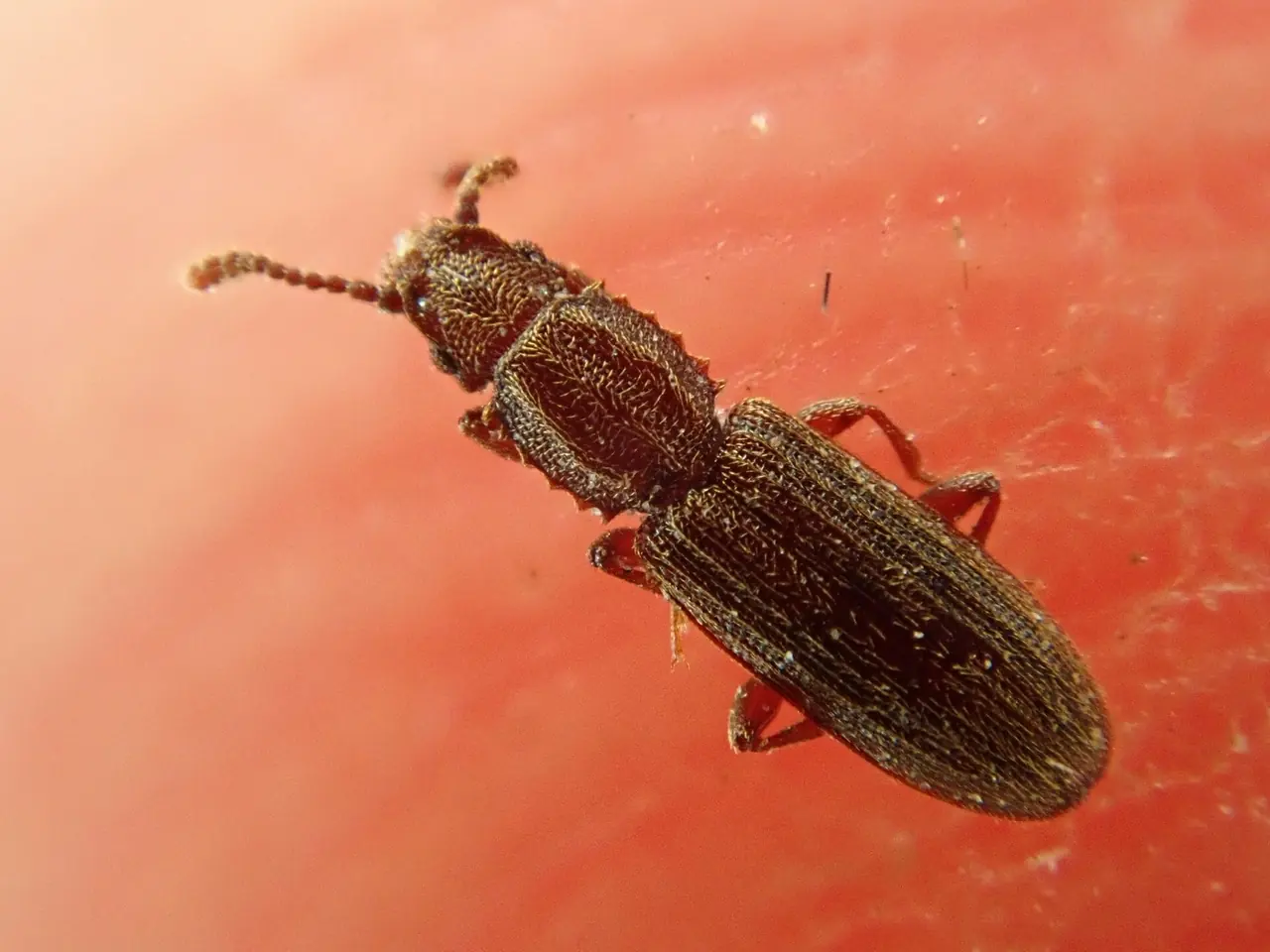
Grain Beetle
A slender, flattened beetle common in stored grains, cereal, and dried fruit, distinguished by saw-like projections along the sides of its thorax.
Identify & treat grain beetle →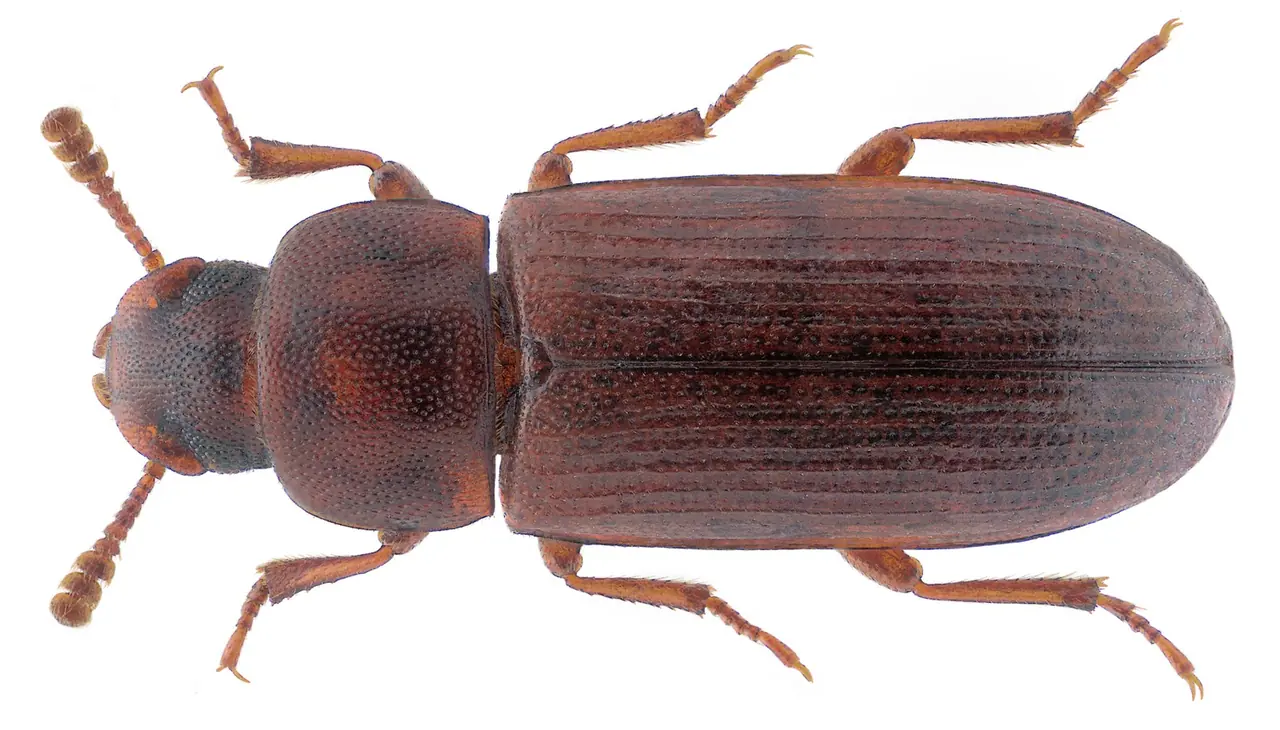
Flour Beetle
A small reddish-brown beetle that infests flour, cornmeal, cereal, and other finely milled dry goods, often in large numbers once established.
Identify & treat flour beetle →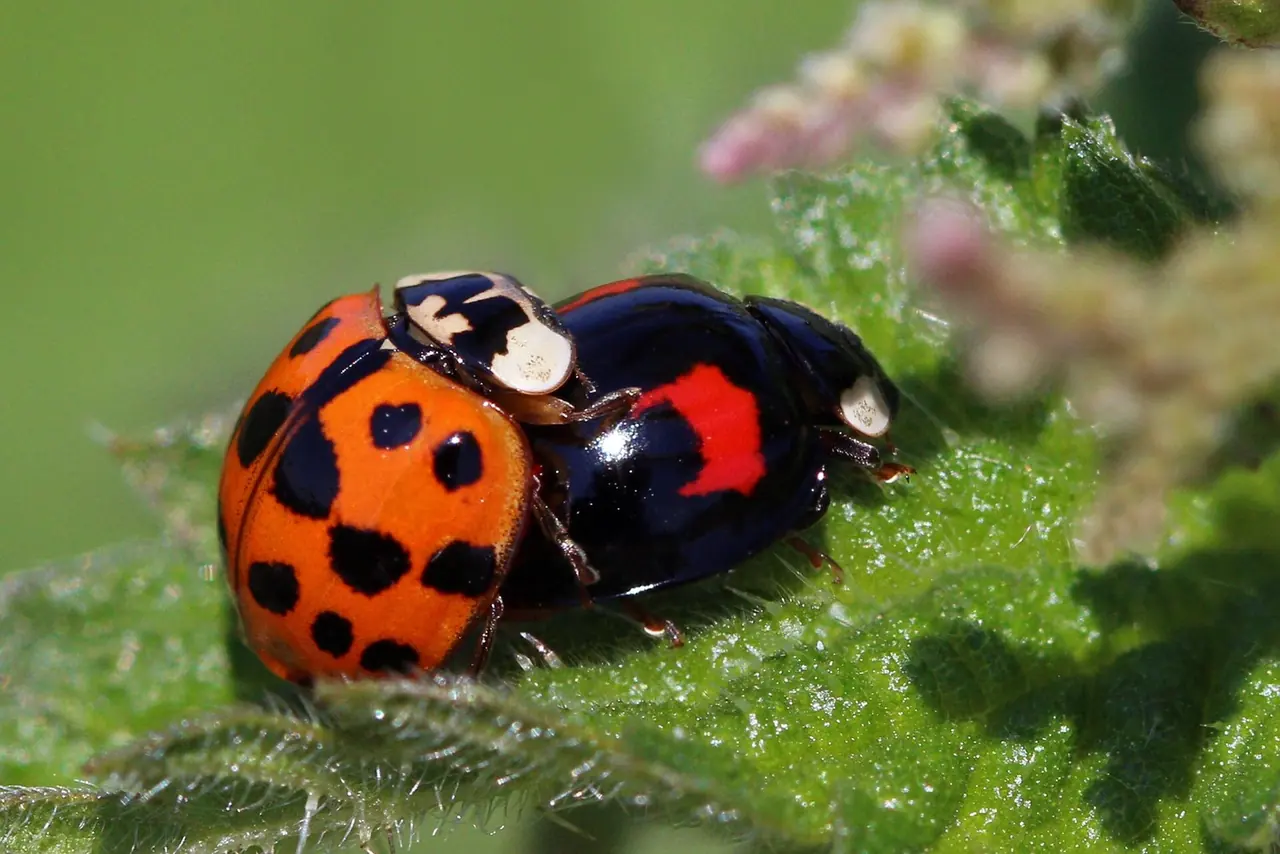
Asian Lady Beetle
The beetle behind the fall invasion that fills window sills and light fixtures by the hundreds every October, and can bite (a pinch, not a sting) and stain surfaces with a yellowish defensive fluid when disturbed. A different species from the beneficial native ladybug.
Identify & treat asian lady beetle →Pest photos are used under Creative Commons and public-domain licenses — see photo credits.