Spiders
Most spiders in Kansas City homes are harmless and are there because insects are. Two matter medically here: the brown recluse, which is common in older homes across the metro, and the black widow, found in garages, window wells and wood piles.
Spider work starts with identification. Recluse control is a monitoring-based program over time; for most other species, cutting the insect traffic around lights and entry points does more than treating the spiders themselves.
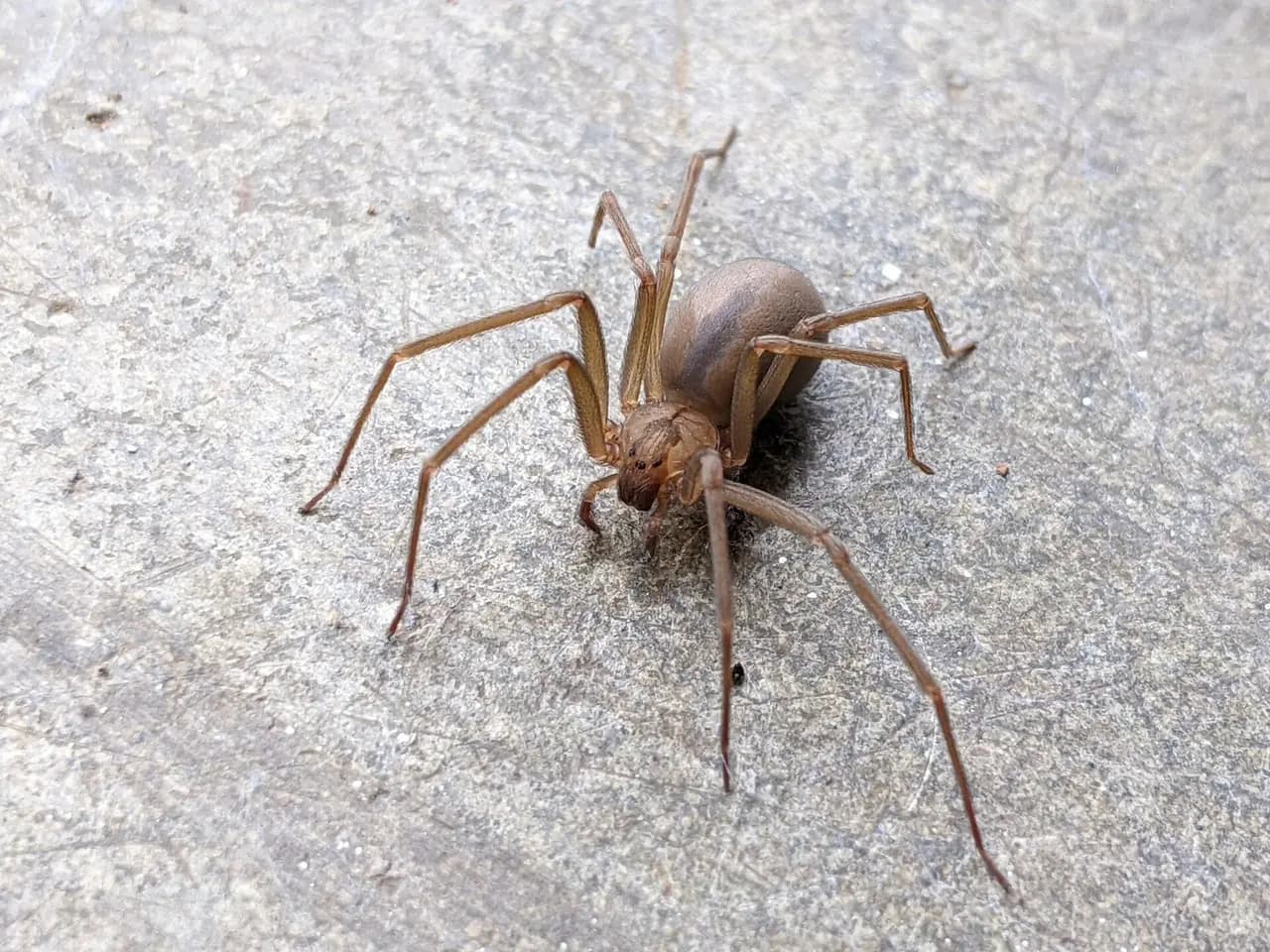
Brown Recluse
Kansas City sits in the heart of brown recluse range, and they are far more common in local homes than most people realize. They are the one spider in this area that justifies a real treatment program.
Identify & treat brown recluse →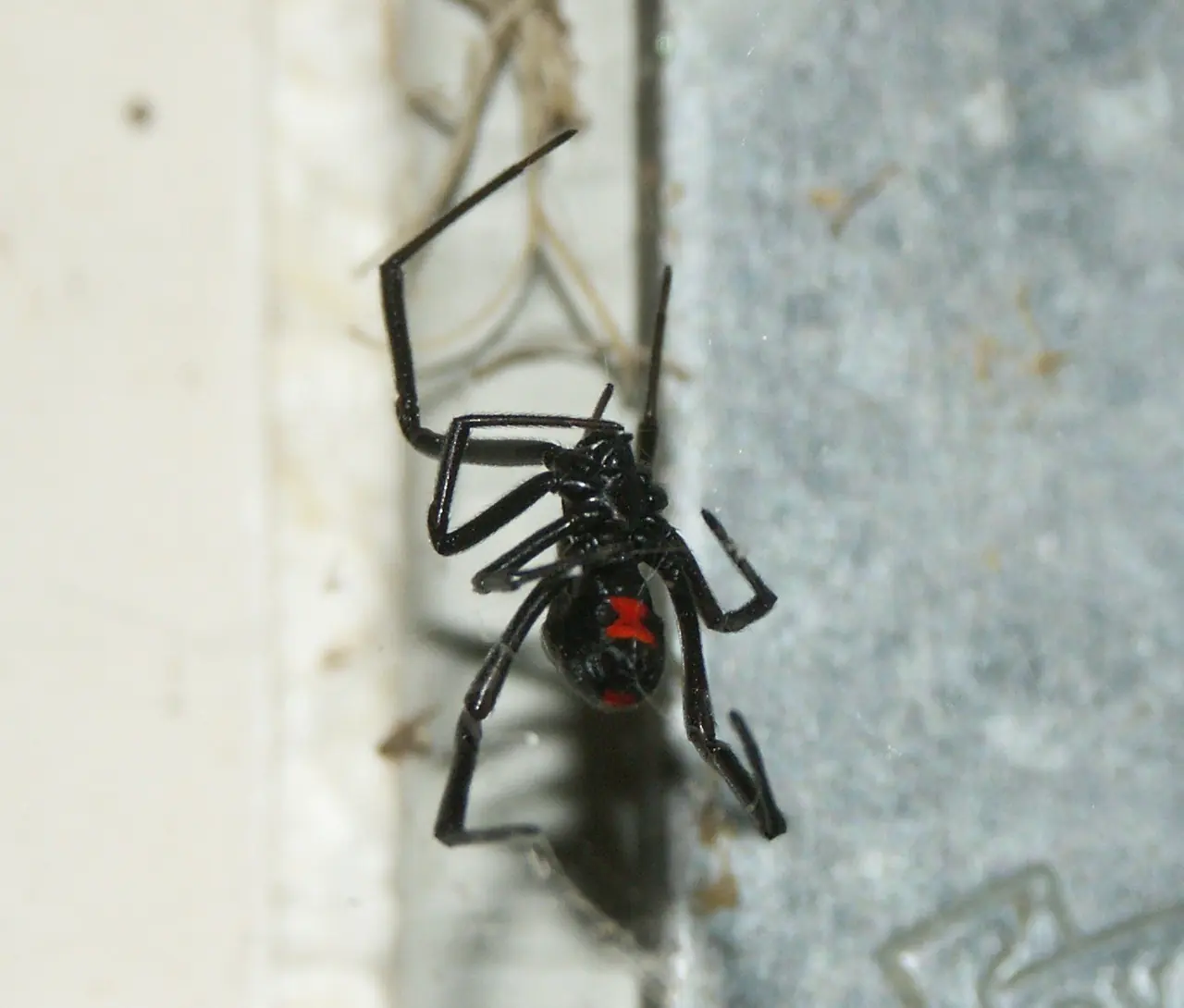
Black Widow
Both the southern and northern black widow occur in Kansas and Missouri. They stay outdoors or in outbuildings and are far less common in living spaces than brown recluse, but the bite is medically significant.
Identify & treat black widow →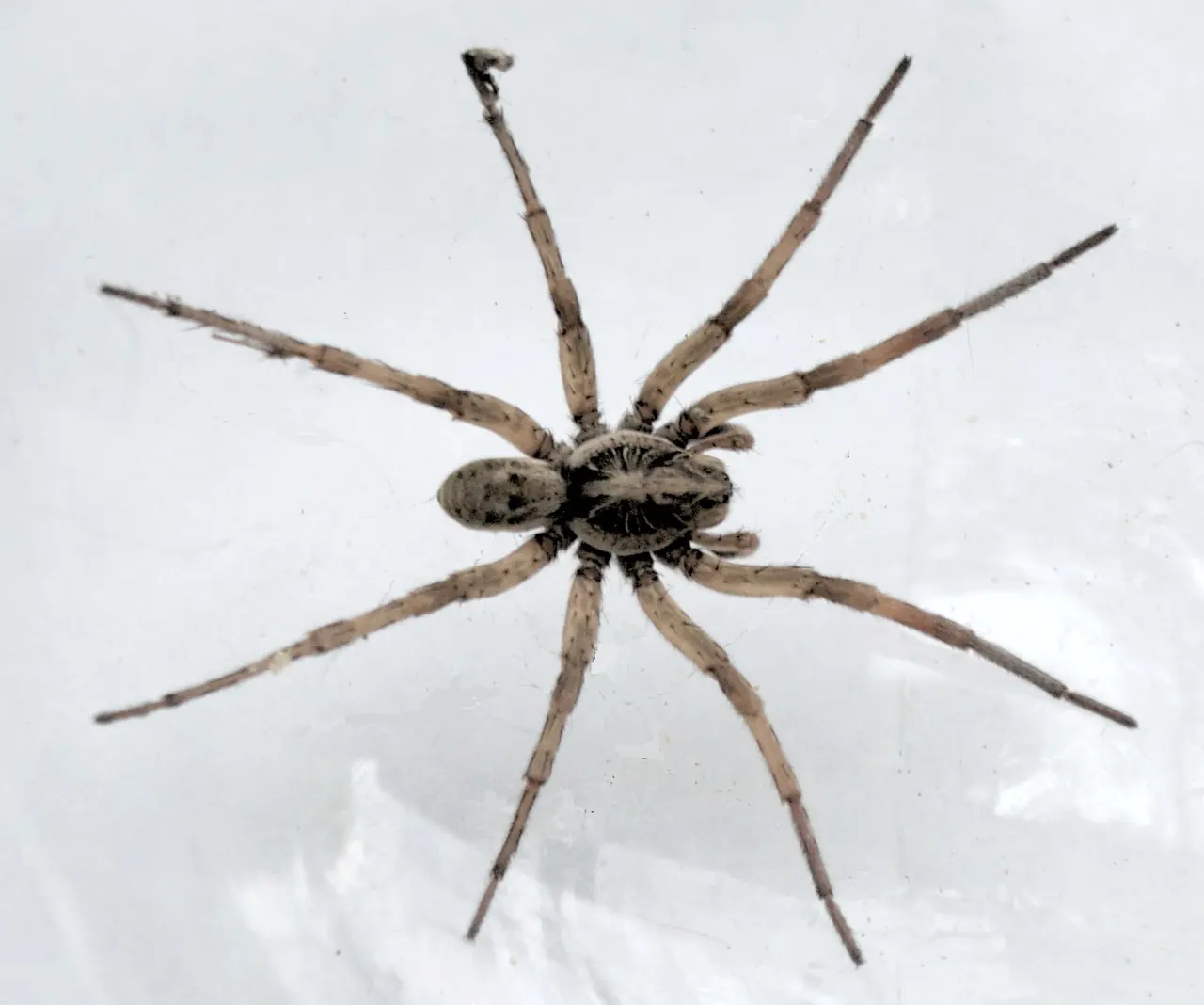
Wolf Spider
The big, fast, hairy spider that runs across the basement floor in October. Wolf spiders hunt on foot instead of building webs, and they are a nuisance, not a danger.
Identify & treat wolf spider →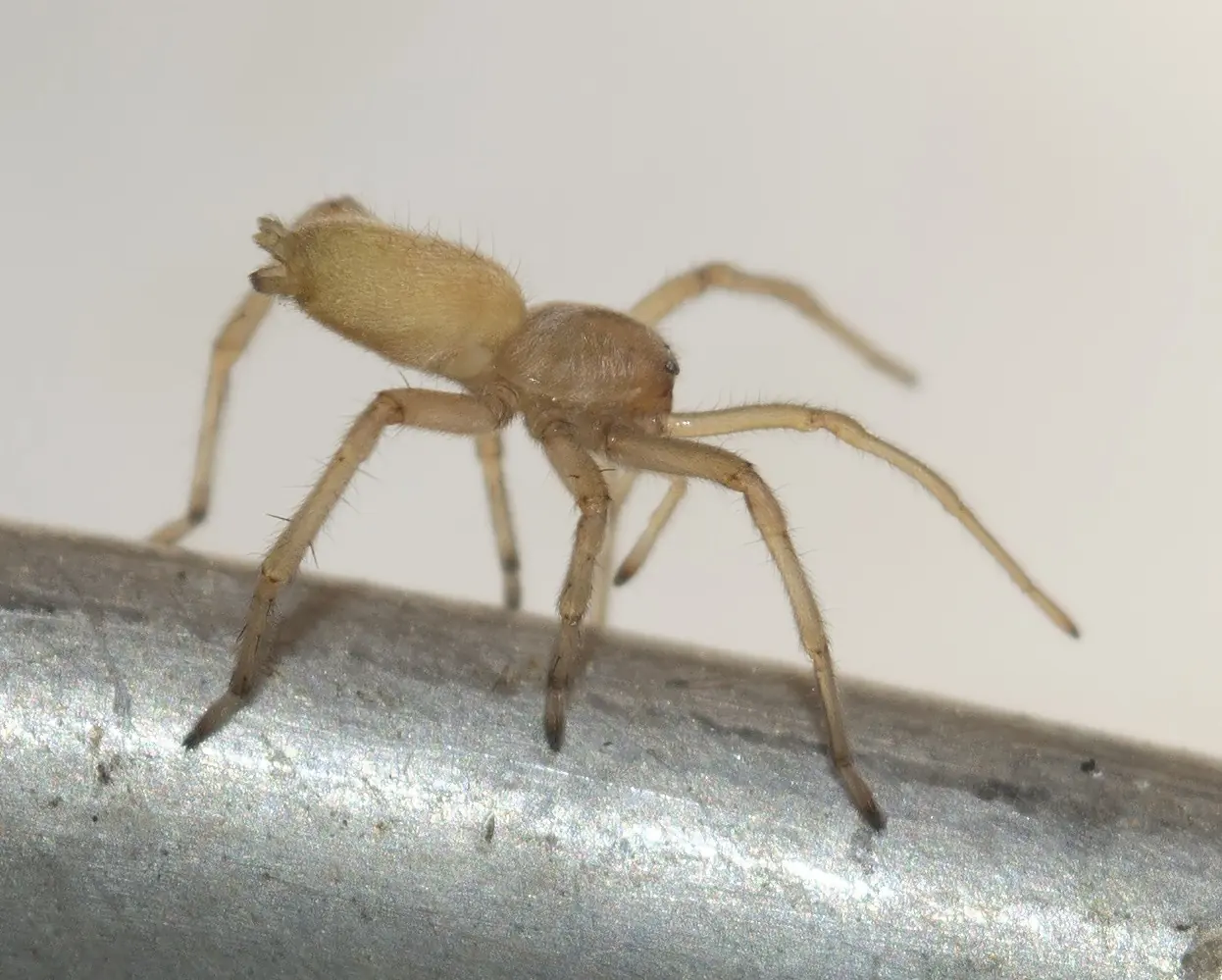
Yellow Sac Spider
A small pale spider that hides in a silk sac where the wall meets the ceiling and is responsible for a good share of the "mystery bites" people wake up with in Kansas City.
Identify & treat yellow sac spider →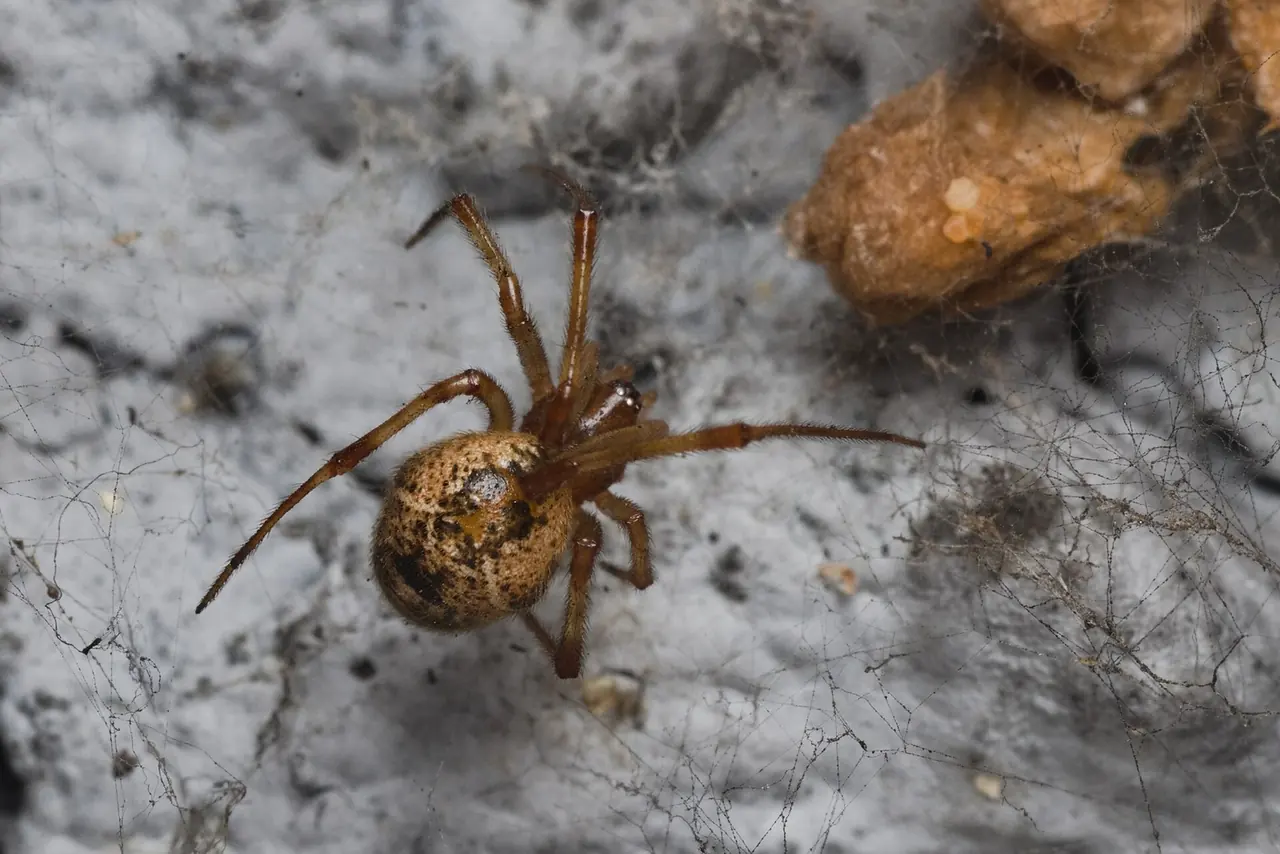
Common House Spider
The little brown cobweb spider behind most of the dusty webs in garage corners, window frames, and basement ceilings. Harmless, and a sign there are insects to eat.
Identify & treat common house spider →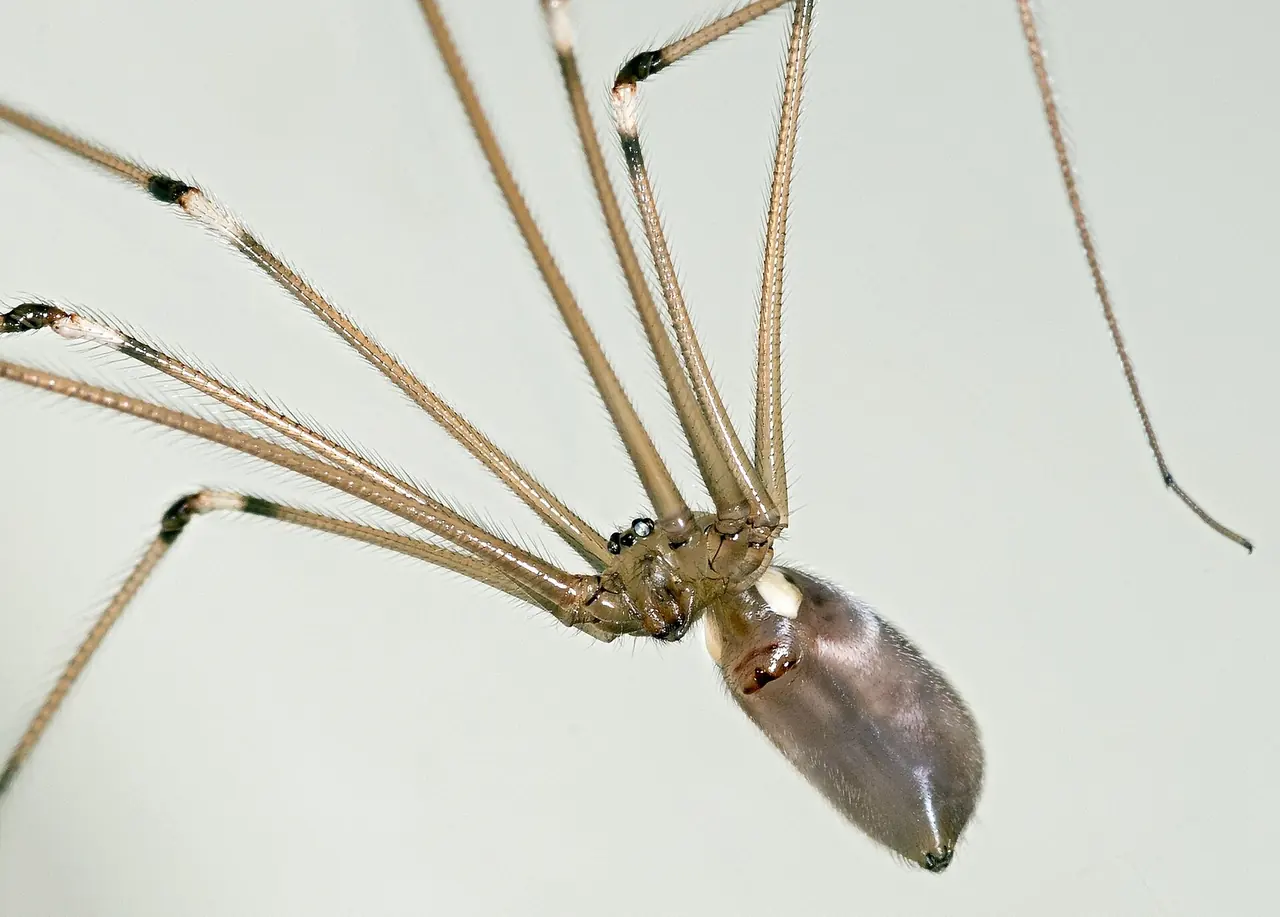
Cellar Spider
The long-legged, wobbly spider in the basement corner that shakes its web when you get close. Often called a daddy longlegs, and completely harmless.
Identify & treat cellar spider →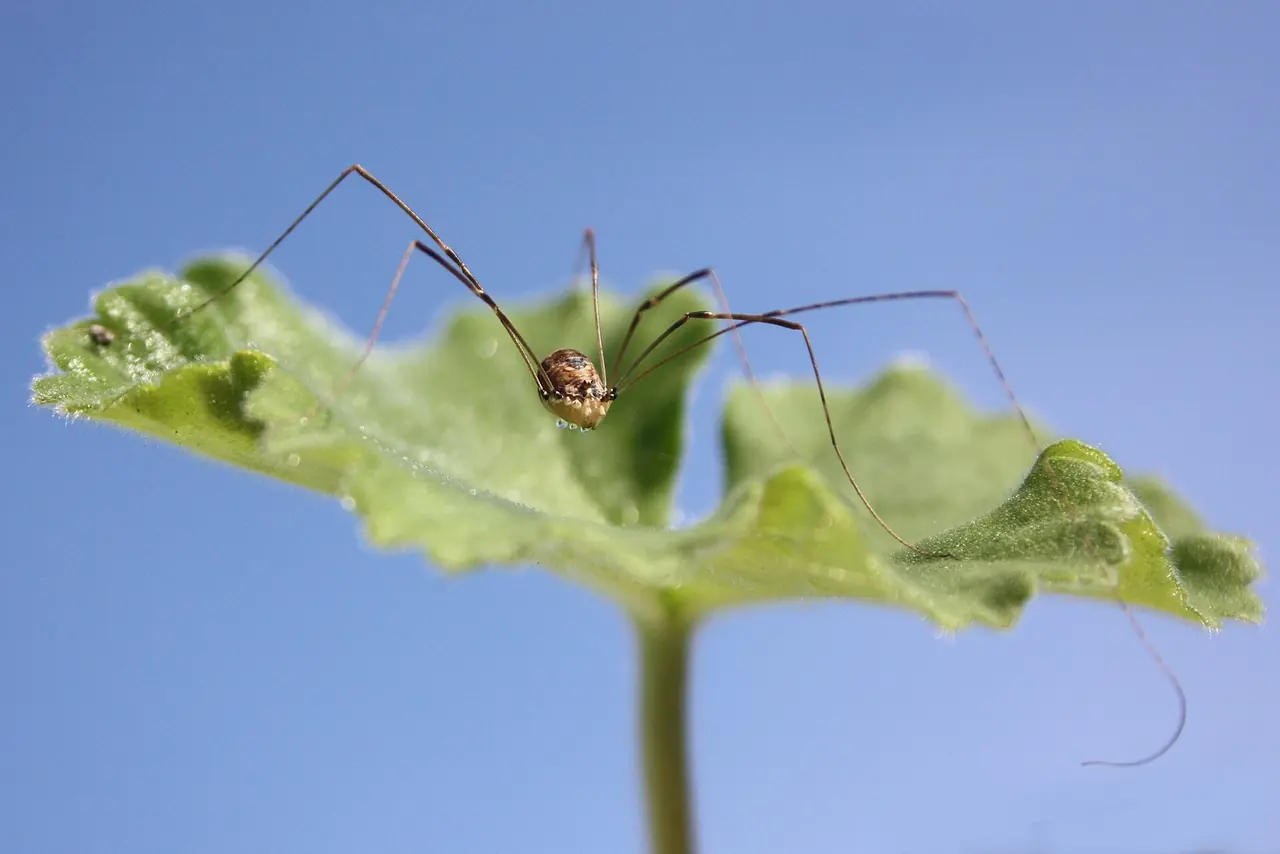
Daddy Longlegs
Not a spider. Harvestmen are a separate arachnid group with a single oval body, no venom, no silk, and no fangs. They cluster on foundations and under eaves in late summer.
Identify daddy longlegs →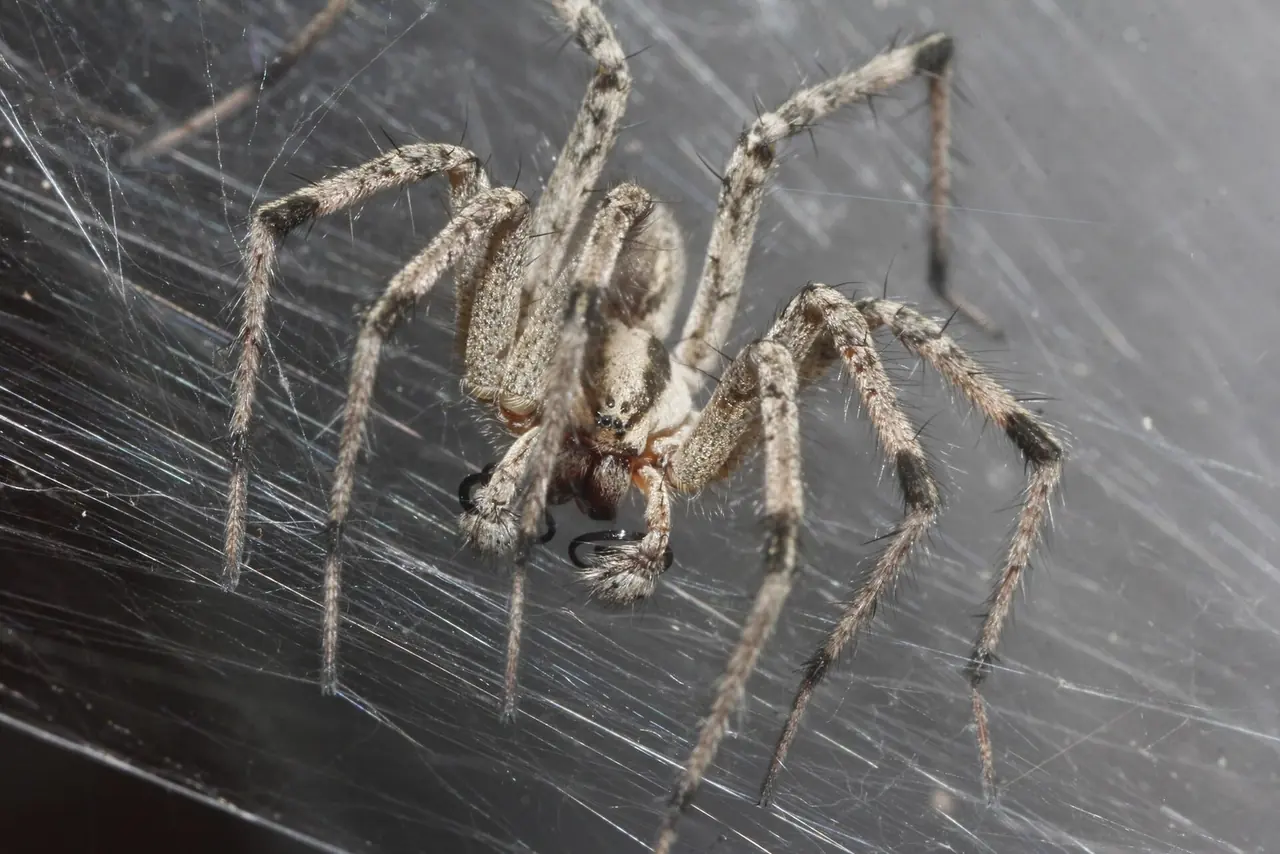
Grass Spider
The spider behind the flat sheet webs with a funnel at one end that cover Kansas City lawns and shrubs on dewy September mornings. Harmless, and frequently mistaken for brown recluse when one wanders indoors.
Identify & treat grass spider →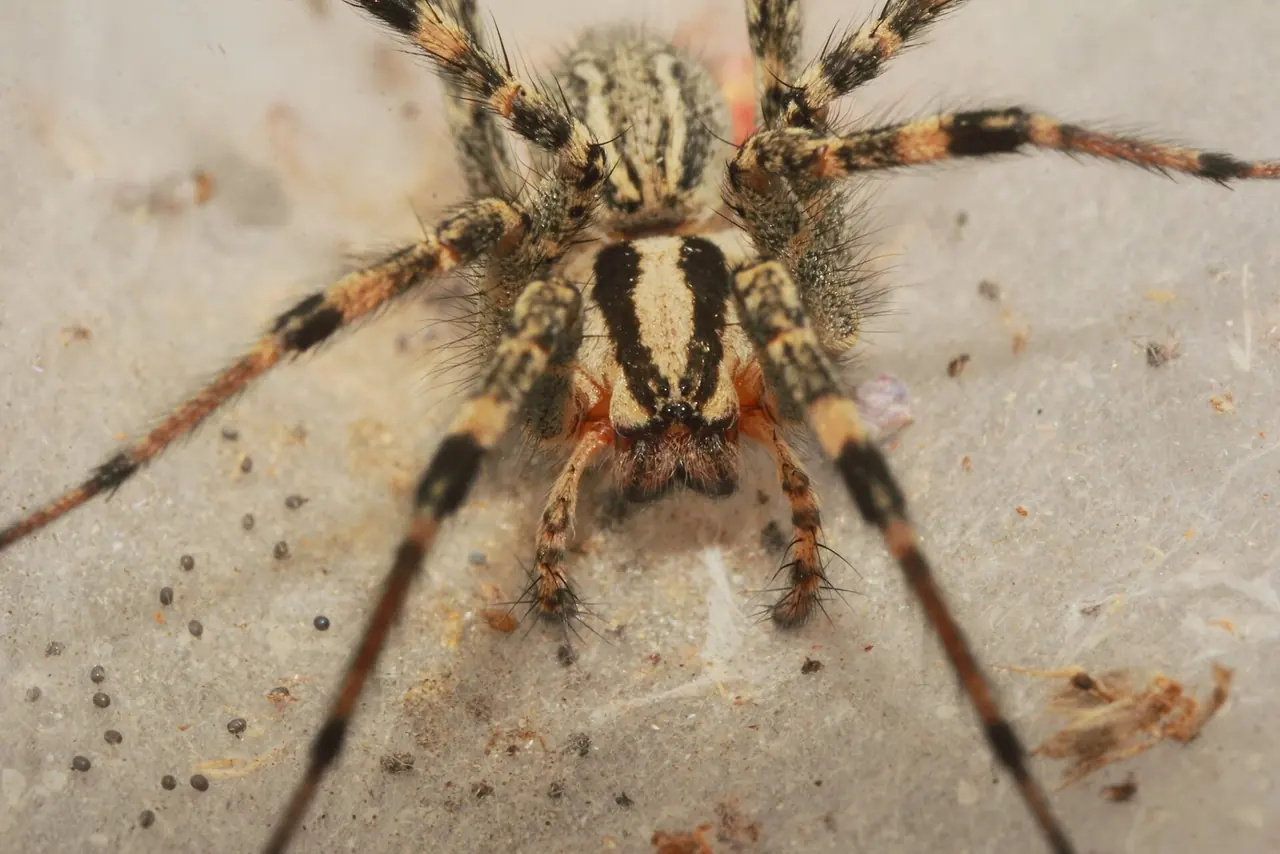
Funnel Weaver Spider
A family of fast, striped spiders that build sheet webs with a tube-shaped retreat in corners, window wells, and woodpiles. The grass spider is the common lawn member; barn funnel weavers are the ones you find in basements.
Identify & treat funnel weaver spider →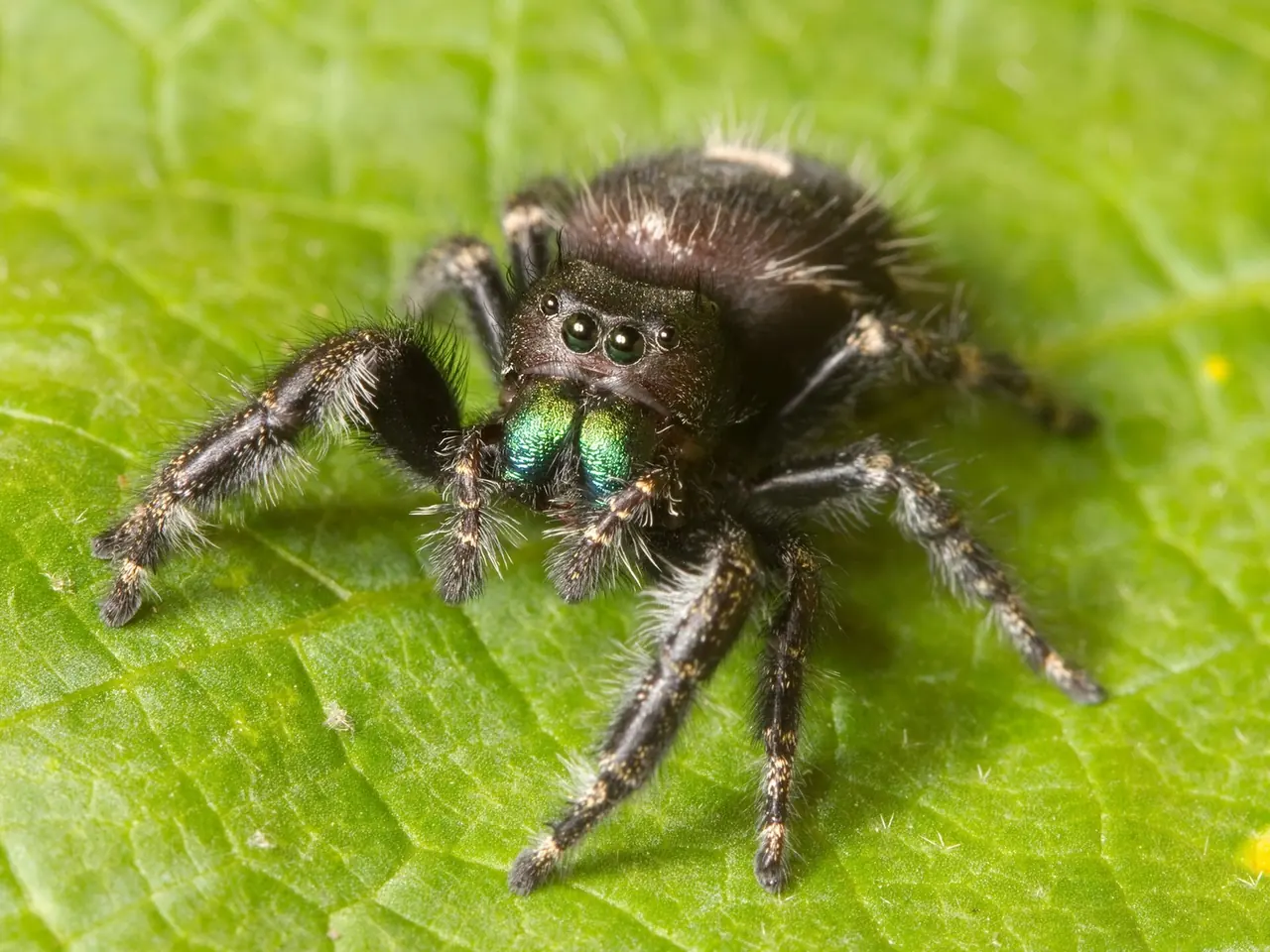
Bold Jumping Spider
The fuzzy black spider with white spots and green fangs that watches you from the deck railing. Curious, harmless, and one of the more useful predators around a Kansas City home.
Identify bold jumping spider →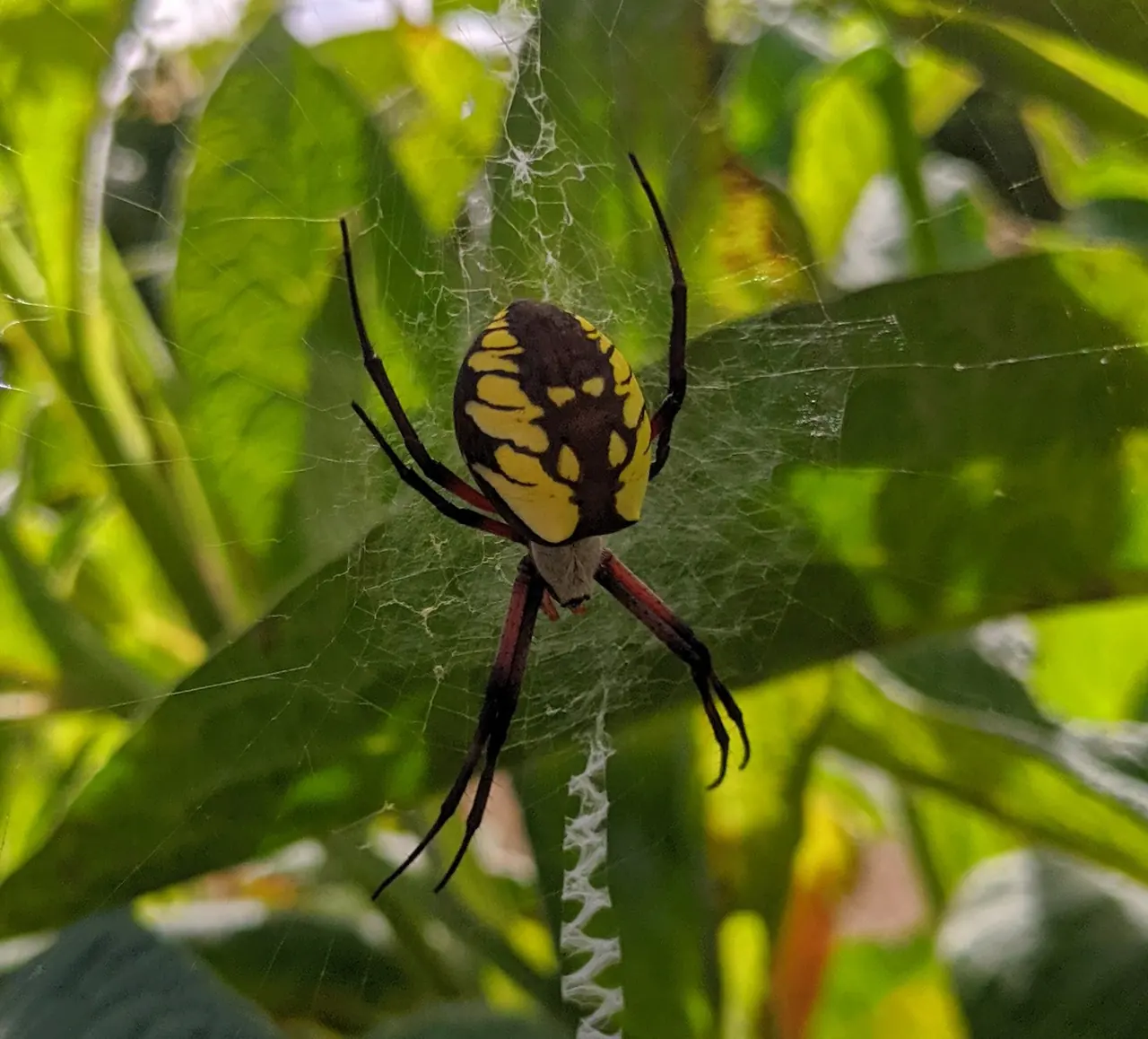
Garden Spider
The big black-and-yellow spider in the large wheel-shaped web with a zigzag of white silk down the middle. Alarming to look at, beneficial, and not a house pest.
Identify garden spider →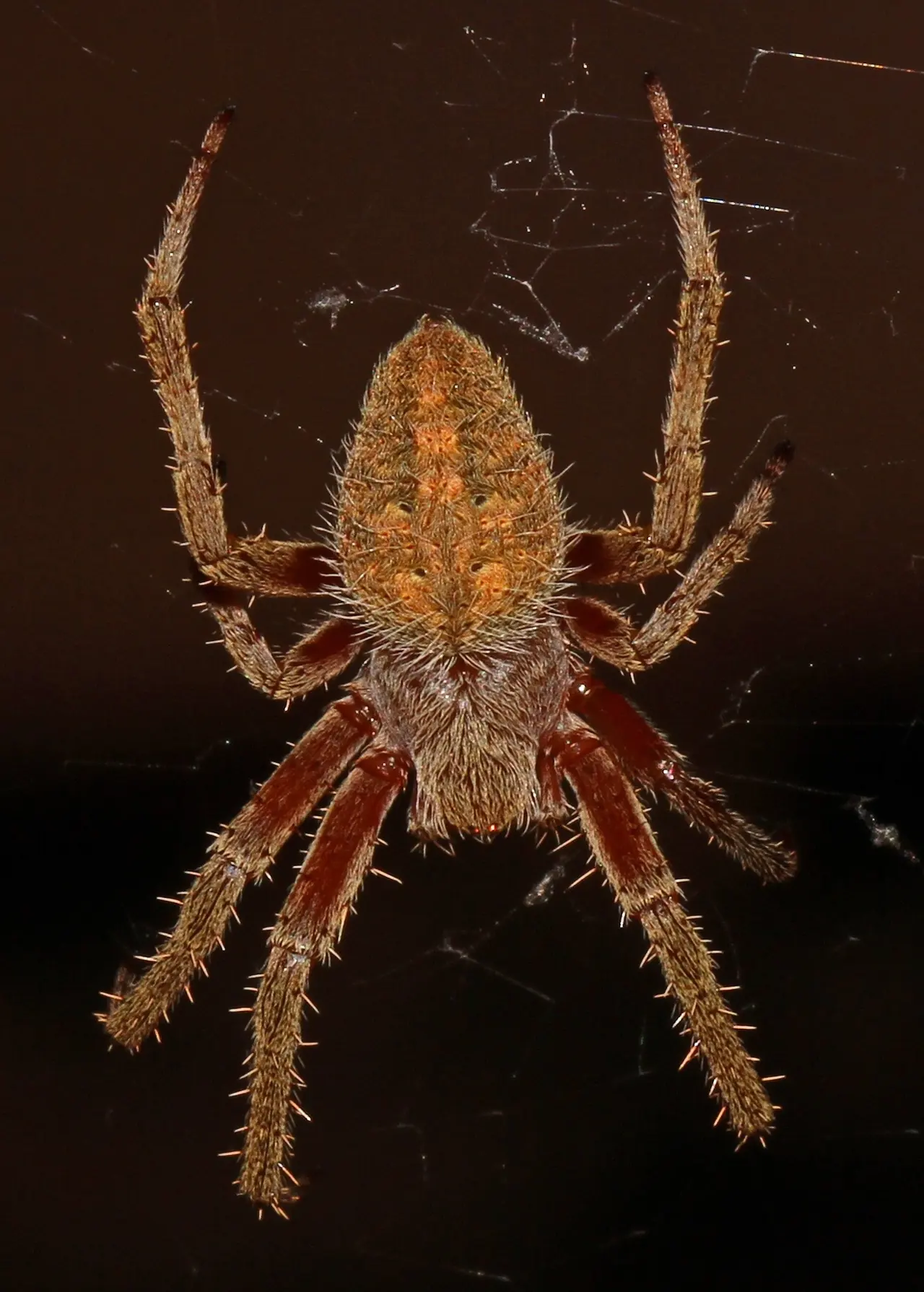
Barn Spider
A stout brown orb weaver that strings a big round web across porches, eaves, and barn doors every night in late summer and takes it down by morning. The spider from Charlotte's Web.
Identify & treat barn spider →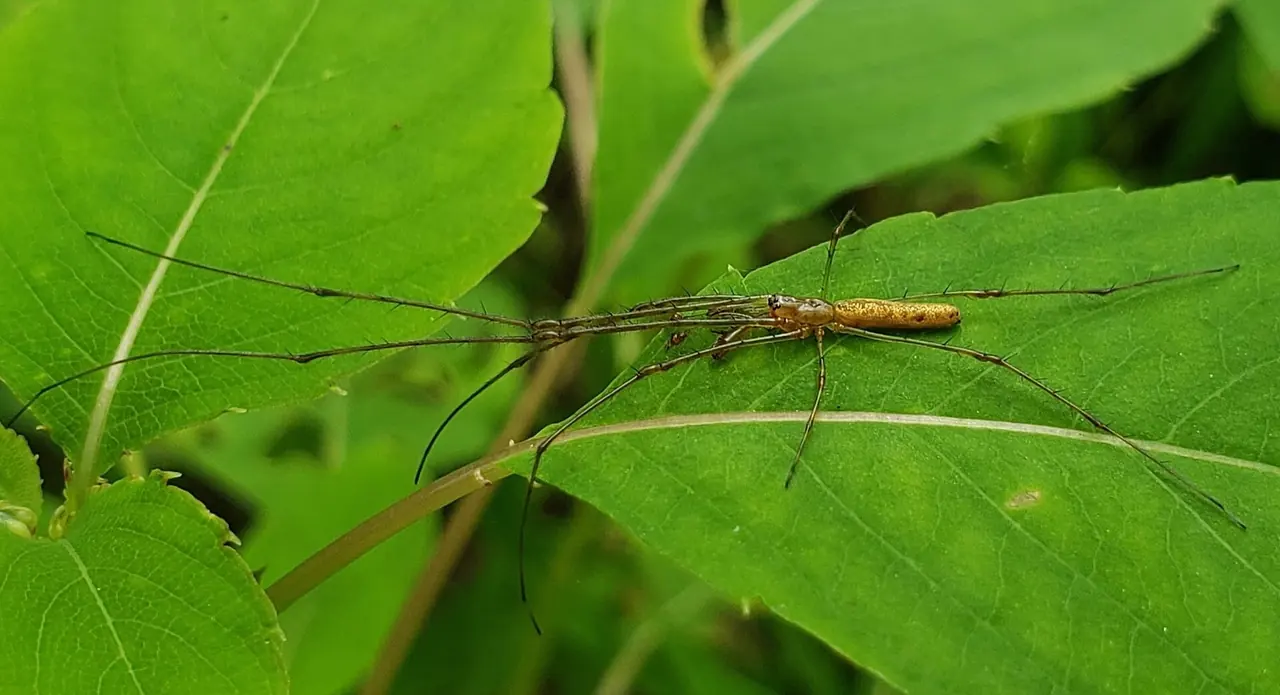
Long-Jawed Orb Weaver
A slender, stretched-out spider with long jaws that builds horizontal webs near water. Common around ponds, lakes, and pools in Cass, Miami, and Johnson counties — and on the lakeside deck.
Identify long-jawed orb weaver →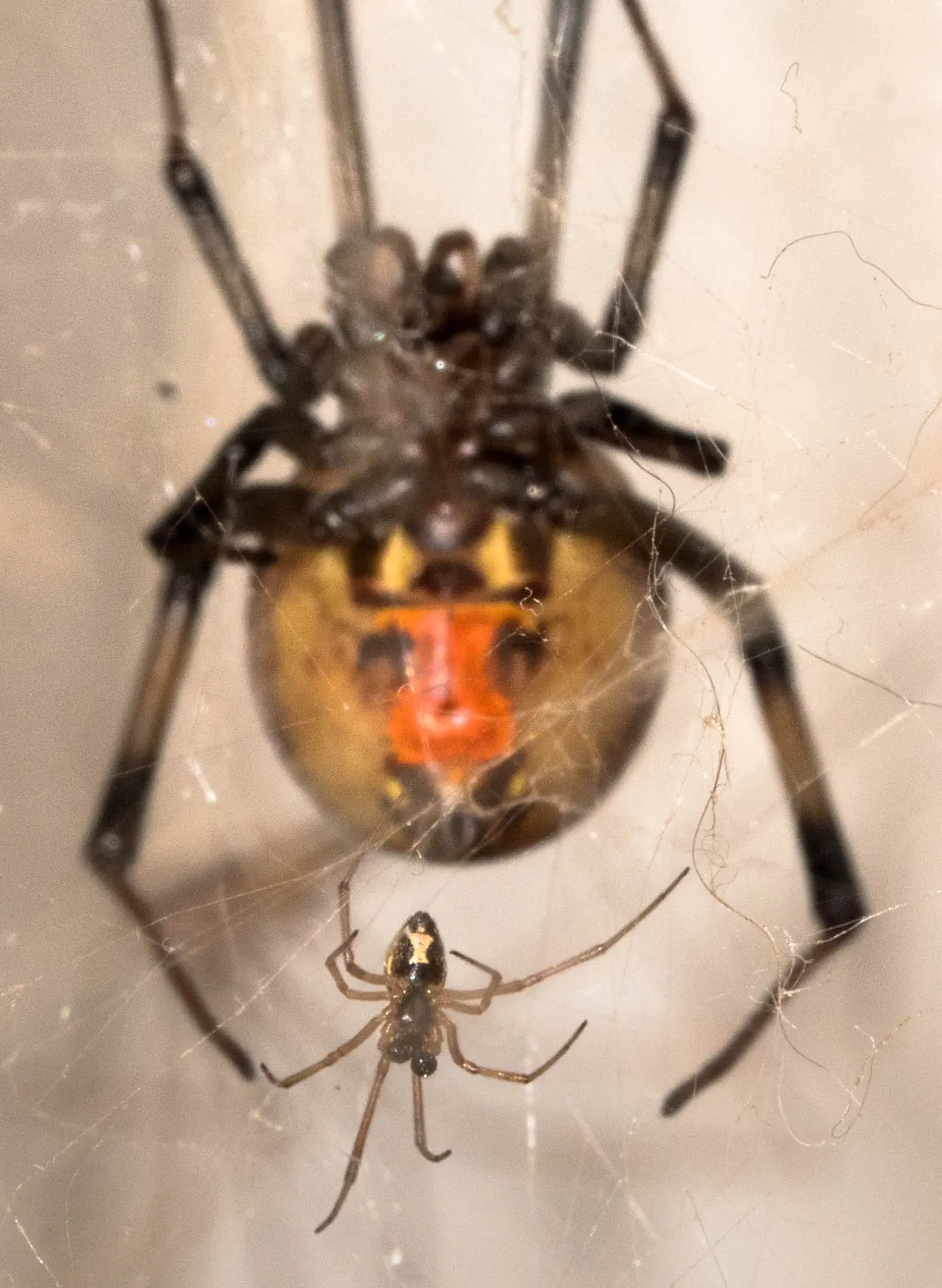
Brown Widow
A less common relative of the black widow, established in patches across Missouri and Kansas, with a milder but still medically relevant bite. Distinguished by a spiky egg sac and mottled brown coloring.
Identify & treat brown widow →Pest photos are used under Creative Commons and public-domain licenses — see photo credits.