Wasps & Bees
Paper wasps start small nests under eaves in April and May; yellowjackets build hidden ground and wall nests that peak in August and September, when they are most defensive. Most bees are pollinators we leave alone.
Tell them apart before doing anything. Carpenter bees drill into wood; honey bees and bumble bees usually just need space. Any yellowjacket or hornet nest is a job for us.
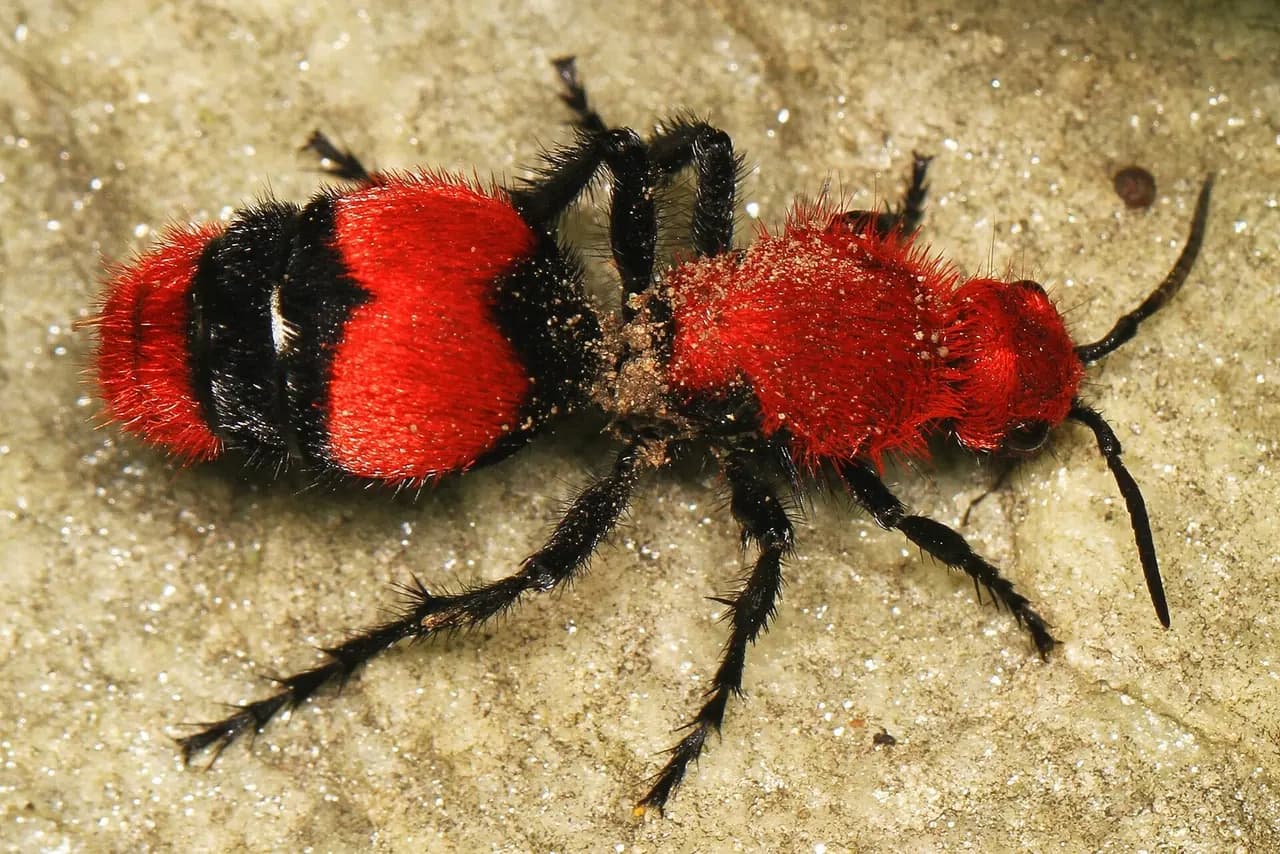
Velvet Ant
Not an ant at all — a wingless female wasp with a sting painful enough to earn the nickname "cow killer." A solitary insect you will see on bare ground or lawns in mid-summer, not something that infests a house.
Identify velvet ant →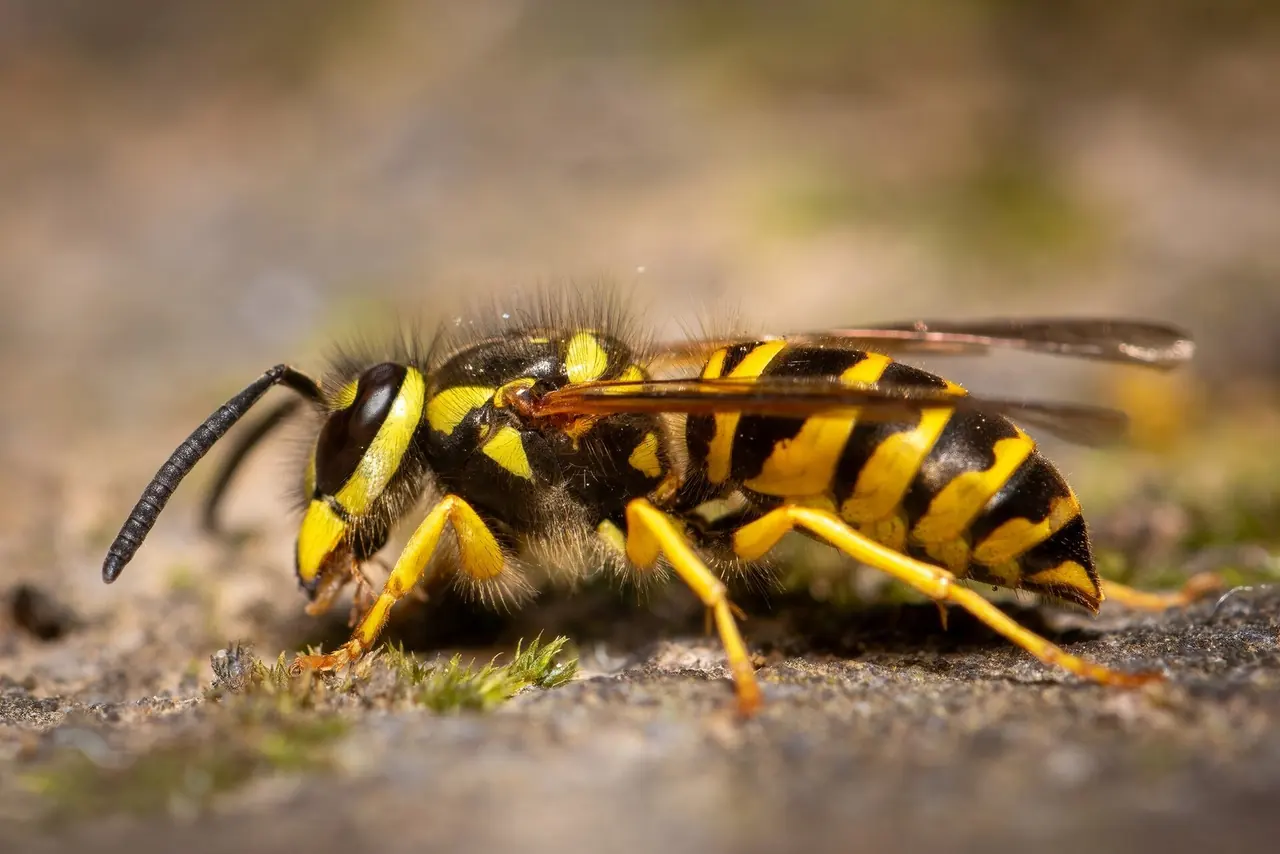
Yellowjacket
The aggressive black-and-yellow wasp that ruins August cookouts and nests underground or inside wall voids. The most dangerous stinging insect we deal with in Kansas City because of colony size and temperament.
Identify & treat yellowjacket →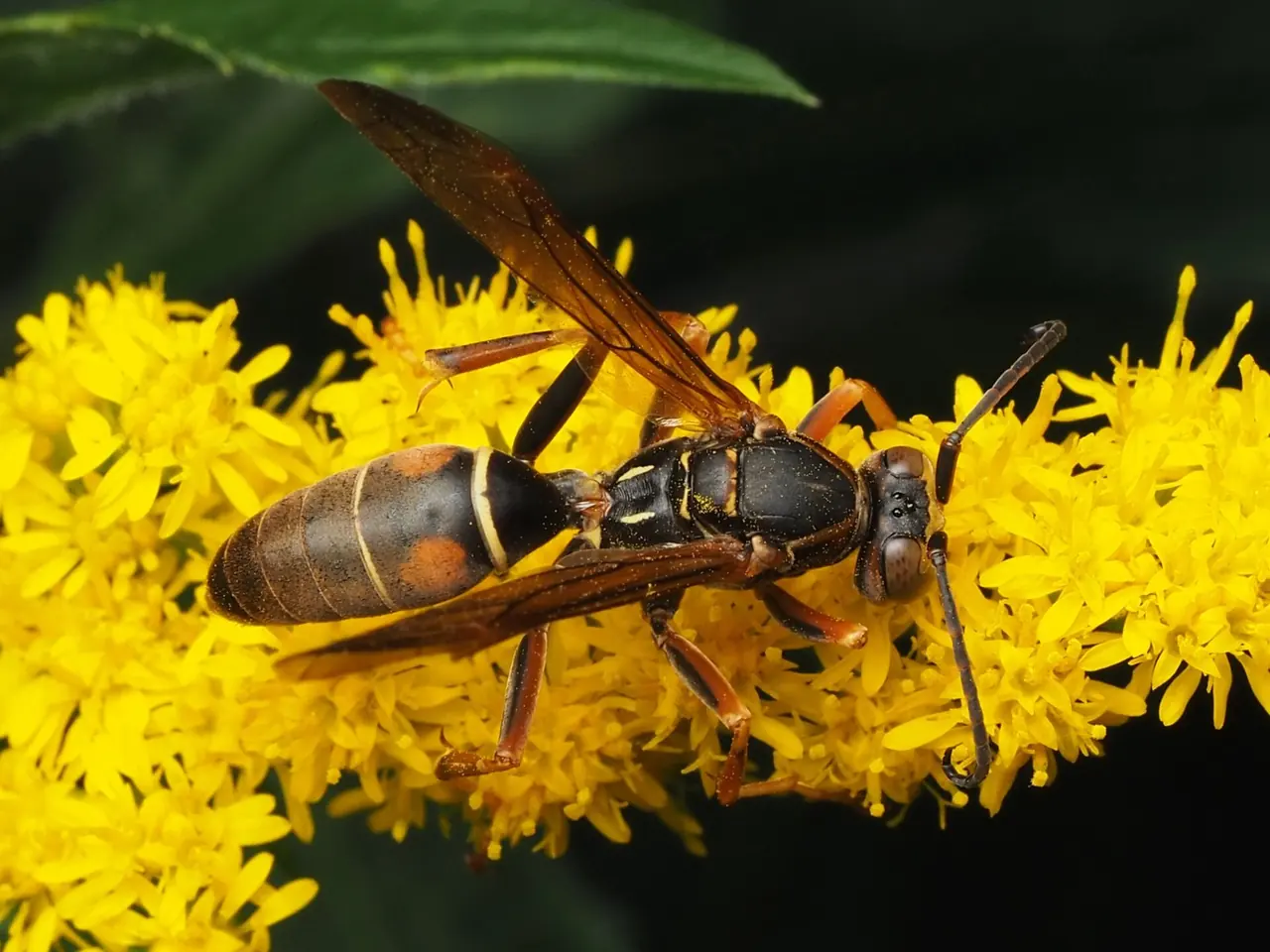
Paper Wasp
The long-legged wasp behind the open, umbrella-shaped comb under your eave, porch ceiling, or grill lid. Common on every Kansas City house, and manageable — but a nest by the front door gets somebody stung.
Identify & treat paper wasp →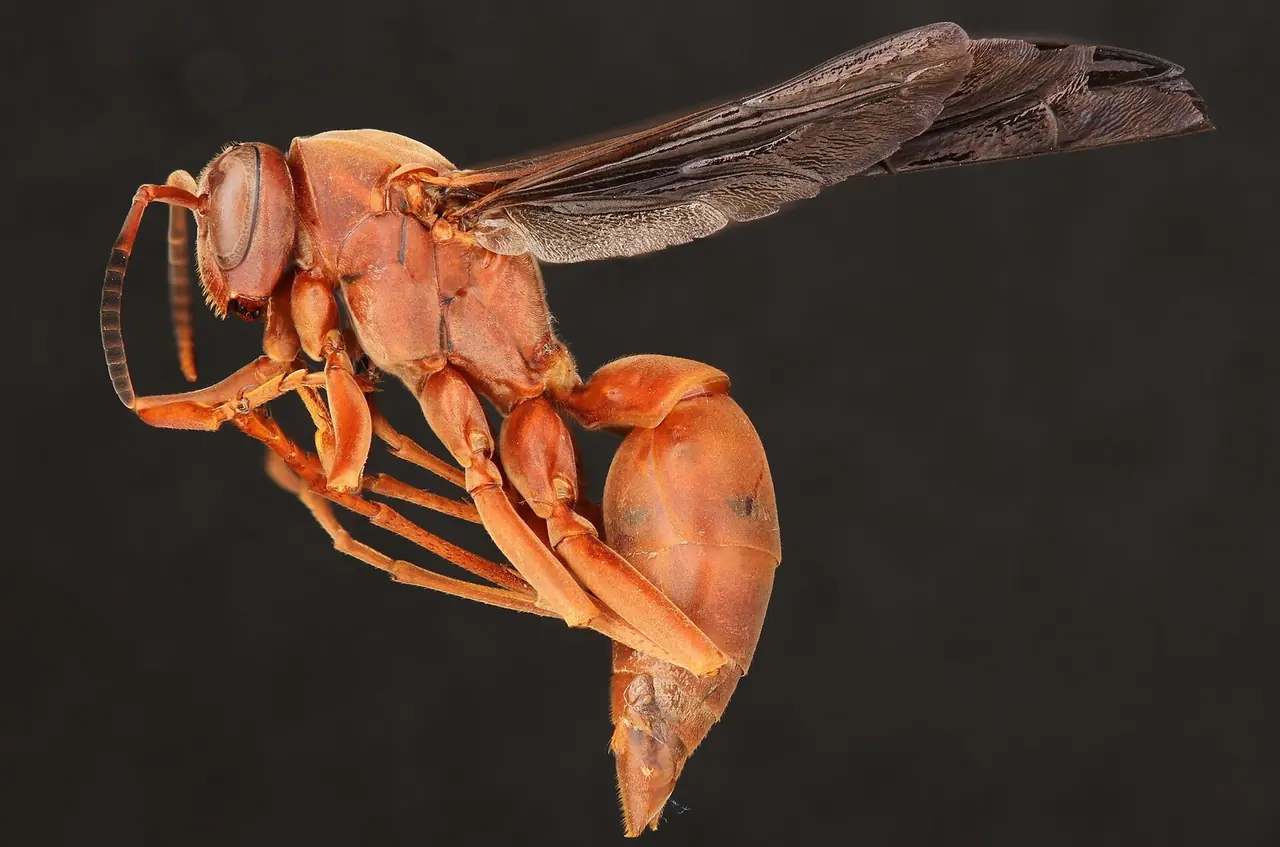
Red Wasp
A large all-red paper wasp, common across Missouri and eastern Kansas, that builds bigger combs than other paper wasps and has a reputation for a nastier sting.
Identify & treat red wasp →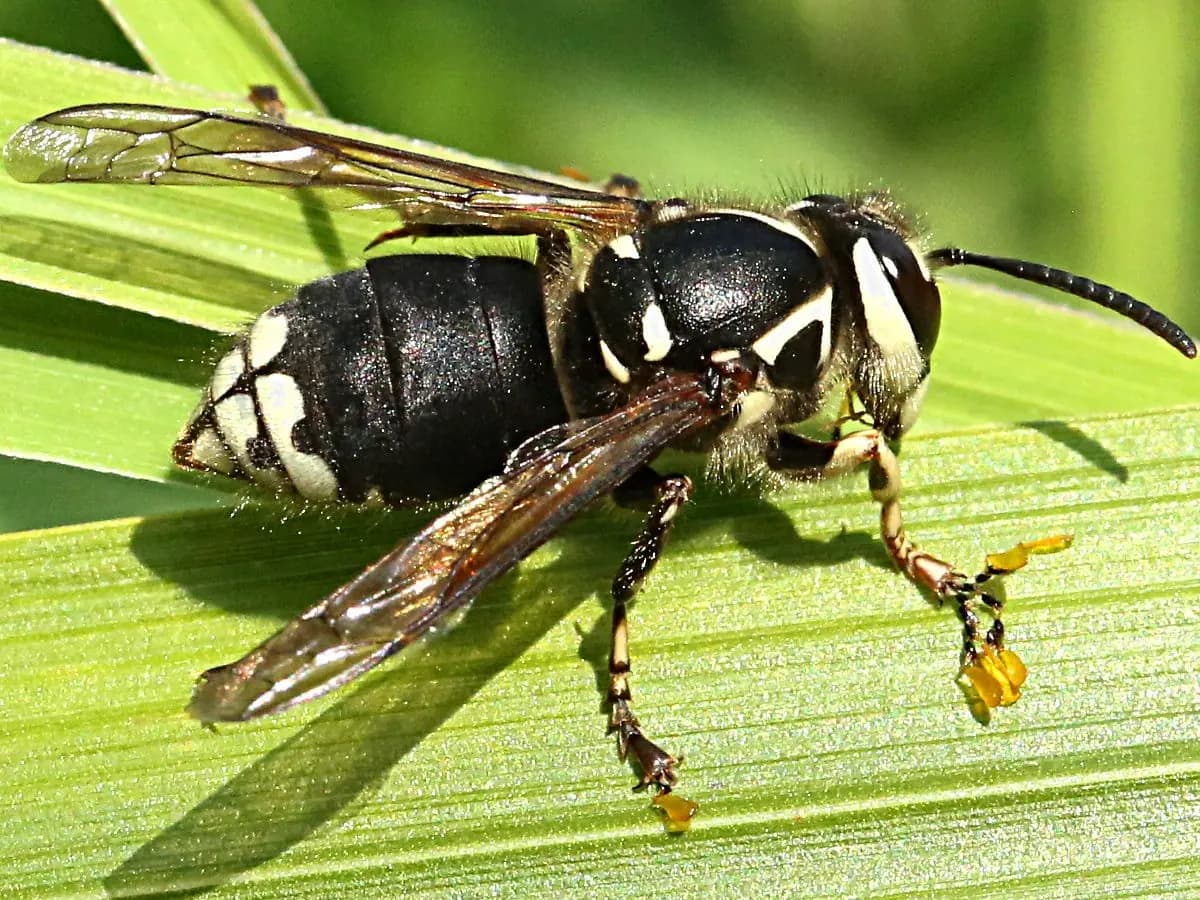
Bald-Faced Hornet
The black-and-white wasp that builds the football-sized gray paper nest hanging from a tree limb, eave, or bush. Technically a large yellowjacket, and every bit as defensive around the nest.
Identify & treat bald-faced hornet →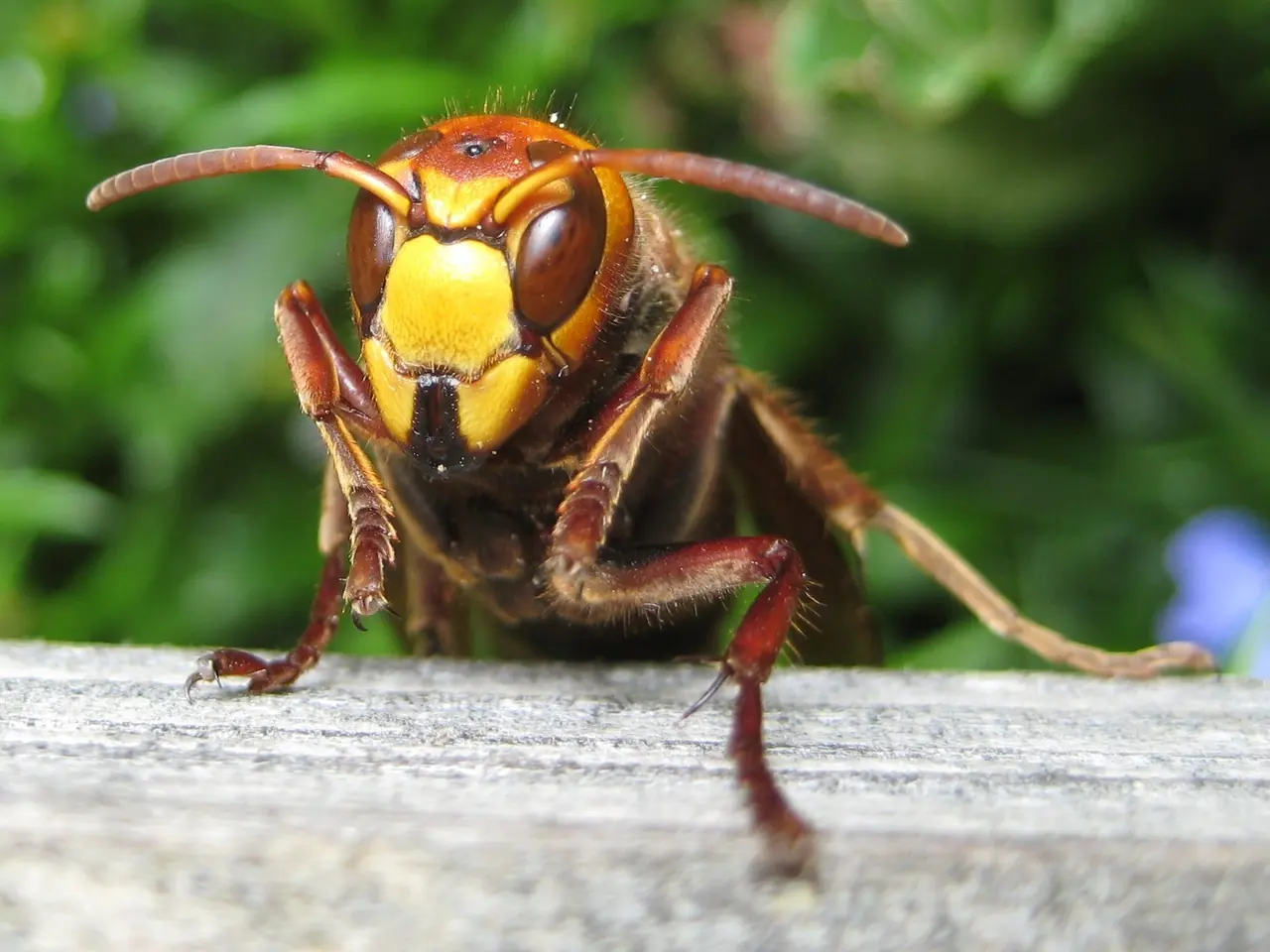
European Hornet
The only true hornet in North America, established across Missouri and into eastern Kansas. Very large, brown and yellow, and unusual in that it flies at night and bangs into lit windows.
Identify & treat european hornet →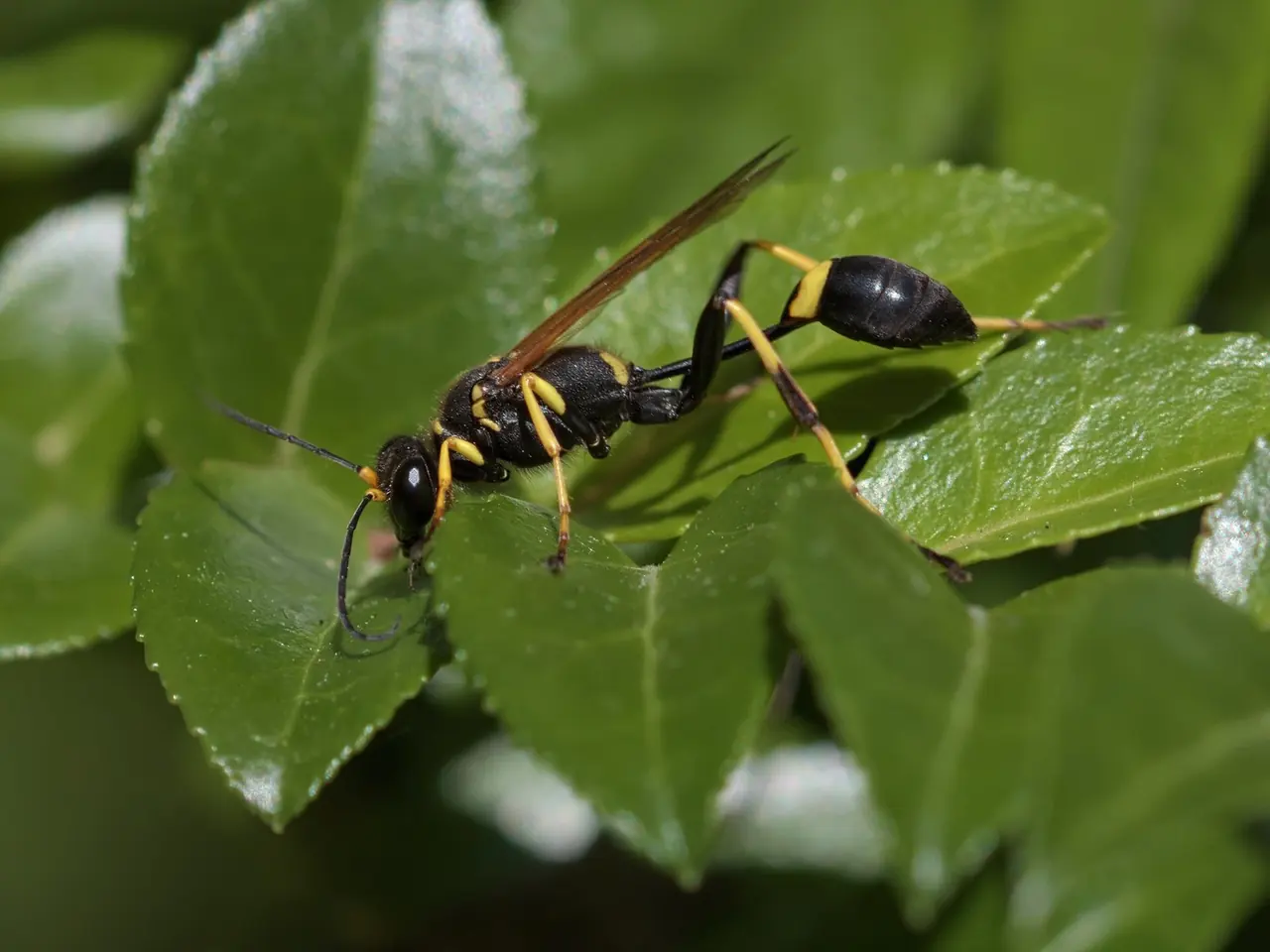
Mud Dauber
The solitary wasp that builds mud tubes on your garage wall, porch ceiling, or under the deck. Long, thin, and unbothered by you — a nuisance for the mud, not a stinging threat.
Identify & treat mud dauber →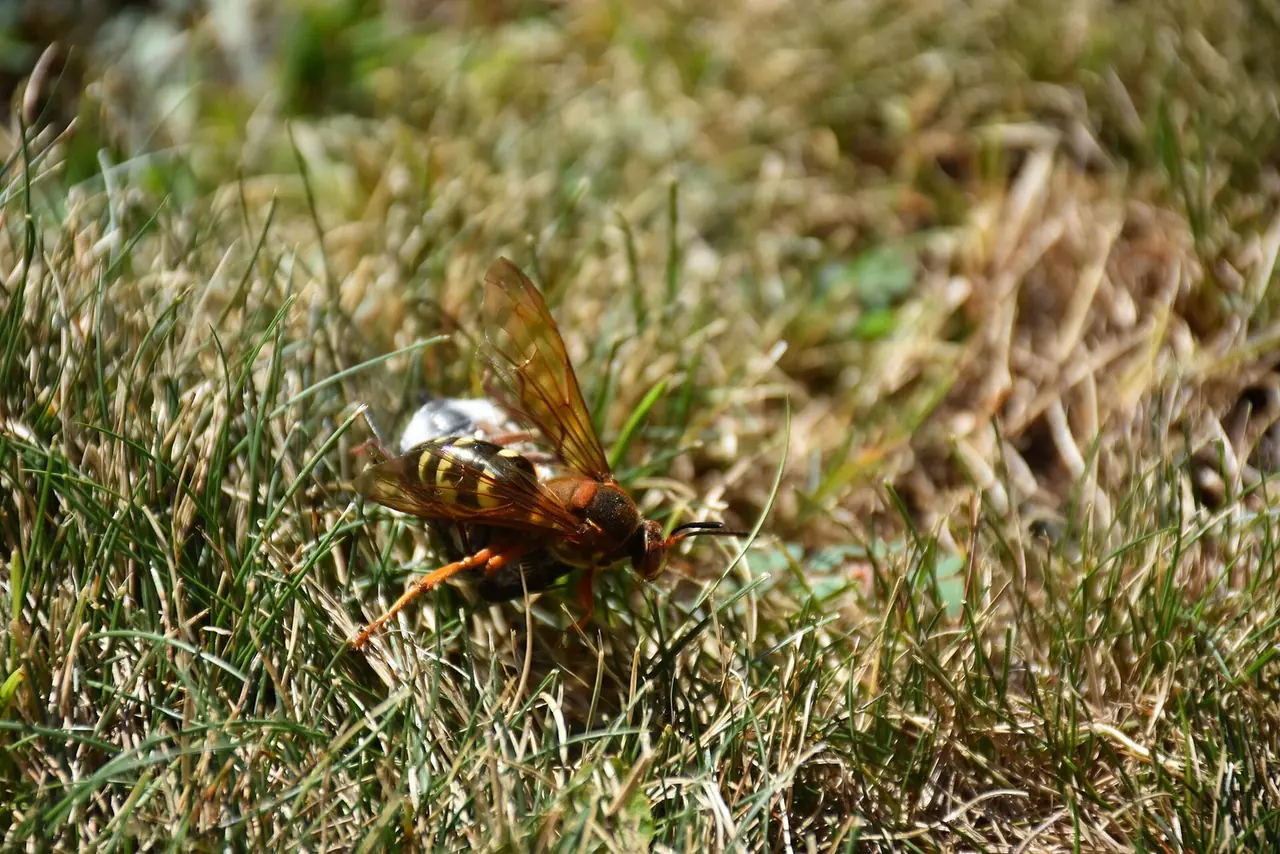
Cicada Killer
The enormous digger wasp that excavates burrows in sunny bare soil every July and drags cicadas into them. Alarming because of its size; nearly harmless because it is solitary and has no colony to defend.
Identify & treat cicada killer →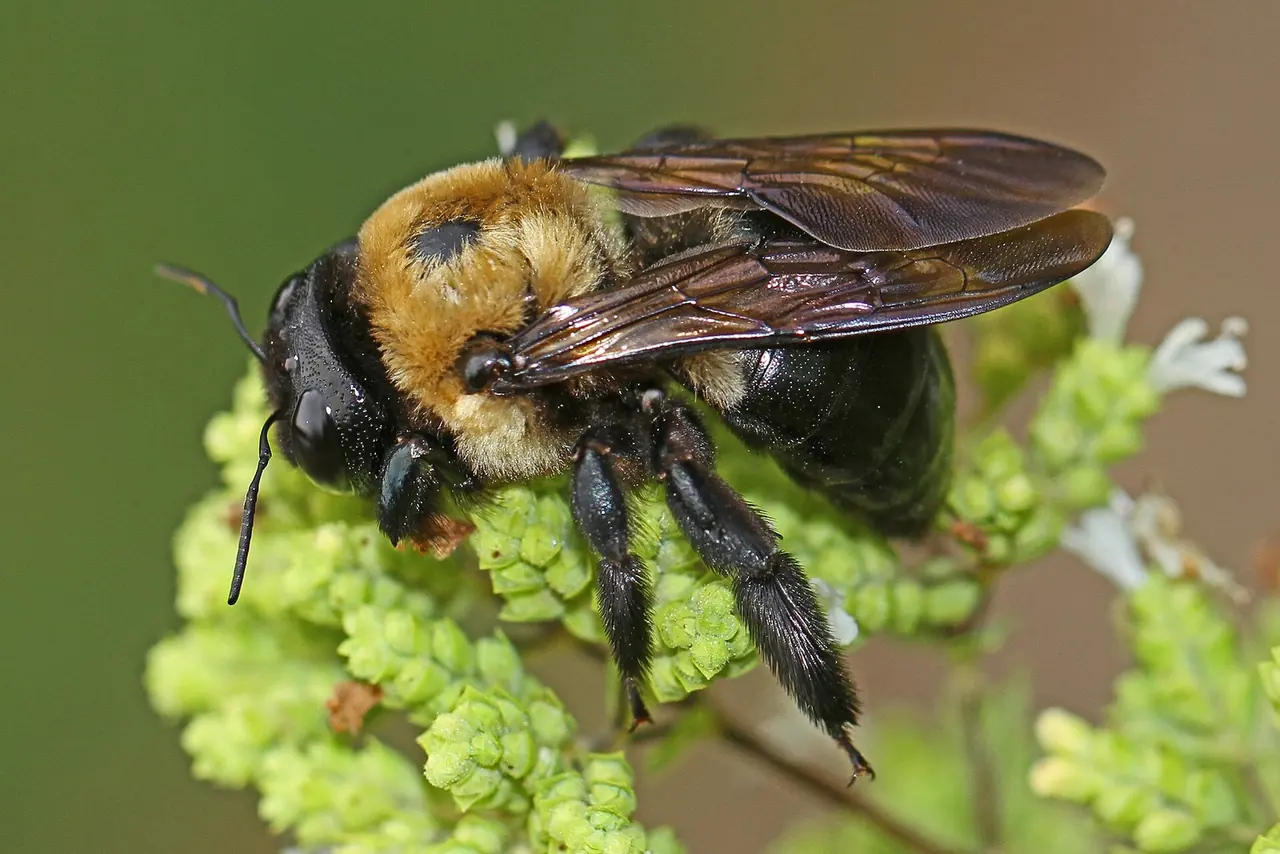
Carpenter Bee
The big black-and-yellow bee drilling perfect half-inch holes into your deck rail, fascia, or cedar siding every spring. It is a pollinator, but it is also the one bee that damages wood.
Identify & treat carpenter bee →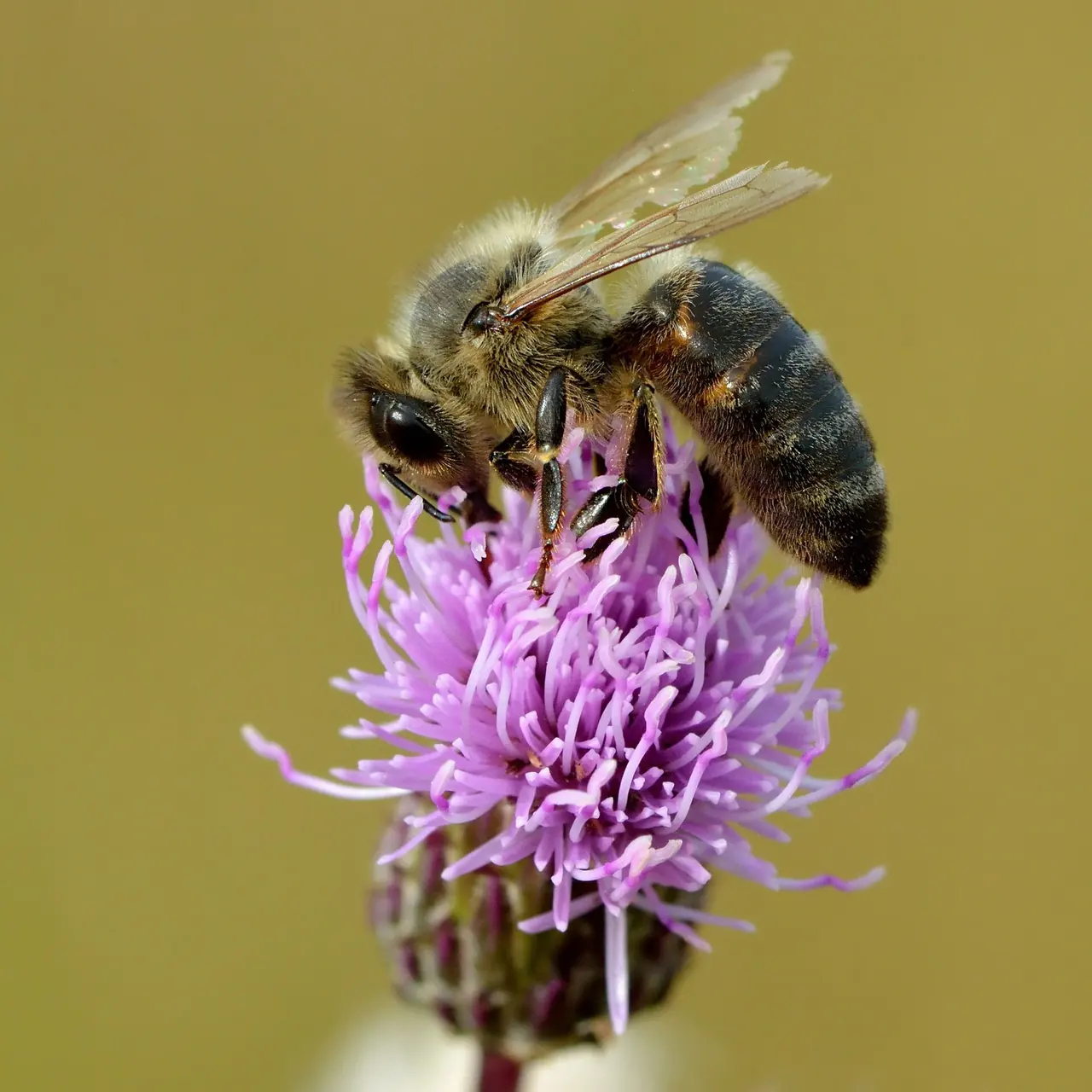
Honey Bee
The managed pollinator every food crop depends on. We do not exterminate honey bee colonies. If a swarm lands on your fence or a colony moves into your wall, the right call is a beekeeper, and we will help you find one.
Identify honey bee →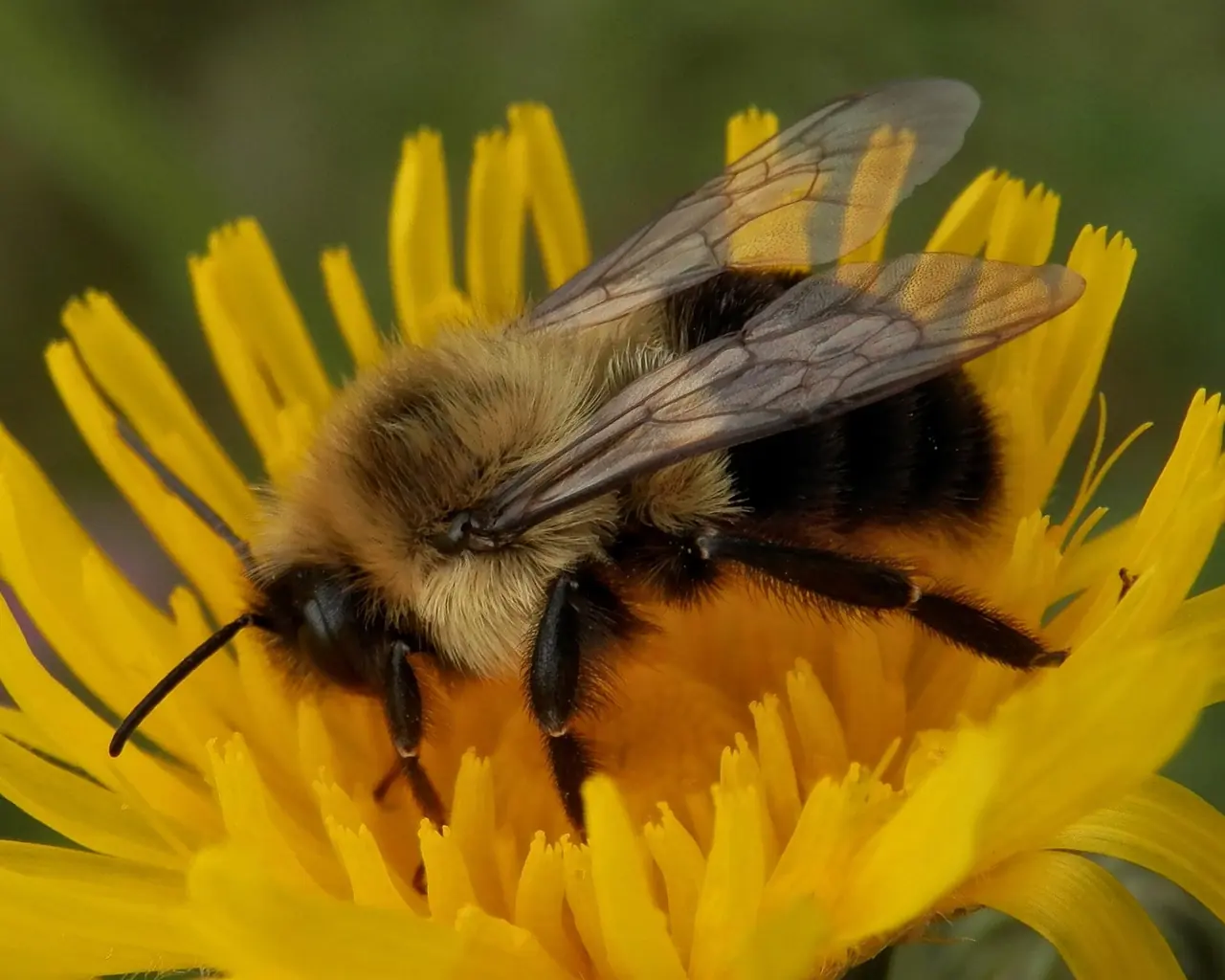
Bumble Bee
The fuzzy, slow-flying bee that nests in old mouse holes, compost, and under sheds. An important native pollinator and, several species being in decline, one we leave alone unless a nest is somewhere truly unworkable.
Identify bumble bee →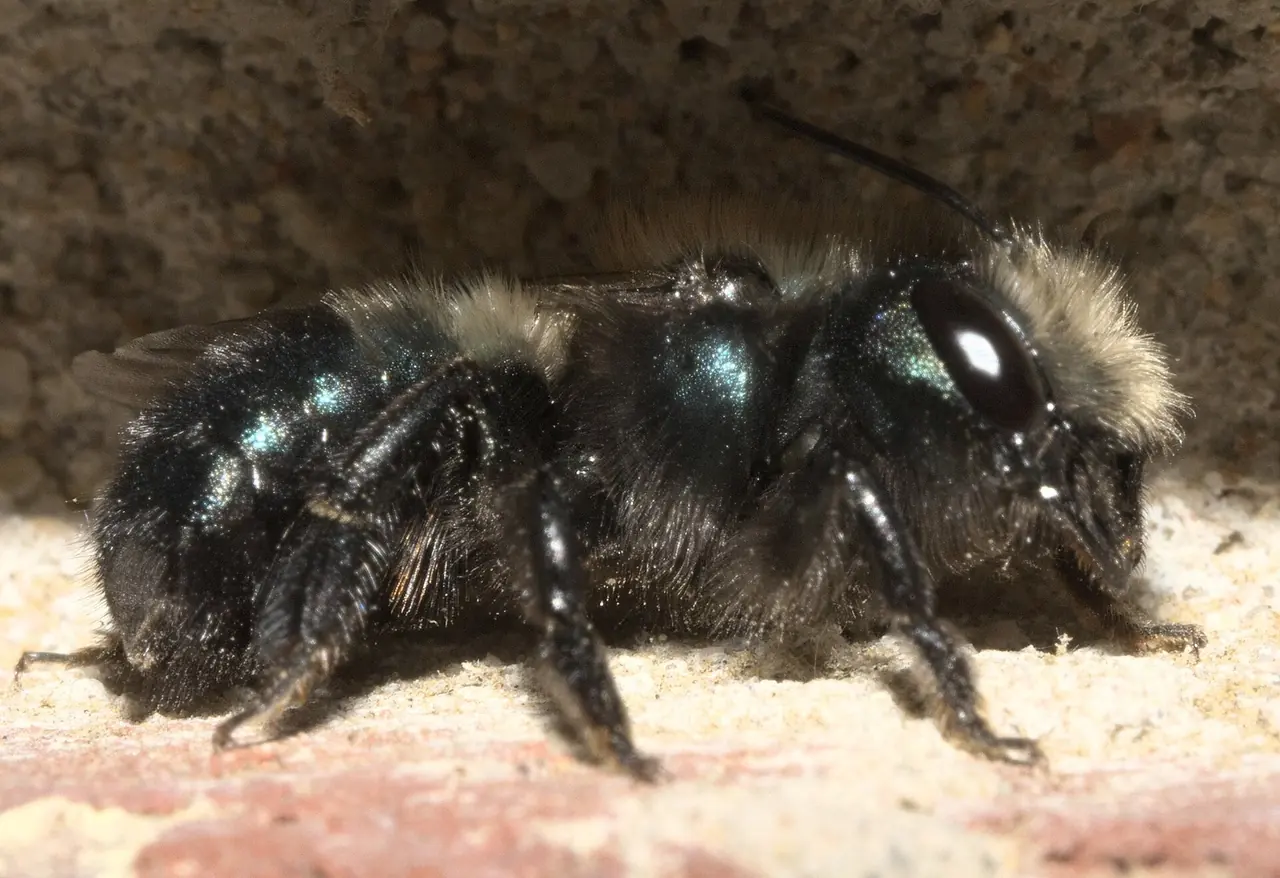
Mason Bee
A small metallic blue-green solitary bee that seals its nest tubes with mud and pollinates fruit trees better than honey bees. If you see mud-capped holes in a bee house or in old nail holes, this is who lives there.
Identify mason bee →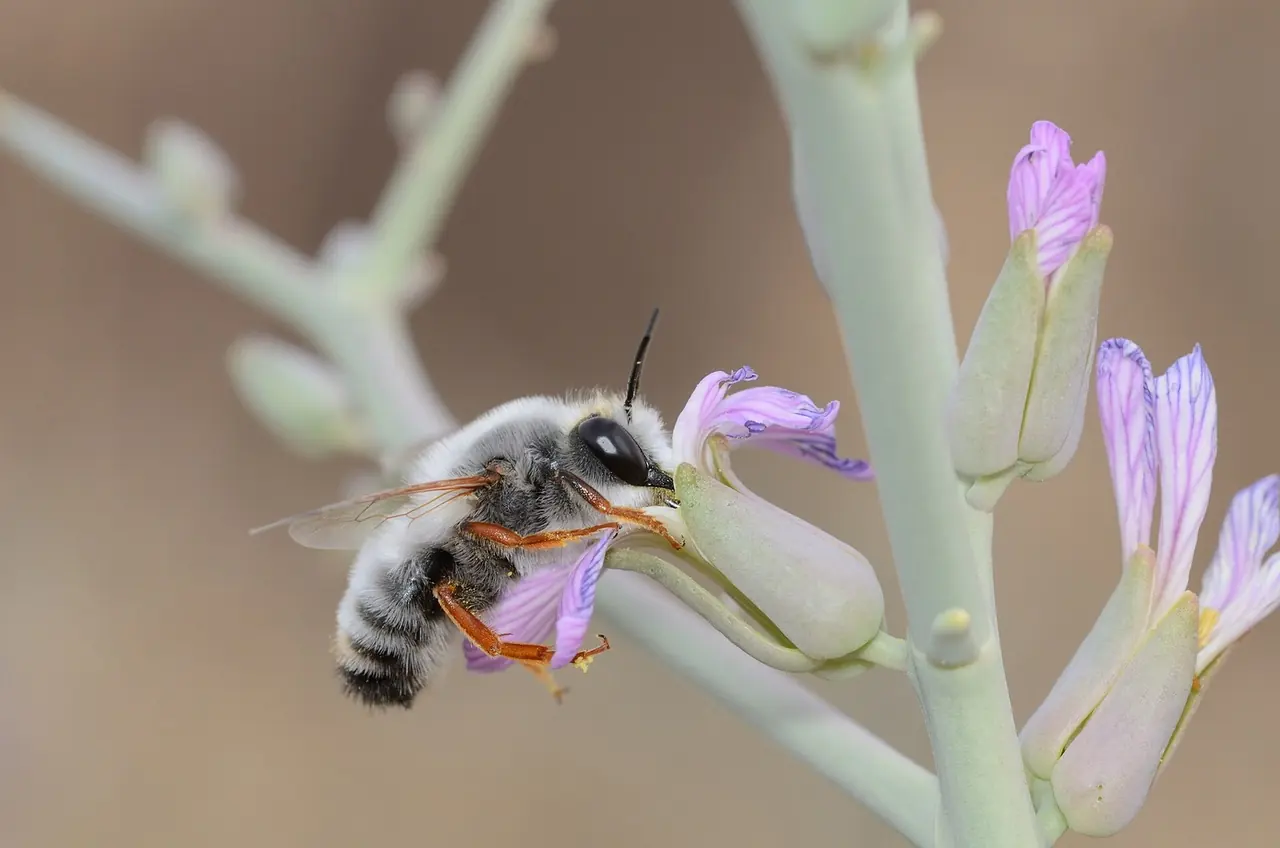
Leafcutter Bee
The bee responsible for the neat half-circle notches cut from rose and redbud leaves. Solitary, gentle, and a top-tier pollinator of alfalfa and garden vegetables.
Identify leafcutter bee →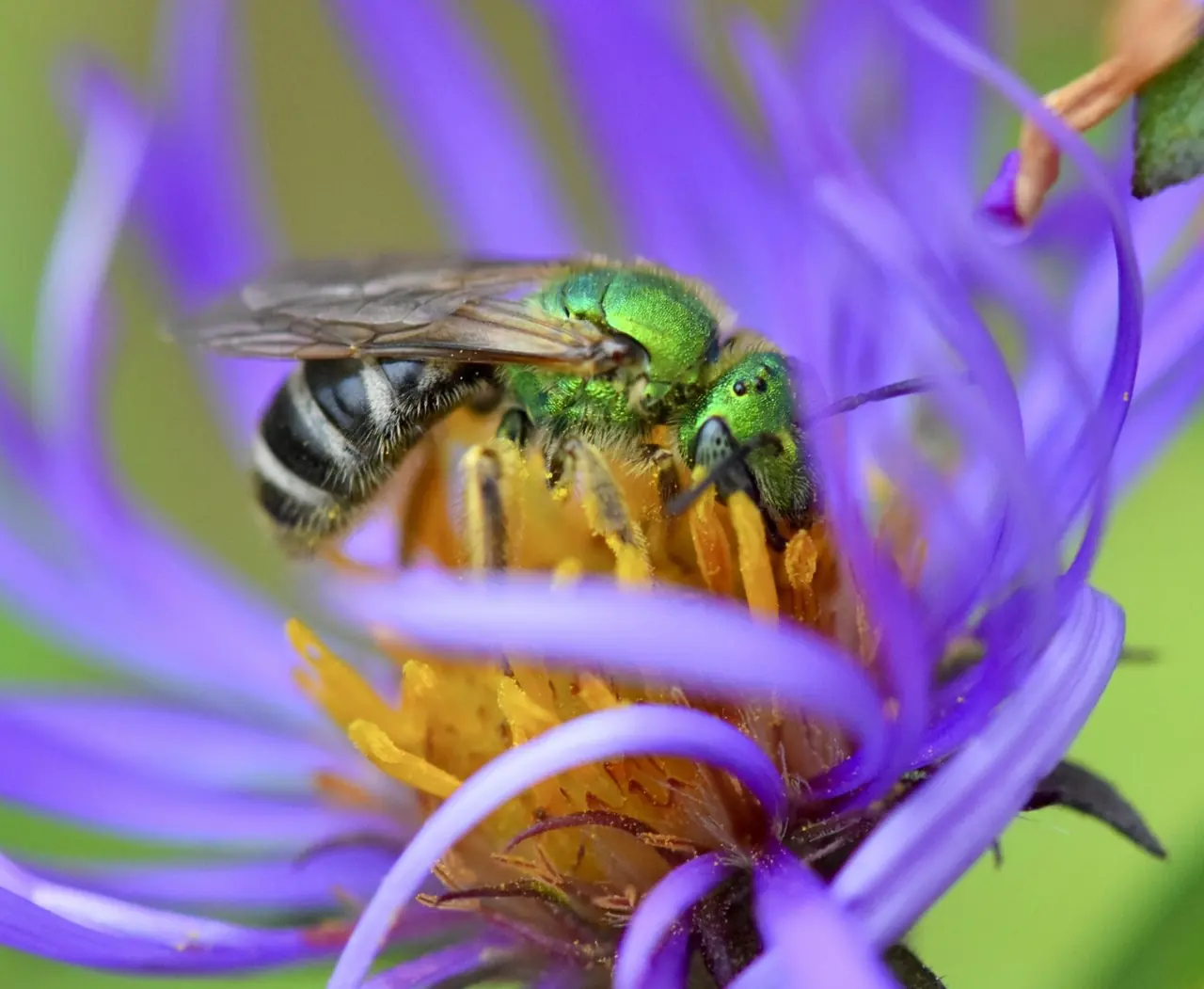
Sweat Bee
The tiny bee that lands on your arm on a hot day to lap up sweat for its salt. Many are bright metallic green. Annoying at a ballgame, essential in a garden, and not a structural pest.
Identify sweat bee →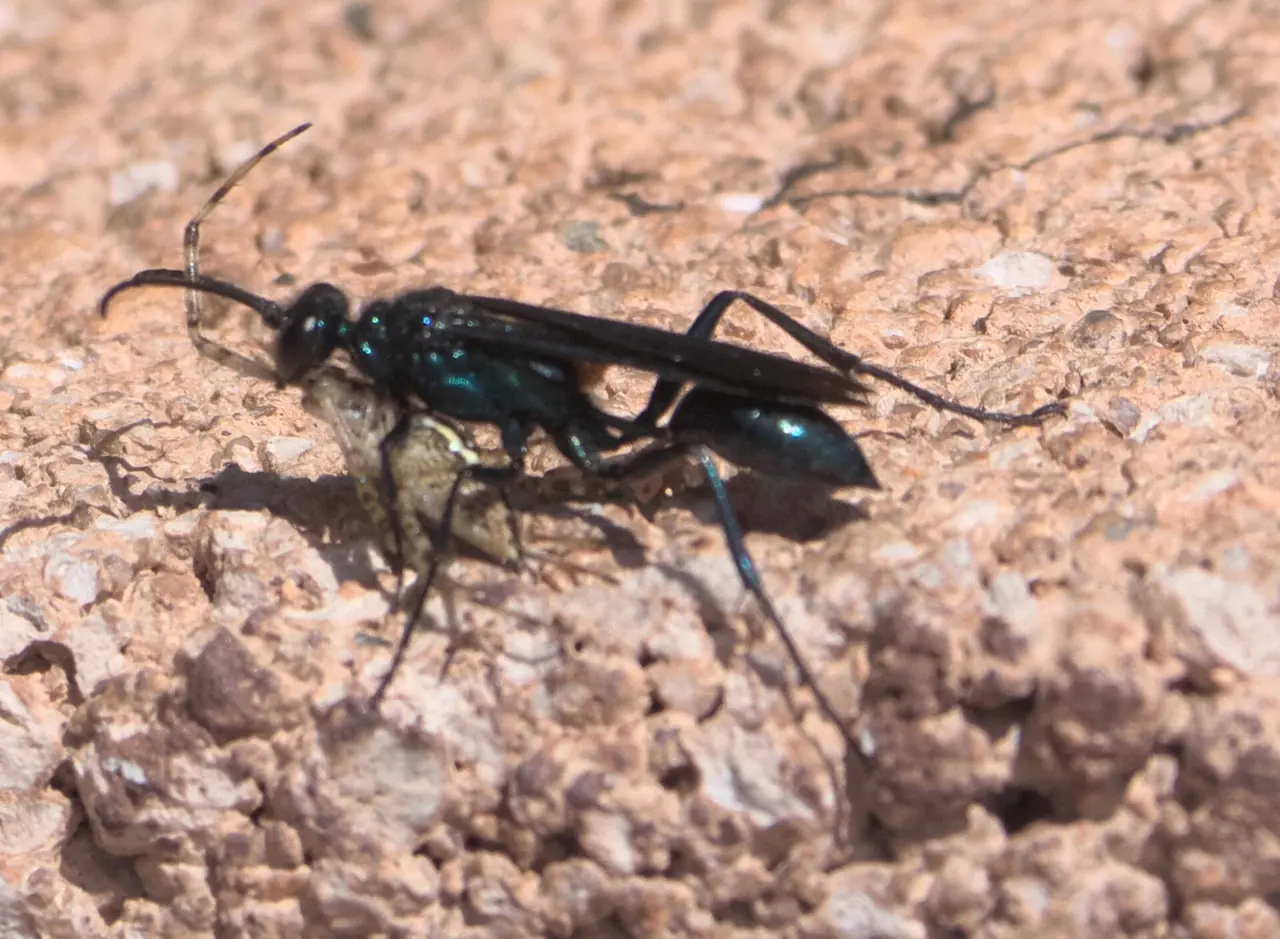
Blue Mud Dauber
A metallic blue-black solitary wasp, closely related to the common mud dauber, that often reuses old mud dauber nests rather than building its own from scratch. Preys specifically on spiders, including black widows.
Identify & treat blue mud dauber →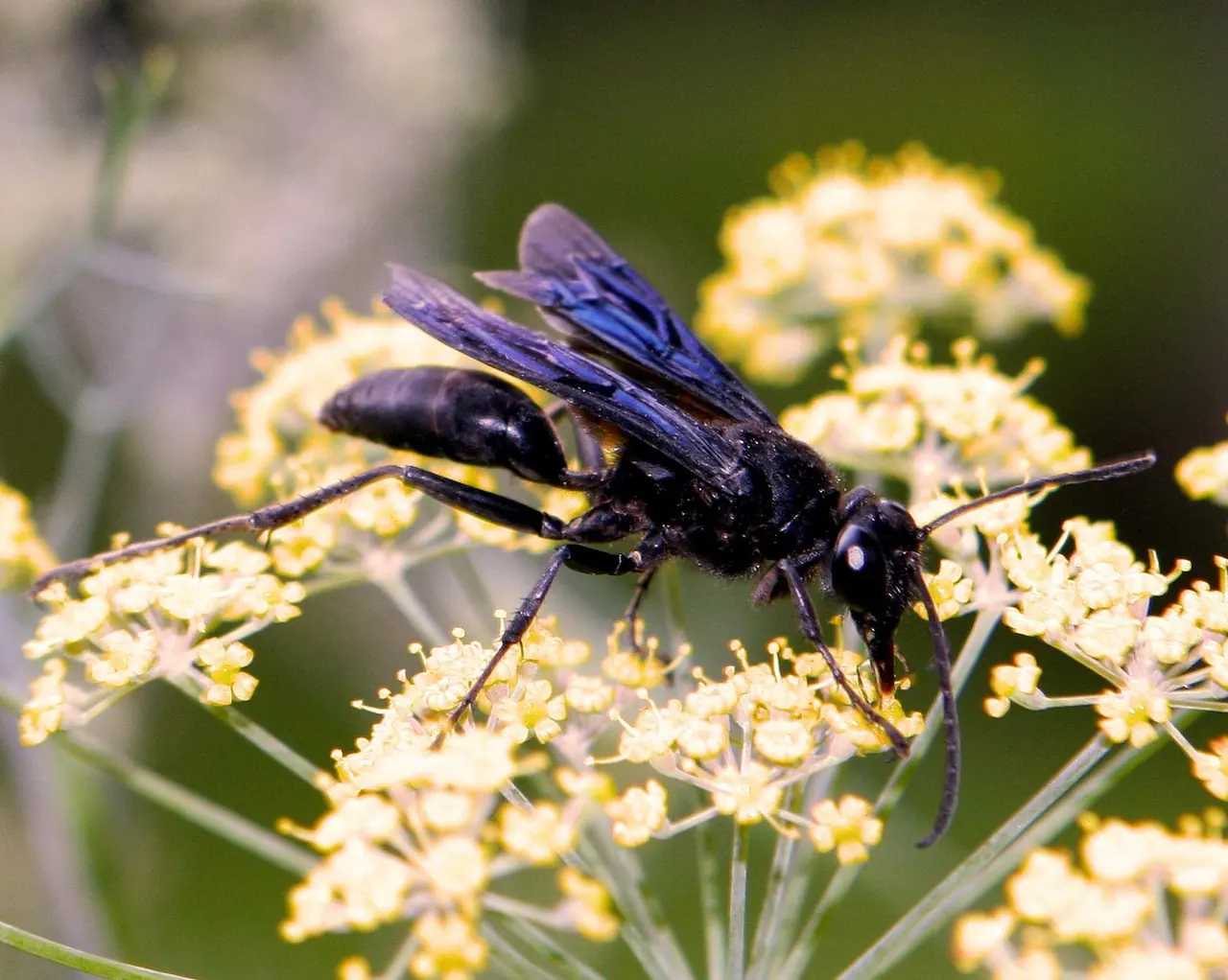
Digger Wasp
A broad group of solitary, ground-nesting wasps that dig individual burrows in bare or thin turf, often in visible numbers over a lawn in summer. Not aggressive and generally beneficial, but the burrows and hovering males can alarm homeowners.
Identify & treat digger wasp →Pest photos are used under Creative Commons and public-domain licenses — see photo credits.